
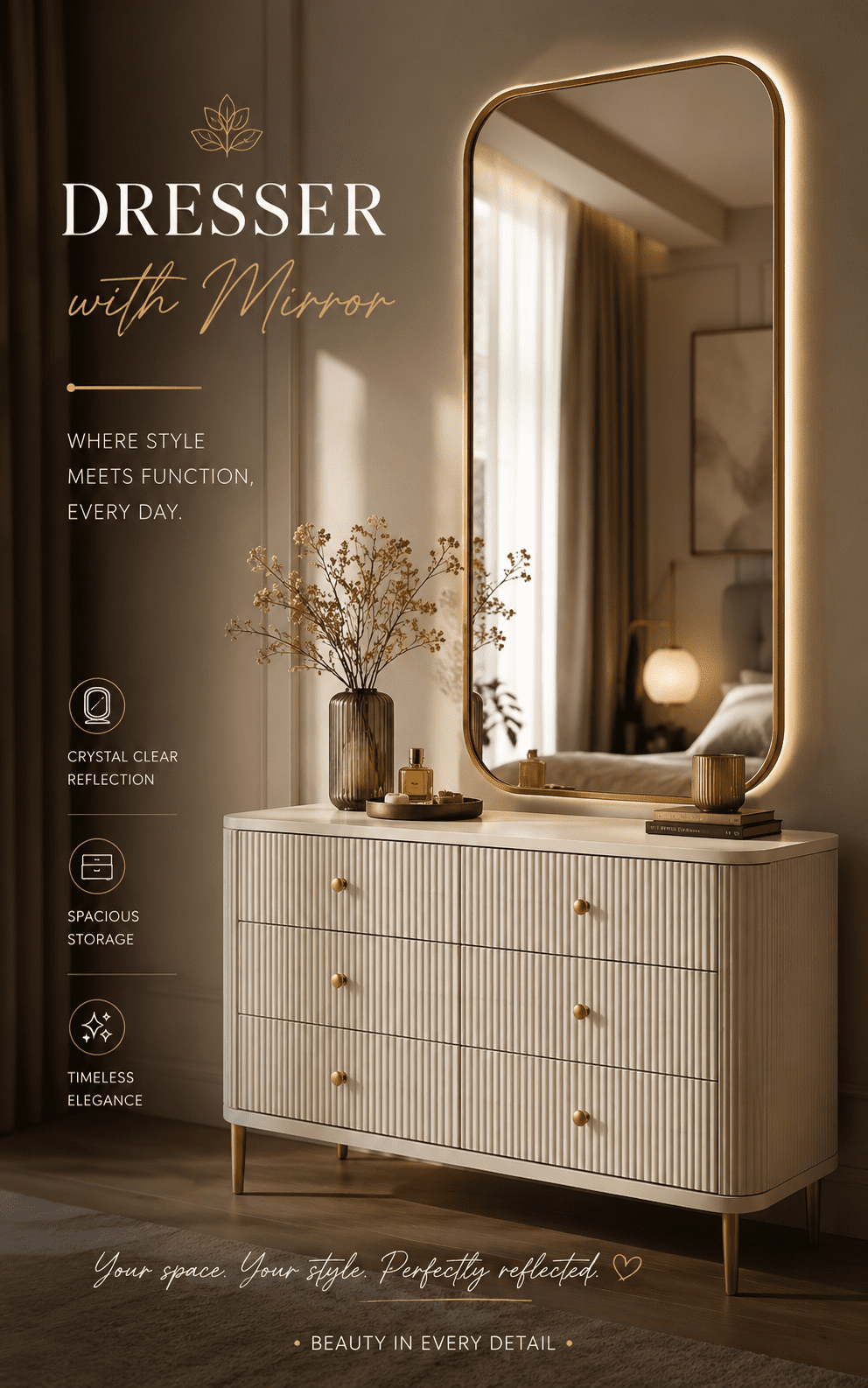
The modern bedroom is more than an overnight sanctuary; it is a closely curated retreat where daily intentions are set and quiet evenings unfold. Among the essential foundations of a well-appointed bedroom, the dresser with a mirror holds a storied place of both utility and grace. Originating from the delicate 18th-century French poudreuse dressing tables, this pairing has evolved into an architectural focal point of contemporary interiors. By balancing structural storage with light-reflecting glass, a thoughtfully positioned dresser and mirror orchestrate spatial symmetry while turning a simple daily routine into a refined ritual.
01 — Spatial Dynamics
The Spatial Evolution of the Dresser with Mirror
In contemporary spatial design, furniture must perform dual roles. It must anchor a room aesthetically while optimizing the physical footprint. The integration of a mirror above a low-profile dresser is an interior styling technique designed to manipulate light and scale. Rather than filling a space with heavy, solid wardrobes, a wide dresser keeps the sightlines open, while the mirror reflects both natural light and architectural details opposite it.
By placing a mirror above a dresser, you create a secondary window. In small apartments or narrow bedroom layouts, this visual reflection tricks the eye into perceiving expanded depth. Positioned adjacent to or perpendicular to a true window, the glass captures incoming daylight, bouncing it into darker corners. The result is a room that feels instantly brighter, larger, and layered with visual interest.
A masterfully integrated round brass mirror above a low-profile walnut dresser introduces light and symmetry into a bedroom.
02 — Design Taxonomy
Design Archetypes: Finding Your Stylistic Signature
Selecting the appropriate dresser and mirror design requires aligning with your existing architectural framework. From historical craftsmanship to sleek contemporary iterations, each style communicates a unique spatial energy.
Traditional and Heritage Class
Traditional dressers emphasize depth and longevity, often utilizing dark wood finishes, intricate crown moldings, and detailed brass hardware. The accompanying mirrors are typically heavy-framed, featuring arched tops or hand-carved timber borders. These pieces work beautifully in classical, colonial, or neo-classical master suites where historical gravity is celebrated.
Sleek Modern and Minimalist
Modern design focuses on flat-slab drawer fronts, touch-to-open latches, and clean, unadorned surfaces. The mirrors are often frameless or finished with ultra-thin metal trims. This approach relies on precise geometry and high-contrast color choices, making it ideal for contemporary urban lofts and mid-century modern spaces.
Warm Modern Farmhouse and Rustic
For rooms designed to feel relaxed and organic, the farmhouse dresser relies on distressed wood finishes, visible timber grains, and antique iron cup pulls. The mirrors are frequently framed in reclaimed barn wood or feature industrial matte-black metal borders that evoke a grounded, hand-crafted aesthetic.
Dedicated Vanity Dressers
A hybrid design that bridges storage and personal preparation. Vanity dressers typically feature a central kneehole recess, allowing for an elegant stool, paired with shallow, velvet-lined drawers specifically partitioned for cosmetics, fine jewelry, and grooming essentials.
Double and Executive Dressers
Spanning up to 72 inches wide, double dressers are designed in two or three side-by-side drawer columns. Offering extensive storage capacity, these pieces support grand-scale mirrors, anchoring spacious master suites and providing shared storage for couples.
03 — Proportional Rules
Sizing, Proportions, and Clearance Dynamics
The most common mistake in bedroom design is selecting furniture with disproportionate scale. A dresser that is too deep narrows walkway clearances, while a mirror that is too small for a wide dresser creates an unbalanced, top-heavy look.
The Proportional Golden RuleFor optimal balance, your mirror should span between 70% and 85% of the total width of the dresser below it. If using a round or organic-shaped mirror, ensure its diameter sits elegantly within the center third of the dresser’s width, allowing flanking space for decorative vertical objects.
When plotting your layout, consider the functional clearances. To pull out a standard 18-inch deep drawer and stand comfortably in front of it, you require a minimum of 30 inches of open floor clearance between the dresser face and any neighboring furniture, such as the edge of the bed frame.
| Room Size Classification | Recommended Dresser Width | Recommended Mirror Type | Minimum Floor Clearance |
|---|---|---|---|
| Compact/Small (Under 120 sq ft) | 36 to 48 inches | Vertical Rectangle / Slim Round | 24 to 28 inches |
| Medium Master (120 to 200 sq ft) | 50 to 60 inches | Symmetric Round / Arch-Top | 30 to 32 inches |
| Grand/Executive (Over 200 sq ft) | 60 to 72+ inches | Wide Landscape / Tri-Fold Vanity | 36+ inches |
04 — Craftsmanship Quality
Material Selection & Craftsmanship Details
Investing in bedroom furniture demands a keen eye for physical durability and timber craftsmanship. Since a dresser holds significant structural weight and undergoes daily mechanical use, drawer construction and material framing determine the piece’s lifespan.
“A high-quality dresser is judged not by the flawless finish of its top surface, but by the weight of its drawers, the quiet slide of its rails, and the integrity of its back panel.”
Solid Hardwood: Timbers like American white oak, walnut, maple, and cherry represent the premium tier of furniture construction. They naturally resist bowing, hold joint fasteners securely, and carry rich grain textures that age beautifully with time.
Engineered Wood and Fine Veneers: High-density MDF paired with genuine wood veneer is an excellent choice for modern finishes. Unlike solid timber, which can swell and shrink with seasonal humidity changes, high-grade engineered wood maintains its structural shape, preventing drawer sticking in damp coastal climates.
Drawer Joinery: When evaluating dressers, pull a drawer out fully and inspect the corners. Quality furniture uses interlocking English or French dovetail joints rather than simple glue and brad nails. Furthermore, look for under-mounted soft-close drawer slides that offer quiet functionality in shared sleeping spaces.


Attention to fine detailing, from premium timber joinery to thoughtful tabletop decor, defines a high-end bedroom presentation.
05 — Palette Theory
Color and Finish Theory for Bedroom Harmony
The color of your dresser sets the visual weight of the room. A dark finish grounds a space, while lighter tones keep the mood airy and casual. When selecting your finish, refer to this curated palette of high-end bedroom tones to understand the aesthetic response they create:
Alabaster White
Smoked Walnut
Warm Greige
Charcoal Ink
Champagne Brass
When pairing your dresser finish with a mirror frame, avoid exact matches unless you are using a pre-curated bedroom set. For a layered, designer feel, introduce contrasting finishes. For example, pair a deep, Smoked Walnut dresser with a slim, Champagne Brass framed round mirror to introduce a touch of warmth and architectural contrast.
Explore expert bedroom decorating ideas and furniture inspiration:
06 — The Editorial Art
The Editorial Art of Styling Your Dresser Surface
An unstyled dresser surface quickly becomes a landing pad for loose change, daily mail, and forgotten items. By applying professional styling principles, you can turn this functional surface into a beautiful, calming vignette.
The Rule of Threes and Triangles
Our eyes naturally seek out odd-numbered groupings. When styling your dresser, construct a visual triangle on one side of the mirror to guide the gaze:
- The Anchor (Tall Element): A tall organic feature, such as cherry blossom branches or eucalyptus in an earthenware vase. This draws the eye upward toward the mirror.
- The Bridge (Medium Element): A collection of perfume bottles in a textured tray or an artistic ceramic sculpture that sits at a medium height.
- The Base (Low Element): A horizontal stack of beautifully bound art books topped with a small marble dish for your daily jewelry.
Integrating Practical Lighting
Grooming and dressing require soft, flattering illumination. Avoid relying solely on overhead recessed ceiling lights, which cast harsh shadows down your face. Instead, place an elegant table lamp on one side of the dresser surface, or mount soft, warm wall sconces on either side of the mirror frame. This creates diffuse side lighting that is ideal for both morning routines and evening wind-downs.
With all these changings try this lighting effect also https://luxedecorehome.com/ambient-lighting-palette-blush/
07 — Design Pitfalls
Crucial Pitfalls to Avoid in Selection and Placement
When investing in high-end bedroom furniture, a few small planning oversights can impact both daily usability and physical safety.
Ignoring Direct Glare Paths: Placing a mirror directly opposite a south-facing window can bounce blinding sunlight into the room during midday, creating uncomfortable glare on your bed. Position your mirror perpendicular to natural light sources instead.
Neglecting Wall Anchor Security: Large dressers, especially those loaded with heavy winter garments, can become top-heavy. Always mount safety wall-anchors to secure the back of the dresser to the wall stud, protecting children and pets.
Over-cluttering the Center: Placing tall decorative objects directly in the center of the dresser blocks the reflection and makes the setup less functional. Keep the center clear for a clean view, placing tall items off to the sides.
Neglecting Soft drawer-stop hardware: Cheap mechanical runners allow drawers to slam, which can cause the mirror above to vibrate over time. Soft-close slides protect both the wood joinery and the mirror’s mounting.
08 — Furniture Care
Maintenance and Longevity Care Rituals
Keeping your dresser and mirror looking beautiful requires a simple but consistent care routine. Harsh chemicals and improper cleaning methods can degrade finishes and damage materials over time.
Wood Maintenance: Dust your dresser weekly with a dry microfiber cloth, wiping in the direction of the natural grain. Avoid commercial silicone sprays, which leave a sticky residue that attracts dust and dulls the lacquer. Instead, use a damp cloth followed by a high-quality beeswax furniture polish once or twice a year to feed and protect the timber.
Mirror Preservation: When cleaning glass, avoid spraying glass cleaner directly onto the mirror. Over time, liquid can seep behind the frame, causing “silver rot”—an oxidization of the silver backing that shows as black spots around the edges. Instead, spray your cleaner onto a lint-free microfiber cloth first, then wipe the glass in gentle, circular motions.
Victorian home decor is most popular and elegant way to beautify the spaces https://luxedecorehome.com/victorian-home-decor-ideas/
FAQ — Expert Advice
Frequently Asked Questions
Can a dresser with a mirror be placed directly facing the bed?
While this is a personal choice, many design philosophies, including Feng Shui, suggest avoiding mirrors directly facing the bed. The reflection of light and movement can disrupt restful sleep. Placing the dresser to the side of the bed or perpendicular to it often creates a more peaceful sleeping environment.
How do you hang a mirror securely above a heavy dresser?
Never rely on simple drywall nails. Use heavy-duty wall anchors, toggle bolts, or French cleats mounted directly into wood studs. Ensure the mirror is securely anchored to handle its weight and stay stable when drawers are opened and closed.
What is the ideal height for a dresser mirror?
The mirror should hang so its midpoint is roughly at eye level when you are standing, which is usually 58 to 62 inches from the floor. Generally, the bottom of the mirror frame should sit about 4 to 8 inches above the top of the dresser to create a cohesive, grounded look.
Can I mix wood tones between my dresser and other bedroom furniture?
Yes. Matching every piece of bedroom furniture can make a room look flat. Mixing complimentary wood finishes, like pairing a warm oak dresser with a dark walnut headboard, adds natural depth, texture, and character to your space.
How do I organize the drawers to maximize my storage?
Use drawer dividers to keep items organized. Keep everyday essentials like underwear, socks, and jewelry in the top drawers. Use the middle drawers for shirts and trousers, and place heavy sweaters and linens in the deeper bottom drawers to keep the dresser balanced.”