
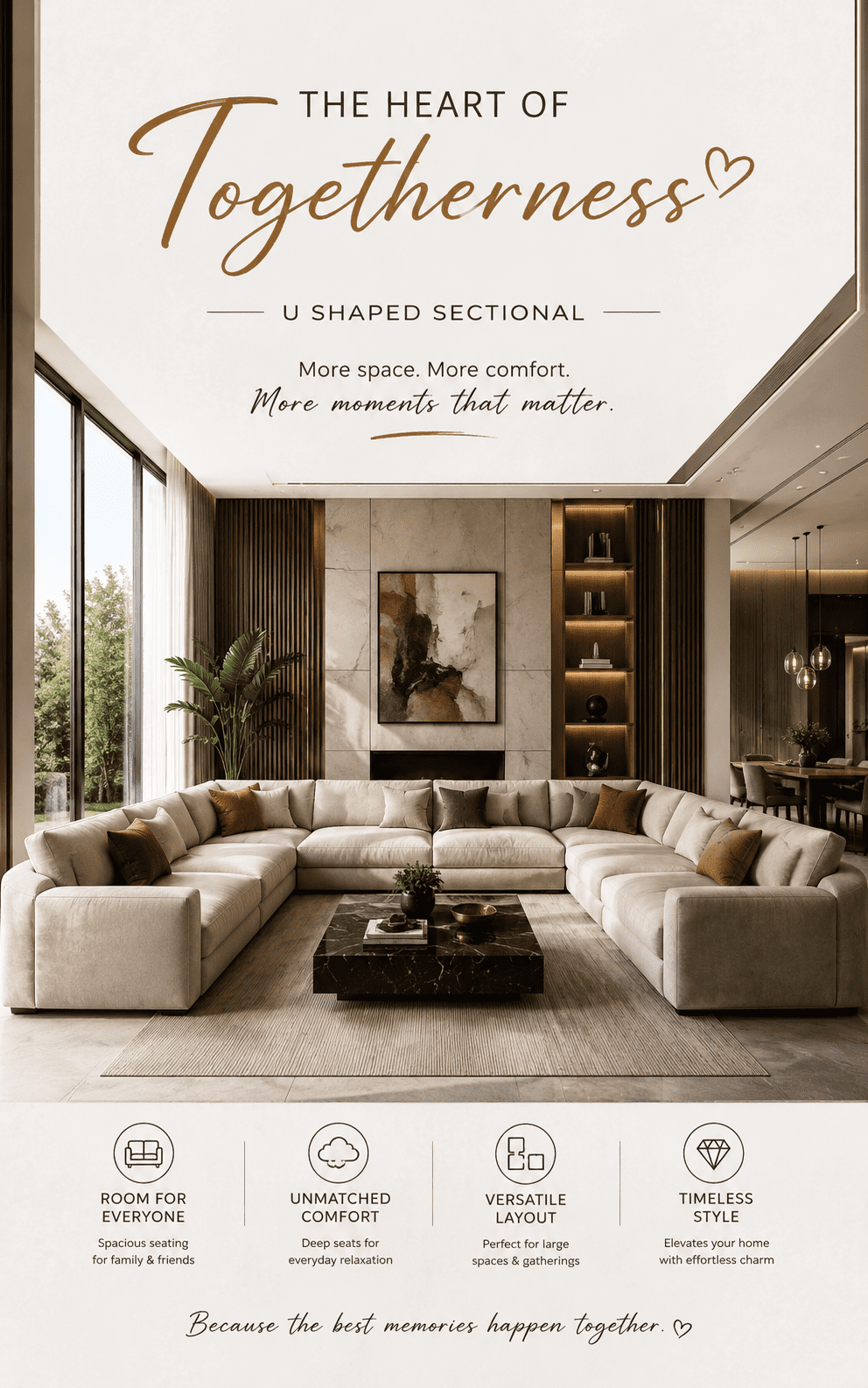
A U-shaped sectional is far more than a simple seating arrangement—it is the definitive architectural anchor of the modern living space. Merging expansive, conversational seating with refined, indulgent comfort, this classic silhouette transforms an open layout into a highly functional yet sophisticated retreat. Whether hosting large gatherings, gathering for family movie nights, or looking for a sprawling layout to unwind, a well-selected U-shaped sectional offers the ideal balance of warmth and high-end design.
In contemporary interior spaces, designers favor these layout configurations for their clean lines and zoning capabilities. Far from dominating a room clumsily, a properly scaled U-shaped design introduces structured, cozy focal points that define modern living. Here is our complete, designer-led guide to selecting, styling, and maintaining your perfect sectional.
01 — Definition
What Is a U-Shaped Sectional?
A U-shaped sectional is a large, cohesive multi-piece sofa arranged to form three distinct seating sides. Built with a central main sofa section flanked by matching chaises, extended corner seating, or terminal returns, it frames a room beautifully to offer an inherently social layout.
“Unlike traditional linear sofas or standard L-shaped configurations, the U-shaped sectional forms an enclosed, highly collaborative layout that acts as a natural room divider while optimizing seating capacity.”
This layout configuration offers exceptional interior benefits: it instantly increases seating capacity, defines pathways within open floor concepts, allows multiple people to stretch out simultaneously, and elevates simple rooms with structured symmetry.
Bohemian furniture give a fresh look to your interiors https://luxedecorehome.com/bohemian-furniture/
02 — The Benefits
Why U-Shaped Sectionals Lead Modern Trends
The continuous evolution toward open-plan architectural homes has amplified the popularity of the U-shaped layout. Modern living centers on versatile, high-traffic spaces where family gathering and elegant entertaining naturally overlap.
1. Unmatched Seating Capacity
For large families or active hosts, standard sofas can feel limiting. A well-proportioned U-shaped sectional easily accommodates six to ten individuals comfortably, without requiring the visual clutter of scattered accent armchairs.
2. Architectural Definition in Open Concepts
In large open-concept floor plans, mapping distinct areas is essential. The high, continuous back of a U-shaped configuration acts as a elegant half-wall, defining the transition between kitchen, dining, and living spaces without blocking natural light.
3. The Ultimate Lounge Experience
With dual chaises or matching corner returns, two people can fully stretch out horizontally at the same time—eliminating the typical battle for the comfortable end of the sofa.
03 — Space Planning
Optimal Room Layouts for Sectionals
Selecting the best physical position for your sectional determines the visual flow and functionality of your entire room.
Spacious Centered Layouts: In a grand living room, float the U-shaped sectional directly in the center of the room. This showcases the design from all angles, offering dynamic 360-degree walkways.
Media Room Configurations: Position the open end of the sectional directly facing your entertainment center, television, or fireplace. This aligns all sightlines, creating a cohesive, home-theater-style environment.
Corner Positioning: In cozy or transitional rooms, placing one of the structural corners of the sectional against adjacent walls maximizes floor space and opens up traffic flow.
To make your nights more memorable get some ideas from https://luxedecorehome.com/date-night-rooms/
04 — Buyer’s Guide
Choosing Your Perfect U-Shaped Sectional
Investing in a high-end sectional requires balancing precise physical dimensions with structural configuration.
1. Measure Twice, Order Once
Before purchasing, trace the outer perimeter of your intended sectional on the floor using painter’s tape. This simple trick allows you to visualize how the furniture impacts paths, walkways, and natural lighting in real life.
2. Selecting Your Configuration
- Symmetrical Layouts: Best for formal rooms where balanced aesthetics are highly desired.
- Chaise Ends: Features terminal chaises without high armrests, maintaining an open, airy visual.
- Modular Designs: Individual interlocking blocks that can be rearranged or expanded over time.
- Reclining Options: Integrated motorized footrests and adjustable headrests for personalized comfort.
05 — Textiles
Selecting the Ultimate Upholstery Material
Your fabric choice directly determines the lifespan, tactile feel, and daily resilience of your investment.
Premium Grain Leather
Leather sectionals exude an upscale, mid-century or modern appeal. Over time, premium leather develops a beautiful patina that adds charm and character to your space.
- Pros: Extremely easy to wipe clean, highly durable, and naturally repels dust and pet dander.
- Cons: High initial investment; can feel cool in winter and warm in summer.
High-Performance Synthetic Blends
Ideal for homes with high daily traffic, children, or pets, performance fabrics use treated fibers designed to repel liquids and resist stains.
- Pros: Excellent resistance to spilling and wear, cozy tactile feel, and budget-friendly options.
- Cons: Requires regular vacuuming to prevent dust buildup inside the woven fibers.
Luxe Velvet & Bouclé
For a highly tailored, editorial aesthetic, rich velvet and looped bouclé offer unmatched depth and texture.
- Pros: Exceptionally soft, highly photogenic, and visually luxurious.
- Cons: Requires careful cleaning and may show wear patterns in high-use areas over time.
06 — Palettes
Popular Color Swatches & Coordination
Your color palette dictates the mood of your living space. Select neutral, anchoring colors for large-scale sectionals, and introduce vibrant accents through throw pillows and blankets.
Neutrals (Gray, Beige, Cream): Provide a timeless foundation, allowing you to easily update your room’s accent colors as design trends shift.
Deep Statements (Charcoal, Navy, Forest Green): Ground large rooms beautifully, adding drama and contrast while naturally masking minor spots and lint.
07 — Styling
How to Style a U-Shaped Sectional Like a Professional
Because of its large size, a U-shaped sectional can look monolithic if not styled thoughtfully. Designers use layered textures and organic shapes to balance the structured outline.
1. Anchor With a Large Area Rug
A common mistake is using a rug that is too small, which can make your seating area look disconnected. Ensure your area rug is large enough to extend at least 12 to 18 inches beyond all outer edges of your sectional to ground the layout.
2. Introduce a Soft, Curved Coffee Table
Since U-shaped sectionals are highly angular, pair them with a round, oval, or organic-shaped wood or marble coffee table. This softens the lines and makes moving around the central space easier.
3. Layer Textures on Cushion Layouts
Avoid matching pillows. Instead, mix linen, velvet, chunky knit, and leather cushions in varying sizes (e.g., matching 22-inch base pillows with 20-inch patterned accents) to create visual depth and rich textures.
Explore expert furniture advice and living room design inspiration:
08 — Pitfalls
Common Mistakes to Avoid
Avoid these frequent spatial mistakes when sourcing and placing your sectional:
-
Disregarding Walkway Clearance: Placing a sectional too close to nearby walls blocks organic flow. Maintain at least 30 to 36 inches of open walking space.
-
Blocking Natural Light and Radiators: High-backed sectionals placed directly in front of large windows can block daylight and restrict heat circulation.
-
Using a Mismatched Coffee Table: Square or rectangular tables can block corner seats and limit legroom. Opt for curved styles instead.
-
Compromising on Frame Integrity: Settle only for kiln-dried hardwoods with double-doweled joinery to ensure your frame stands up to years of daily use.
09 — Q&A
Frequently Asked Questions
Can a U-shaped sectional work well in a small living room?
Yes. By choosing a compact, low-profile modular design with slim armrests and light-colored upholstery, you can maximize seating without overwhelming a smaller room.
How much clearance space do I need around my sectional?
For comfortable movement, leave a minimum of 30 to 36 inches of walkway space between the edges of your sectional and surrounding walls, doors, or fireplace hearths.
Which upholstery is best for families with pets?
Performance fabrics and distressed top-grain leather are the most practical choices. They offer exceptional durability, repel water, and are highly resistant to scratches and pet hair.
What is the difference between a modular and a fixed sectional?
Fixed sectionals are built as set configurations, while modular sectionals consist of individual interlocking pieces that you can rearrange or expand to fit your space over time.
Final Thoughts
A U-shaped sectional is a classic, comfort-focused investment that brings structure, warmth, and easy sophistication to modern homes. By prioritizing durable materials, correct spatial layout, and thoughtful styling, your sectional will serve as the inviting, beautiful centerpiece of your home for years to come.