
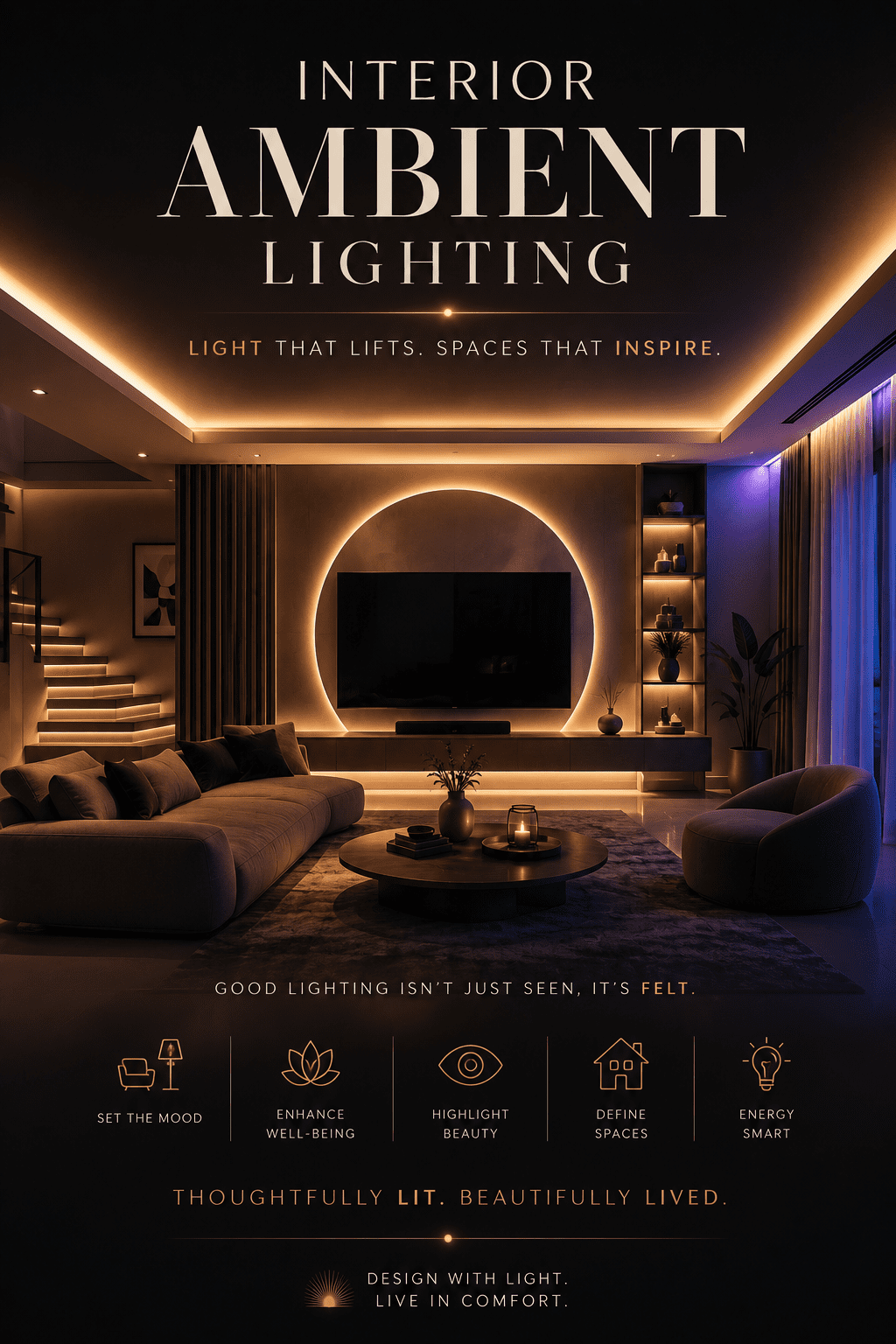
Interior ambient lighting stands as the ultimate cornerstone of successful residential design. More than a simple functional layout, it defines how we experience our living spaces, shapes our daily moods, and enhances comforting architectural lines. When expertly applied, ambient light blankets a room in a balanced, glare-free wash of illumination, instantly turning standard spaces into relaxing, custom sanctuaries.
Many homeowners frequently struggle with flat, uninspiring spaces simply because they treat illumination as an afterthought. Modern high-end styling views light as an active architectural element. By constructing a layered system of diffused ceiling fixtures, low-profile accent lines, and strategic lighting elements, you can elevate your interior finishes and create a cohesive style statement that functions beautifully day and night.
01 — Foundational Core
Deconstructing General Illumination
At its baseline, interior ambient lighting serves as the primary base layer of light within an indoor space. Unlike focused task setups meant for reading or intricate cooking, ambient sources are designed to distribute light evenly across a room, eliminating harsh shadows and softening the overall environment.
When general illumination is properly balanced with existing architectural features, it sets a comfortable baseline of visibility. This soft wash allows the human eye to navigate a room easily, creating a visually restful environment that reduces strain and emphasizes the chosen textures, paint pigments, and structural elements of the layout.
A thoughtful ambient setup doesn’t fight against the architecture; it embraces it. It interacts naturally with incoming daylight hours, softens the hard corners of minimal floor plans, and supplies an inviting background glow that frames high-end furnishings and curated decorative accents with flawless execution.
02 — Fixture Anatomy
Structural Fixture Classifications
Creating a professionally styled space requires choosing the right delivery system for your light. Different architectural layouts demand specific physical fixtures to achieve an ideal, seamless spread of illumination:
1. Architectural Cove & Drop-Ceiling LED Strips
Cove setups utilize hidden LED pathways tucked neatly inside ceiling drops, crown moldings, or custom wall recesses. This method bounces light upward against the ceiling before scattering it back down into the room, creating an incredibly soft, hotel-style architectural atmosphere.
2. Streamlined Recessed Downlights
Installed completely flush with the ceiling surface, modern recessed architectural pot lights offer clean, minimalist sightlines. They are excellent for providing functional baseline brightness across high-traffic zones like expansive kitchens, long hallways, and open-concept dining rooms without adding visual clutter.
Architectural cove lighting paired with clean recessed fixtures provides a soft, glare-free general glow.
3. Statement Pendants & Central Chandeliers
Serving as beautiful structural focal points during the day, central hanging fixtures anchor a room’s design layout. To maintain an ambient effect, select options with frosted glass globes or fabric drum diffusers that scatter light outward horizontally, rather than beaming it harshly downward.
Learn expert strategies for planning and layering lighting throughout your home:
03 — Spatial Application
Room-by-Room Ambient Layouts
Every residential room operates under different functional demands. As a result, your ambient styling approach must adapt to match the unique emotional and daily goals of each individual space:
The Living Room Sanctuary: As the social heart of the modern home, living rooms thrive on rich, multi-tiered flexibility. Avoid relying on a single overhead light source; instead, combine low-glare ceiling downlights with warm floor lamps and indirect accent ribbons.
For an advanced look at balancing your primary and secondary layers in this space, explore our guide on creating a balanced layered lighting living room environment.
The Restful Bedroom: Bedrooms demand an atmosphere of absolute comfort, peace, and restorative luxury. Prioritize hidden LED strips tucked behind upholstered headboard panels or underneath bed frames to construct a soft evening glow. Keep all bulb values fixed at an ultra-warm 2700K level to support your circadian rhythms.
Low-level bedroom lamps and glowing bathroom mirror backlights keep light levels soft, relaxing, and restful.
The Culinary Kitchen Hub: Kitchen configurations require a clever mix of function and style. Use evenly spaced recessed ceiling channels to establish a clean base layer of illumination, then introduce under-cabinet LED tracks to wash your countertops in soft, usable light that eliminates dark workspaces.
The Spa-Inspired Bathroom: Transform a simple bathroom into a luxurious personal retreat by moving away from intense overhead spotlights. Instead, implement high-CRI backlit vanity mirrors and dimmable waterproof niche lights that create a comforting, resort-style atmosphere for evening relaxation.
04 — Future Technical Design
2026 Trends & Smart Integration
Residential lighting design continues to evolve, merging cutting-edge technology with wellness-focused philosophies. Modern homes increasingly utilize adaptive smart systems that automatically align indoor environments with natural daily light shifts:
This shift toward tech-driven comfort has also popularized creative color-mapping strategies. Homeowners are expanding past simple white light bulbs to craft customizable, low-saturation accent palettes that change the architectural mood of their spaces instantly.
Curious about styling with soft, trending interior colors? Take a look at our specialized design manual on implementing an ambient lighting palette blush theme in your home.
05 — Material Science
Finishes & Material Texture Dynamics
The specific surfaces and materials you select for your lighting fixtures heavily dictate how light bounces and behaves throughout a room. Match your home’s structural finishes to complementary materials to maximize architectural depth:
| Fixture Material | Light Diffusion & Behavior | Recommended Styling Aesthetics |
|---|---|---|
| Matte Black Steel | Absorbs surrounding light rays, framing spaces with strong, crisp lines | Industrial, Raw Loft, Bold Contemporary |
| Brushed Champagne Gold | Reflects light with a rich, soft metallic warmth that feels high-end | Modern Luxury, Art Deco, Transitional Elegance |
| Frosted Opal Glass | Completely diffuses light output, eliminating intense, pinpoint glare | Mid-Century Modern, Minimalist, Japandi |
| Open-Grain Natural Wood | Softens light reflections while introducing organic, textured warmth | Scandinavian, Organic Modern, Biophilic Coastal |
By blending light-diffusing frosted elements with rich reflective metals, you generate a beautiful sense of balance. This ensures your light fixtures look like curated art pieces during daytime hours and provide exceptional, non-glaring illumination throughout the evening.
06 — Design Correction
Common Pitfalls to Avoid
Creating a balanced, welcoming atmosphere requires avoiding common layout mistakes that can quickly disrupt the flow of an otherwise beautiful room layout:
-
The Single Overhead Source Mistake: Relying entirely on a central ceiling fixture. This flattens your room’s dimensions and creates long, dark corner shadows. Always break your layout into multiple, layered light points.
-
Mismatched Color Temperatures: Combining cold daylight bulbs (5000K) and soft amber bulbs (2700K) in the same immediate area. This inconsistency creates a chaotic, visually jarring environment.
-
Overlighting and Glare: Installing high-wattage, unshielded bulbs that flood a room with clinical brightness. Remember that true ambient lighting should focus on soft diffusion rather than blinding intensity.
-
Forgetting In-Wall Dimmer Controls: Leaving light layouts on basic binary on/off switches. Without a reliable dimmer system, you lose the ability to shift the room’s atmosphere to match different times of day or occasions.
Thoughtful design adjustments—like swapping harsh bulbs for energy-efficient LEDs or placing low-profile floor lamps in forgotten corners—can instantly save a room from feeling uninviting.
For more detailed architectural definitions and expert spacing metrics, visit our comprehensive breakdown of ambient light definition principles.
FAQ
Frequently Asked Questions
What is the primary purpose of interior ambient lighting?
The primary purpose of ambient lighting is to provide a soft, even base layer of illumination across a room. It ensures safe, comfortable visibility and sets the overall mood without creating harsh glare or dark, unsettling shadows.
What bulb temperature is recommended for a relaxing home environment?
For intimate, relaxing areas like bedrooms and living rooms, a warm white color temperature between 2700K and 3000K is highly recommended. For functional zones like kitchens and bathrooms, a neutral white between 3500K and 4100K works best.
Why is relying on a single overhead ceiling fixture a mistake?
Relying on a single overhead fixture creates a flat, clinical look with harsh shadows down the walls. Professional interior design requires layered lighting—combining ambient, task, and accent sources to bring visual depth and warmth to a room.
Can smart lighting apps help save energy over time?
Yes. Modern smart LED setups allow you to set custom schedules, automatically dim outputs during evening hours, and turn off fixtures when rooms are empty, significantly reducing long-term household electricity costs.
A New Standard for Balanced Home Styling
Investing time in a well-planned interior ambient lighting strategy is one of the most effective ways to upgrade the comfort and look of your home. By moving away from single, harsh light sources and embracing layered, dimmable fixtures, you unlock a dynamic living environment that naturally adapts to your daily life. Focus on warm bulb temperatures, mix light-softening textures, and leverage modern smart controls to create an elegant, inviting haven you’ll love returning to for years to come.