
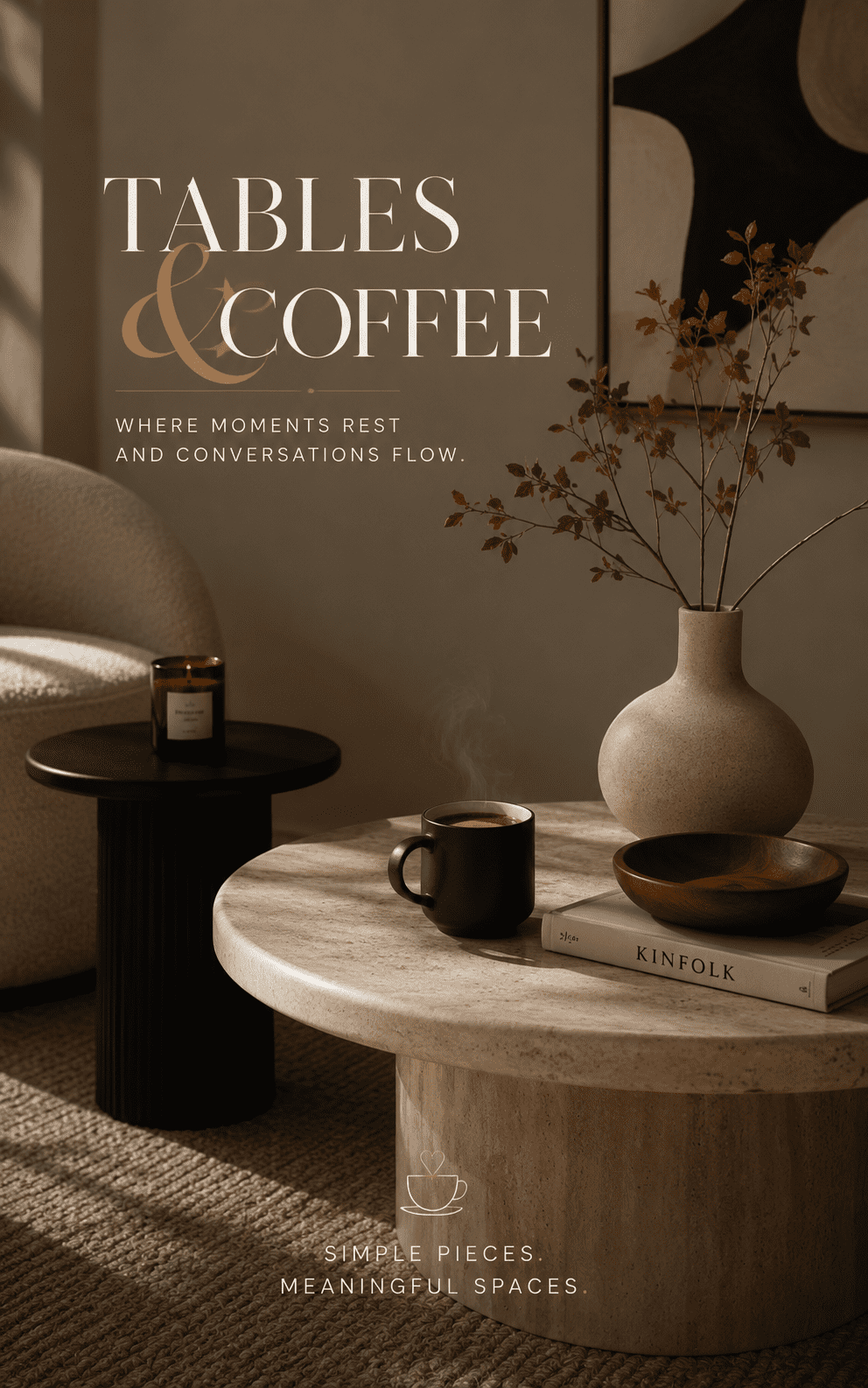
Tables are the quiet anchors of residential architecture. While upholstered sofas provide physical comfort and wall colors establish mood, it is the horizontal planes of our tables that organize human movement and structure daily living. From grand dining tables hosting evening gatherings to sculptural coffee tables centering our living spaces, the right choice of furniture balances physical function with design aesthetics.Tables and Coffee tables are unique and new ideas for all.
In contemporary home interiors, selecting a table is no longer a purely practical choice. Designers treat these pieces as key artistic opportunities—chances to introduce natural textures, explore rich wood grains, and showcase fine masonry. Whether your home reflects minimalist Japandi values, historic farmhouse charm, or the bold luxury of Italian marble, understanding how to select, scale, and style your tables is key to creating a cohesive, editorial look.
01 — Spatial Architecture
The Role of Visual Gravity in Design
In interior design, every room requires a focal point—a core element that draws the eye and anchors floating furniture. Without a table to center it, a living room seating arrangement can feel disjointed, with sofas and chairs facing each other across an empty void. A central table provides a sense of physical and visual gravity, grounding the layout.
By placing a table in a room, you define its purpose. A console table in an entryway signals transition, while a dining table establishes a zone for gathering. This spatial organization shapes how we move through our homes, guiding our steps and creating comfortable pathways.
“A room achieves visual balance when its horizontal planes reflect the scale and structure of its vertical boundaries.”
Beyond organizing layouts, tables allow us to layer textures within a space. They provide a contrast of hard surfaces against soft upholstery and rugs. For example, pairing a smooth marble coffee table with a textured boucle sofa creates a rich, balanced dynamic that elevates the entire room design.
02 — The Living Room Anchor
Understanding Coffee Table Fundamentals
The modern coffee table has come a long way from its historic origin as a tall tea table. Today’s living spaces favor lower, broader silhouettes that keep sightlines open and match the relaxed profile of contemporary sofas. A well-designed coffee table serves as both a practical surface and a canvas for curated styling.
When choosing a coffee table, balance is key. It needs to be durable enough for daily use while maintaining its aesthetic appeal. It must also match the scale of your seating, providing easy access from every seat without crowding the room.
03 — Functional Varieties
Table Typologies for Modern Homes
Each table style serves a unique purpose in your home’s layout. A well-balanced interior uses a variety of these typologies to create a functional and visually interesting space:
1. Coffee Tables
Typically measuring 16 to 18 inches high, these tables ground your primary seating area. They are designed to hold drinks, books, and decor, making them the functional center of the living room.
2. Side & End Tables
Slightly taller than coffee tables, these pieces sit next to sofas or armchairs. They hold task lighting, such as reading lamps, and keep everyday essentials within easy reach.
3. Dining Tables
The social heart of the home. These tables need to be highly durable and scaled to fit your room, providing comfortable seating for family and guests alike.
4. Console Tables
With their slim, narrow profiles, console tables are ideal for entryways, hallways, or positioned behind a floating sofa. They offer a place for key trays, table lamps, and artwork without taking up too much floor space.
5. Nesting Tables
A clever, space-saving choice for smaller rooms. These modular tables stack neatly together when not in use and can be pulled out to provide extra surface space when entertaining.
04 — The Materiality Masterclass
Material Selection & Textural Dialogue for tables and coffee tables
The material of your table determines its visual weight, durability, and style. Choosing a material is an opportunity to introduce contrast and touchable texture into your space:
Natural Stone & Marble
Marble and travertine tables bring a sense of luxury and timeless style to any room. White marble with distinct grey veining adds classic elegance, while beige travertine offers a warm, organic feel that grounds minimalist interiors.
Fine Hardwoods
Wood brings natural warmth and character to a home. Oak, walnut, and pine feature unique grain patterns that pair beautifully with neutral fabrics, making them a staple of Japandi, Scandinavian, and rustic spaces.
Travertine
Walnut
Calacatta
Aged Brass
Lime Wash
Glass & Acrylic
Glass tables are an excellent choice for smaller or darker rooms. Their transparent surfaces let light pass through, making the room feel larger while showcasing beautiful rugs underneath.
05 — Scale & Proportion
Scale, Balance, and Geometric Rules
Even the most beautiful table can look out of place if its proportions are wrong for the room. Interior designers rely on clear guidelines to ensure tables fit their surroundings comfortably:
The Proportional BlueprintFor a comfortable and balanced layout, follow these spatial guidelines:
• The Width Rule: Your coffee table should be between 1/2 and 2/3 the length of your sofa.
• The Clearance Rule: Keep 14 to 18 inches of space between the table and your seating for comfortable legroom.
• The Pathway Rule: Leave at least 30 inches of space between the table and other major furniture pieces, like media consoles or cabinets, to ensure easy movement.
Selecting the Right Shape for Your Room
Your room’s layout and traffic flow should guide your choice of table shape:
- Rectangular: Works beautifully with long, straight sofas or standard L-shaped sectionals, echoing their clean lines.
- Round: Ideal for smaller spaces or rooms with busy pathways, as the lack of sharp corners makes it easy to walk around.
- Square: Perfect for deep, symmetrical seating arrangements or large U-shaped sectionals, creating a strong central focus.
- Organic Shapes: Free-form stone or wood tables soften angular rooms, bringing a touch of nature indoors.
06 — Design Curations
Curated Design Recipes
Creating a cohesive look is all about how you pair different textures and finishes. Here are three classic design styles to inspire your table choices:
The Luxe Editorial
Pair a rich, veined white marble coffee table with a soft velvet sofa in dark charcoal or emerald green. Add brushed brass side tables to introduce warmth and subtle shine, creating a sophisticated, high-end look.
The Organic Japandi
Combine a low-profile travertine table with a linen sofa in ivory or soft sand. Integrate accent pieces made of light, raw oak to bring in natural textures and establish a serene, peaceful atmosphere.
The Industrial Loft
Contrast a heavy, reclaimed wood coffee table featuring black steel legs with a leather sofa. Complete the look with concrete-finished side tables and a metal console table to highlight clean, structured lines.
Visit the link https://luxedecorehome.com/american-signature-furniture/ to get innovative ideas about American signature furniture.
07 — Styling Pitfalls
Common Layout Mistakes to Avoid
When arranging and styling your tables, simple mistakes can disrupt the flow of your room. Keep these common pitfalls in mind:
-
The Empty Center: Leaving a coffee table completely bare can make a room feel cold and unfinished. Arrange a few simple items, like a book and a candle, to make the space feel inviting.
-
Overcrowded Surfaces: Covering your table with too many decorative items creates visual clutter. Leave some open space to keep the look clean and functional.
-
Mismatched Heights: Placing a side table that is much taller or shorter than the arm of your sofa looks unbalanced and makes it hard to use. Aim to match heights as closely as possible.
-
Ignoring Floor Underlays: Placing a dark wood table directly on matching dark wood floors can make the room feel heavy. Use a light, textured rug between the floor and the table to create contrast.
08 — Care & Longevity
Care, Protection, and Conservation
Fine furniture is an investment that can last for generations with the right care. Each material requires specific attention to keep it looking its best:
Stone & Marble Care
Natural stone is porous and prone to staining. Clean spills immediately with a soft cloth, and always use coasters under glasses and mugs. Clean with a damp cloth and mild soap, avoiding harsh chemicals or acidic cleaners. Applying a stone sealer once a year helps protect the finish from moisture.
Timber Conservation
Protect wood tables from direct heat and sunlight, which can dry out the wood and cause cracking. Dust regularly with a dry microfiber cloth, and polish with natural beeswax every few months to keep the wood nourished and beautiful.
Glass & Metal Care
Dust metal frames with a soft, dry cloth to prevent rust, and avoid using abrasive scrubbers that can scratch the finish. Use a gentle, ammonia-free cleaner on glass surfaces to prevent streaking and maintain a crystal-clear look.
Explore expert decorating tips and furniture inspiration for living rooms:
09 — Common Queries
Frequently Asked Questions
How high should a coffee table be in relation to a sofa?
Your coffee table height should be level with or 1 to 2 inches lower than the top of your sofa’s seat cushions. This keeps the sightlines uninterrupted and ensures a comfortable, natural reach.
What is the standard clearance space required around a coffee table?
The ideal clearance distance between the edge of the coffee table and the surrounding seating (sofa, armchairs) is 14 to 18 inches. This allows for comfortable legroom while keeping the table surface within arm’s reach.
Which coffee table shape is best for small living spaces?
Round or oval coffee tables work best in smaller spaces because they lack sharp corners, easing foot traffic flow and preventing the room from feeling visually crowded.
How do you style a luxury marble coffee table without cluttering it?
Style a marble table using the rule of threes: place a low decorative tray to contain smaller items, stack two or three large art books to introduce height, and finish with an organic touch like fresh botanicals or a sculptural ceramic bowl.
How can I protect a porous travertine or marble coffee table from stains?
Apply a high-quality penetrating stone sealer annually, always use coasters under beverages, avoid acidic cleaners, and wipe up liquid spills immediately to prevent etching.