
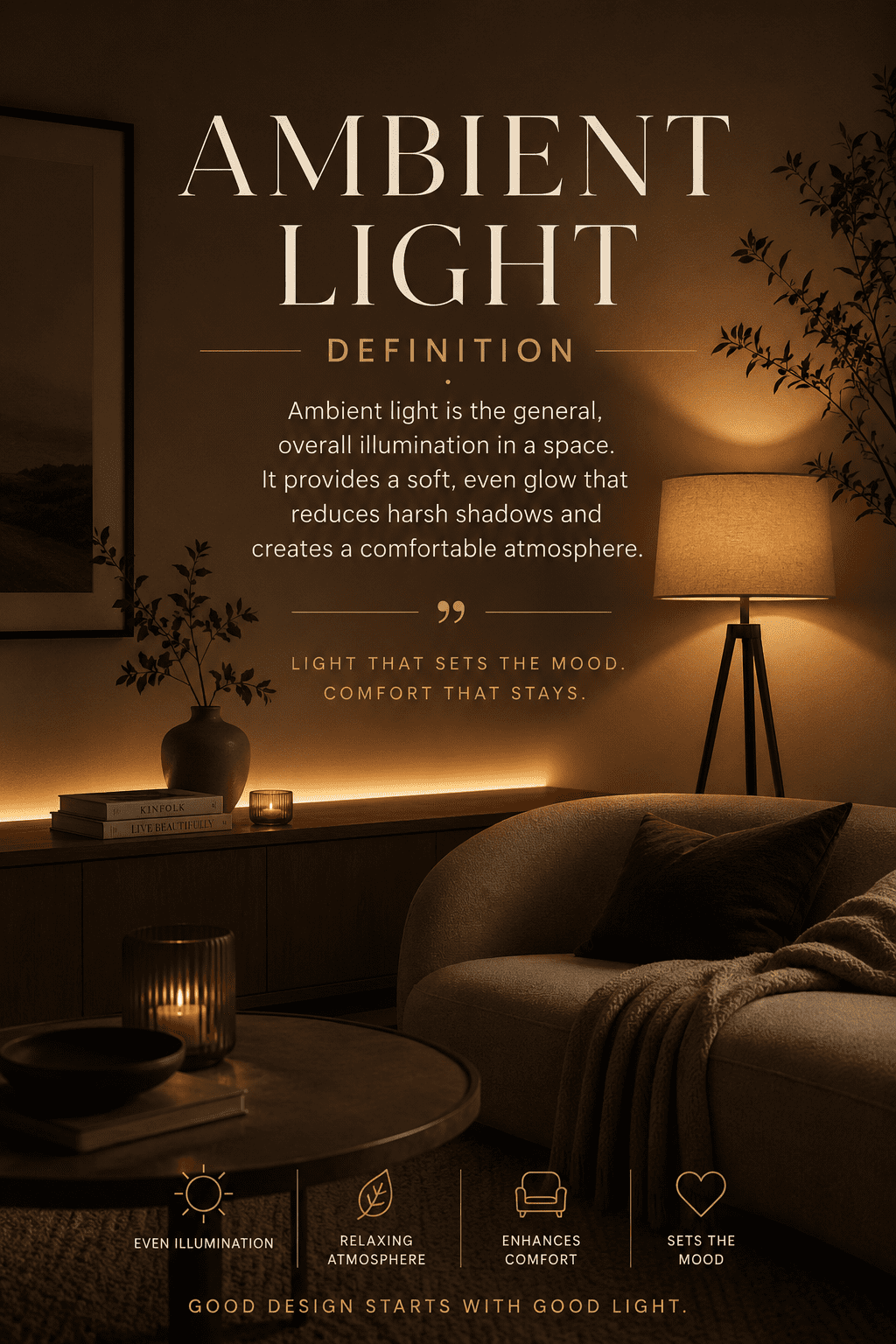
Ambient lighting is the quiet masterpiece of high-end interior design. While architectural accents and statement furniture often steal the initial spotlight, it is the fundamental layer of light that quietly determines how a room feels, breathes, and functions. In elite interior design circles, lighting is no longer treated as a simple tool for basic visibility—it is curated as an invisible texture that molds atmosphere, comfort, and architectural elegance.
Many homeowners unknowingly treat lighting as an afterthought, installing a single bright overhead fixture and wondering why their space feels sterile or flat. True Pinterest-inspired luxury relies heavily on structural, layered techniques. By understanding how to balance shadows, choosing the proper warmth, and choosing fixtures that project light symmetrically, you can easily shift your spaces from a cold showroom vibe to an ultra-inviting, high-end sanctuary.
01 — Core Concept
What Is Ambient Light? The Architectural Canvas
At its baseline foundation, ambient light refers to the global, overarching illumination within an interior space. It acts as the primary canvas upon which all other layers of light are painted. Its main functional objective is simple yet precise: to fill an entire room with an even, comfortable glow, enabling safe movement and general visibility without relying on glaring hot spots or casting heavy, dramatic shadows.
Unlike highly focused task lighting (which spotlights a specific workspace like a marble kitchen island or a velvet reading chair), ambient lighting diffuses effortlessly across surfaces. It forms the core base layer of a comprehensive, professional lighting plan.For more interior styling and modern decorative ideas, head to this link.(https://luxedecorehome.com/ambient-room-lighting/)
This foundational glow can be sourced organically or artificially. During peak daytime hours, natural sunlight filtering through sheer linen curtains offers the ultimate organic ambient wash. As evening approaches, this responsibility transitions to strategically placed structural fixtures: recessed ceiling canisters, stately modern chandeliers, hidden architectural cove strips, and beautifully scaled floor lamps.
02 — The Value Pillar
Why Ambient Lighting Matters in Luxury Home Décor
Lighting is the definitive element that binds color palettes, textile selections, and spatial flow together. You can invest in rare marble tabletops and plush custom velvet seating, but under poor, cold illumination, those high-end selections will appear muted, drained, or entirely flat.
Thoughtfully configured illumination softens the perimeter walls of a room, creating a striking optical illusion that expands smaller floor plans. By eliminating dark, neglected corners, light coaxes the human eye into registering the space as grand, cohesive, and remarkably airy.Love this aesthetic? Visit this link (https://luxedecorehome.com/bedroom-ambient-lighting-reddit/) for more decorative ideas.
“Light is the invisible furniture of a home. It has the unparalleled power to alter the structural scale of a room and instantly elevate everyday elements into objects of high-end luxury.”
Beyond pure spatial architecture, there is a deep physiological component at play. Harsh, direct light triggers subtle stress responses and immediate eye fatigue. Soft, beautifully balanced ambient lighting works in harmony with human circadian rhythms, encouraging immediate relaxation, lowering ambient stress levels, and making communal spaces feel genuinely comforting for family and guests alike.
03 — Fixture Anatomy
The Pillars of Architectural Ambient Fixtures
Achieving a perfectly balanced editorial look requires utilizing specific styles of lighting fixtures. Each selection serves a unique structural role in dispersing light across your home:
1. Ceiling-Mounted Statements
Serving as the anchor of traditional room layouts, ceiling fixtures project light outward across expansive radiuses. Sculptural semi-flush mounts, classic pendants, and grand chandeliers drop down from the highest point of the room, using the ceiling surface itself to bounce and soften illumination across the entire layout below.
2. Recessed Minimalist Canisters
Often referred to by architects as architectural can lights, recessed lighting is installed flush inside the ceiling matrix. This keeps sightlines clean and unobstructed, making it a favorite for modern, minimalist home layouts. When configured in a precise, geometric grid, recessed cans distribute an exceptionally uniform blanket of light over vast areas.
For an elevated look, pair modern recessed lighting with architectural cove lighting to bounce a soft, cloud-like glow off the ceiling plane.Your dream home starts here. Visit this link (https://luxedecorehome.com/ambient-light-lamp/) for more decorative ideas.
Architectural cove lighting paired with clean, recessed ceiling canisters provides an elegant, shadow-free foundation.
3. Hidden LED Strip Components
The darling of contemporary Pinterest inspiration, flexible linear LED strips unlock the magic of indirect lighting. By hiding these low-profile strips out of direct line of sight—such as deep within ceiling drop steps, underneath bespoke floating vanities, behind headboard panels, or inside custom built-in bookshelves—you create a stunning, floating optical effect that adds incredible architectural intrigue.
04 — Spatial Curation
Room-by-Room Ambient Design Strategy
Every individual room within an elegant home demands its own targeted, highly tailored lighting strategy based on functionality and mood:
The Living Room: The Multi-Layered Sanctuary
As the main hub for entertaining and daily relaxation, the living room requires a highly flexible strategy. Relying on a single overhead source can flatten the design. Instead, blend the structural overhead grid with low-level decorative accents like large ceramic table lamps and graceful arc floor lamps nestled into reading nooks.
Combining overhead architecture with low-level lamps creates a luxurious, multi-dimensional living area.
The Bedroom: Intimate Hotel-Style Luxury
Bedrooms must remain serene, calming sanctuaries designed to promote deep rest. Avoid harsh, exposed downlights directly over the head of the bed, as this causes immediate eye strain. Instead, opt for hidden LED accent strips behind floating wood headboards, or mount soft fabric wall sconces that cast a gentle, upward wash along the walls.
Hidden LED strip integrations provide a soothing, indirect glow perfect for a high-end bedroom aesthetic.
The Culinary Zone & The Bathroom Oasis
In kitchens and bathrooms, ambient lighting must cleanly balance out functional task zones. In the kitchen, couple your general recessed cans with gorgeous pendant lights over marble islands, then run under-cabinet LED ribbons to erase work surface shadows. In the bathroom, elevate the design by introducing backlit LED mirrors and moisture-resistant flush ceiling mounts to evoke a high-end, day-spa vibe.
Learn more about expert home lighting principles from Architectural Digest:
05 — Technical Mastery
Mastering Color Temperature & Kelvin Scales
You can purchase the most exquisite designer fixtures in the world, but choosing the wrong bulb color temperature will completely ruin the vibe. Color temperature is measured scientifically via the Kelvin scale (K), and navigating it correctly is vital for your home’s aesthetic consistency.
Designer Insight: The Kelvin Scale RuleAlways keep your living spaces, dining areas, and bedrooms strictly mapped between 2700K and 3000K. This golden window delivers the warm, candle-like white light required to make spaces feel inviting, safe, and truly luxurious. Save cooler kelvin ranges exclusively for functional utility areas.
Let’s break down how different color temperatures behave across interior spaces:
- Warm White (2700K – 3000K): Casts an amber, rich glow. Imbues spaces with an intimate, cozy, and deeply relaxing energy. Perfect for standard living rooms, dens, and bedrooms.
- Neutral White (3500K – 4100K): Clean, crisp, and completely balanced. It does not lean heavily into yellow or blue tones, making it fantastic for hyper-functional kitchens, laundry rooms, and grooming vanities.
- Cool daylight (5000K+): Brisk, highly clinical, and deeply energetic. Typically restricted to high-production commercial spaces, garage workshops, or medical facilities; avoid using this in residential living spaces.
06 — The Core Matrix
How to Layer Ambient, Task, and Accent Light
High-end interior spaces never rely on a single source of light. To mimic the depth found in professional design magazines, you must layer three distinct classifications of illumination across each room.
Think of it as a three-dimensional design grid: ambient light sets your overall canvas baseline, task light brings focus to specific functional zones, and accent light draws the eye to beautiful artwork or unique architectural details.
| Lighting Classification | Primary Functional Purpose | Ideal Fixture Examples |
|---|---|---|
| Ambient Lighting | Global illumination, setting the base mood, balancing room shadows | Recessed cans, chandeliers, cove LEDs, floor lamps |
| Task Lighting | Direct, glare-free illumination tailored for focused activities | Under-cabinet strips, desk lamps, reading sconces |
| Accent Lighting | Visual drama, spotlighting focal art, or defining architecture | Directional track spots, picture lights, in-cabinet pucks |
To control this layered matrix seamlessly, always install high-quality dimmers on every circuit. Dimmers grant you complete control over your home’s lighting levels, allowing you to easily adjust from a bright, functional morning setup to a soft, romantic evening ambiance.
07 — Design Pitfalls
Common Ambient Lighting Mistakes to Avoid
Even seasoned home decorators fall prey to standard lighting errors. Protect your home’s design by watching out for these common layout mistakes:
-
The “Lone Ceiling Fixture” Trap: Relying on a single central flush mount. This flattens the room’s dimensional perspective, casts harsh shadows beneath your eyes, and makes spaces feel incredibly uninviting.
-
Kelvin Discontinuity: Mixing completely different color temperatures within the same room layout. Pairing a cool 5000K bulb with a cozy 2700K lamp creates an unappealing visual clash that disrupts the flow of the design.
-
Ignoring Dimmer Control: Wiring your lights to simple on/off switches. Without dimmers, you lose the ability to soften the light levels as day turns to night, preventing you from setting a relaxed evening mood.
-
Improper Fixture Placement: Installing recessed downlights in rigid rows without checking your furniture arrangement. This can accidentally position lights directly above seating positions, creating uncomfortable overhead glare.
FAQ
Frequently Asked Questions
What is the clear interior design definition of ambient light?
Ambient light is the general foundation of light within an interior space, designed to provide uniform, balanced illumination. It creates comfortable base visibility throughout the layout without relying on localized, intense glare points.
Can hidden LED strip lighting be considered a true ambient source?
Yes. When high-output linear LED strips are hidden away inside ceiling drops or behind custom architectural valances, they bounce a beautifully soft, indirect glow off major surfaces. This acts as an exceptional ambient light layer.
How do I correctly choose between 2700K and 3000K bulbs for my living spaces?
A 2700K bulb provides a noticeably warmer, traditional look that beautifully complements classic dark woods, deep velvets, and rich marble. A 3000K selection offers a slightly crisper, cleaner white profile that works perfectly with contemporary, bright minimalist spaces.
Why do interior designers heavily prioritize dimmers for ambient setups?
Dimmers let you control the brightness levels to match natural shifts in daylight. This flexibility lets you instantly change the atmosphere of a room from a bright, active space to a relaxed, cozy evening sanctuary.
The Last Word on Elevated Ambient Design
Mastering ambient lighting is the ultimate secret to unlocking a truly warm, sophisticated, and editorial-worthy home. It serves as the vital foundation for all your design choices, turning ordinary rooms into inviting, stylized spaces. By moving away from flat, single-source lighting and embracing a layered approach with warm color temperatures, dimmers, and thoughtful fixture placement, you can effortlessly elevate your home’s daily atmosphere. Treat light as a core design material, and watch your spaces come alive with comfort and timeless luxury.