

Luxury interior lighting ideas can completely transform the look of your home. The right lighting not only improves visibility but also adds elegance and depth to your space. Today, the trend has shifted toward “Quiet Luxury”—an approach where lighting is deeply integrated, sculptural, and atmospheric. This ultimate guide will walk you through 10 designer secrets for achieving a stylish, residential lighting design that makes your home feel like a curated 5-star sanctuary.
Lighting Secret 01
Beyond Functional: Lighting as Art and Sculpture
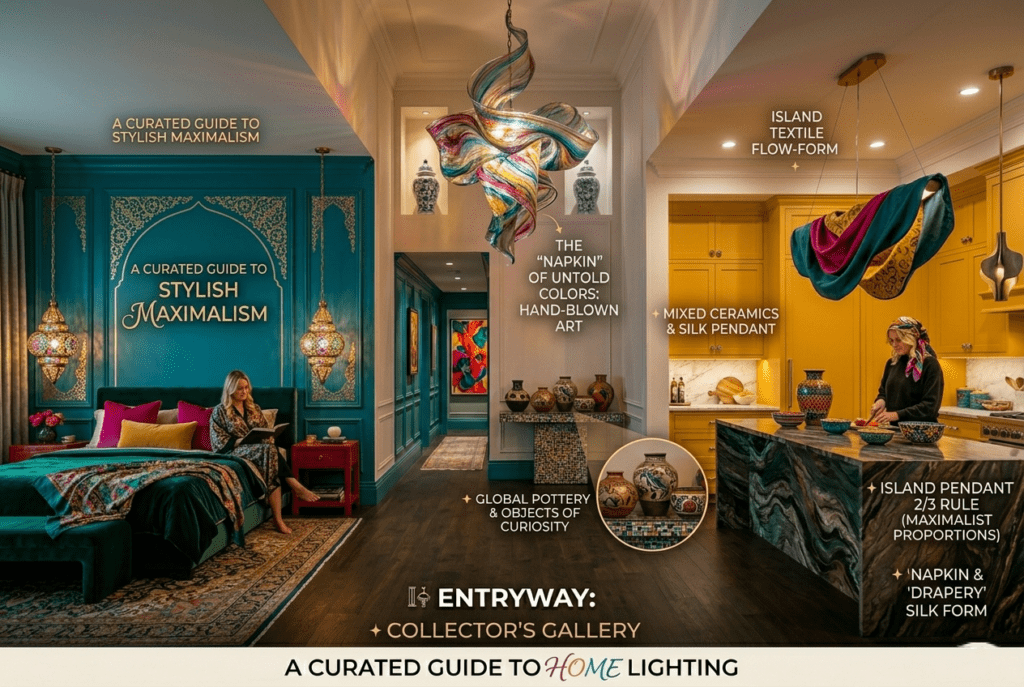
The first rule of a stylish interior lighting plan is to view your fixtures as art. Modern designs feature sculptural pieces that define a room’s character even when the power is off. Whether it’s a hand-blown glass pendant or a brutalist brass chandelier, your main fixture shouldn’t just illuminate; it should inspire.
Organic forms—fixtures that appear to flow like fabric—bring a softer dynamic to interiors. These organic silhouettes break the rigidity of modern architecture and introduce a sense of lightness and movement to your space.
When selecting a statement chandelier, follow the 2/3 Rule. For a dining area, the fixture should be roughly two-thirds the width of the table to ensure proportional harmony without overwhelming the space.
Key Sculptural Elements:
Lighting Secret 02
Mastering the Tri-Layering Methodology

A single overhead light can make an expensive home look flat and uninspired. Every professional residential lighting design guide emphasizes the importance of layering.
Layer 1 — Ambient: This is your foundation. Think invisible LED coves, recessed architectural downlights, or a large floor lamp. Its job is to provide safe, general movement light.
Layer 2 — Task: Focused and practical. A sleek reading sconce beside a light grey sofa or a directional pendant over a kitchen island.
Layer 3 — Accent: This layer adds character. This includes picture lights for your art, LED strips inside shelving, and small “sparkle” lights that draw the eye toward architectural details like marble moldings.
The Secret Ratio: 50% Ambient, 30% Task, 20% Accent. Use your accent lighting to create “pools of light” that add biological comfort and architectural depth.
Lighting Secret 03
Choosing the Best Indoor Lighting: The Kelvin Gold Standard
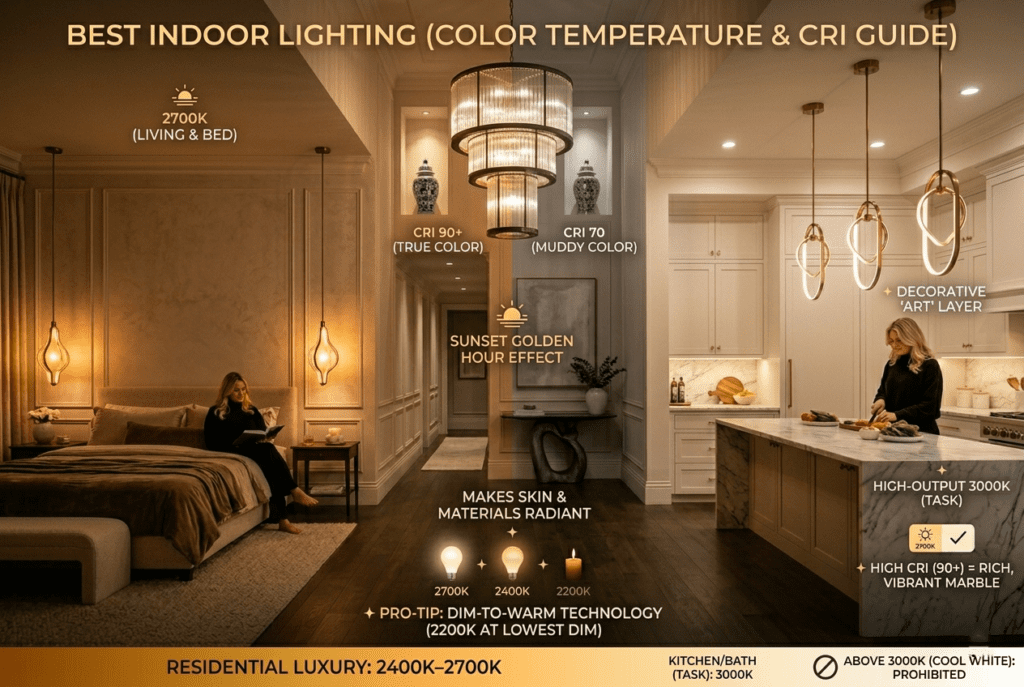
The “Best indoor lighting” is not just about the fixture; it is about the color temperature. In luxury design, anything above 3000K (cool white) is generally avoided in living areas as it can create a clinical atmosphere.
For a high-end residential feel, stick to the 2400K–2700K range. This “Incandescent Warm” tone replicates the golden hour of sunset, making skin tones look radiant and materials look rich.
Furthermore, look for bulbs with a High CRI (90+). Color Rendering Index (CRI) measures how accurately a light source reveals the true colors of your decor. Lower CRI bulbs can make high-end materials look dull.
Invest in “Dim-to-Warm” technology. These LEDs actually shift to a warmer, more amber tone (2200K) as you dim them, perfectly mimicking traditional candle-lit environments.
What to Look For:
Lighting Secret 04
Architectural Integration: The “Invisible” Glow
One of the most powerful lighting effects in interior design is the use of “Invisible” sources. This is where you see the light, but not the bulb.
Place LED strips in “Coves” (the gap between the wall and a dropped ceiling) or behind “Shadow Gaps” near baseboards. This creates an ethereal halo effect that makes furniture appear to hover. In high-end design, we use this to highlight expensive materials—grazing light across a textured stone wall or a marble backsplash reveals beautiful details that direct overhead light would flatten.
Modern Glow Locations:
Lighting Secret 05
Lighting for High-End Textures: Marble & Wood
Lighting high-end textures requires a delicate balance of angle and diffusion. Direct overhead downlighting is often too harsh on polished marble surfaces, resulting in glare that distracts from the natural veining.
To showcase premium textures like Calacatta marble, fluted plaster, or rich walnut panels, utilize grazing and washing techniques. Placing linear LED sources parallel to the texture highlights its depth and grain, turning structural surfaces into gallery-worthy features.
For highly polished surfaces like polished marble, avoid direct spotlighting. Opt instead for diffused, indirect ambient lighting to reduce harsh reflections while illuminating the stone’s inner depth.
Lighting Secret 06
Types of Lighting in the Living Room
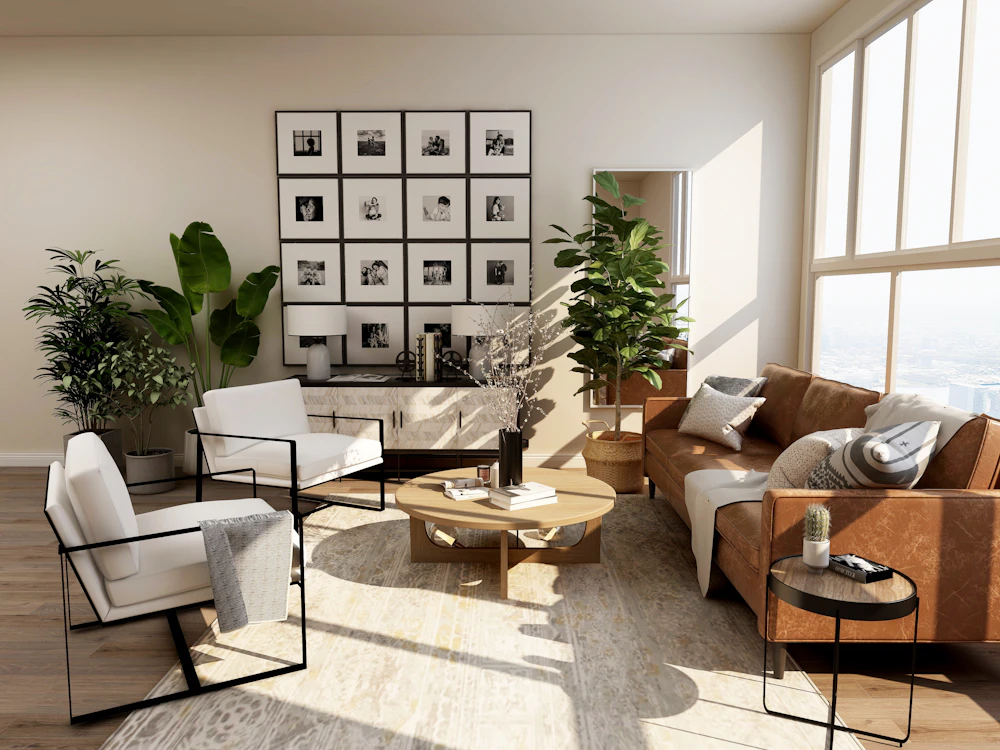
The living room is the most versatile space in a home, and its lighting must follow suit. When considering the types of lighting in living room design, think about “Scenes.”
For a “Movie Night” scene, your accent lights (shelf LEDs and wall grazing) should be the only things active at 10% brightness. For a “Social Evening,” your sculptural chandelier should be at 40%, paired with warm table lamps nearby. This level of control is what defines a luxury home.
- Symmetry: Place matching table lamps at both ends of your sofa for a polished look.
- Visual Weight: Ensure your floor lamps have substantial bases (marble or heavy ceramic) to anchor the room.
Lighting Secret 07
Small Space Luxury: Transforming Apartment Living
You don’t need a mansion to use a luxury interior lighting guide. In fact, lighting is the most effective tool for making compact spaces look vast. In small apartments, use “Vertical Uplighting.” By pointing light toward the ceiling from a floor lamp or a small uplighter behind a plant, you draw the eye upward, creating the illusion of height.
Avoid cluttering surfaces with many small lamps. Instead, invest in one large, impactful piece that serves as a focal point. Quality over quantity remains a cornerstone of modern luxury.
Lighting Secret 08
The Magic of “Dim-to-Warm” and Smart Tech
Luxury lighting relies heavily on transition. Integrating a smart control system allows you to pre-program lighting scenes that automatically transition based on the time of day.
Utilizing dim-to-warm technology ensures that as the light intensity drops, the color temperature automatically shifts toward a warmer, candle-like glow (2200K). This biological shift mimics the setting sun and encourages relaxation before sleep.
Lighting Secret 09
Human-Centric Lighting for Wellness
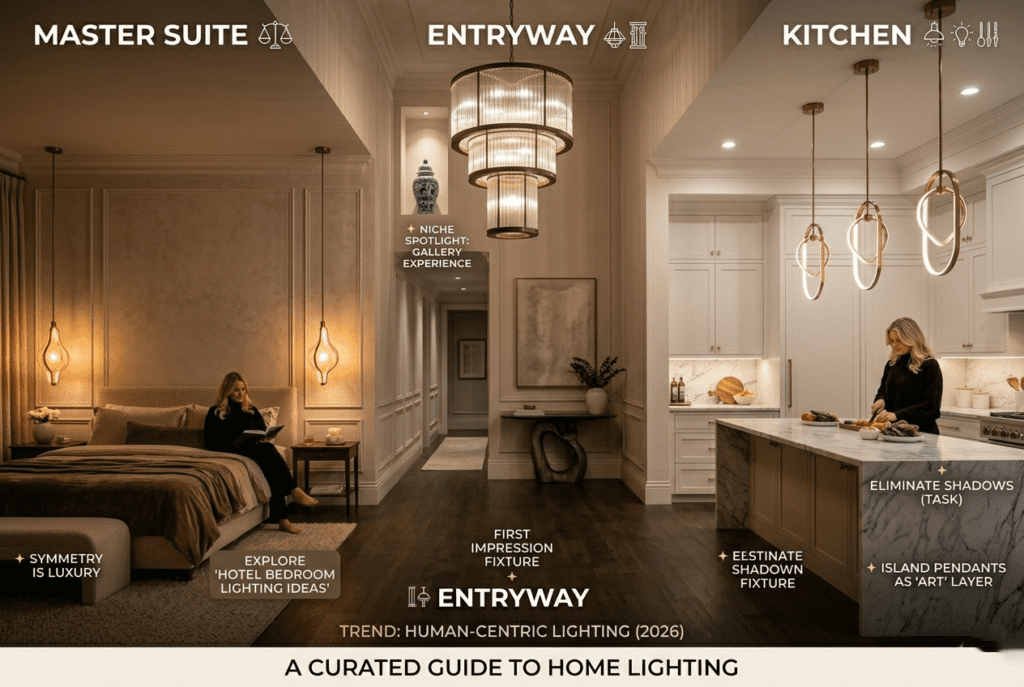
Human-Centric Lighting (HCL) aligns your home’s artificial light with your natural circadian rhythm. By utilizing tunable white fixtures, you can bring the health benefits of natural sunlight indoors.
During morning hours, cooler blue-enriched light (around 4000K to 5000K) can help promote focus and alertness. As evening approaches, the system shifts gradually down to warm, amber tones (2700K and lower), signaling your brain to prepare for rest.
Lighting Secret 10
Curated Gallery Niche Spotlights
True luxury design uses shadow as effectively as light. Niche lighting, where spotlights are focused on singular art pieces, sculptures, or floral arrangements, creates pockets of dramatic focus.
Instead of flooding the entire room, direct light precisely using low-voltage, narrow-beam spotlights. This creates soft shadows and a high-end gallery experience inside transition spaces and hallways.
The Final Check
The 10-Point Luxury Lighting Checklist
☐ Choose a sculptural hero fixture that acts as art.
☐ Layer Ambient, Task, and Accent sources in all main rooms.
☐ Standardize your bulbs to a warm 2700K temperature.
☐ Ensure a High CRI (90+) for all visible light sources.
☐ Install dimmer switches or smart controls everywhere.
☐ Use LED strips to create an “Invisible” architectural glow.
☐ Address all dark corners with lamps or plant-uplighting.
☐ Position table lamps at seated eye level (approx. 60cm).
☐ Avoid visible bulbs; prioritize diffusion and indirect light.
☐ Create “Scenes” to adapt the lighting to your mood.
Common Errors
Luxury Lighting Mistakes to Avoid
-
Using “Cool White” in Social Zones. It can detract from the warm atmosphere and make high-end finishes look flat.
-
Ignoring Interior Shadows. A room that is evenly lit everywhere feels flat and commercial. Contrast adds luxury.
-
Selecting Tiny Fixtures. Undersized chandeliers make a room feel cramped. Go larger for a confident, balanced look.
-
Visible LED “Dots.” Exposed LED strips can feel unpolished. Always use a diffuser profile for a smooth, continuous band of light.
Frequently Asked
Residential Lighting FAQ
What is the best lighting for a house to look expensive?
The best lighting for a house to look expensive is layered lighting that combines warm ambient glow (2700K), focused task lighting, and subtle architectural accent lighting. Avoiding single overhead sources and using high-CRI bulbs is essential.
How do lighting effects in interior design impact the mood?
Lighting effects like wall washing, silhouetting, and grazing add three-dimensional depth and drama. Soft, indirect light promotes relaxation, while crisp, focused light creates energy and highlights luxury textures like marble and wood.
What are the common types of lighting in living room design?
The common types include ambient (chandeliers or coves), task (reading lamps), and accent (picture lights or LED shelf strips). A luxury living room should integrate all three to create a ‘Quiet Luxury’ atmosphere.
Why is a residential lighting design guide important?
A residential lighting design guide provides a roadmap for balancing functionality with aesthetics. It ensures that lighting complements the architecture, enhances the perceived value of materials, and supports the wellness of the inhabitants.
Final Thoughts: The Ultimate Luxury Experience
Achieving a 5-star look isn’t about the quantity of light; it’s about the quality and control. By following this residential lighting design guide, you transition from merely lighting a room to designing an atmosphere.
Start by auditing your bulb temperatures, then introduce the three layers of light. Remember: in luxury interiors, what you choose not to light is just as important as what you do.