
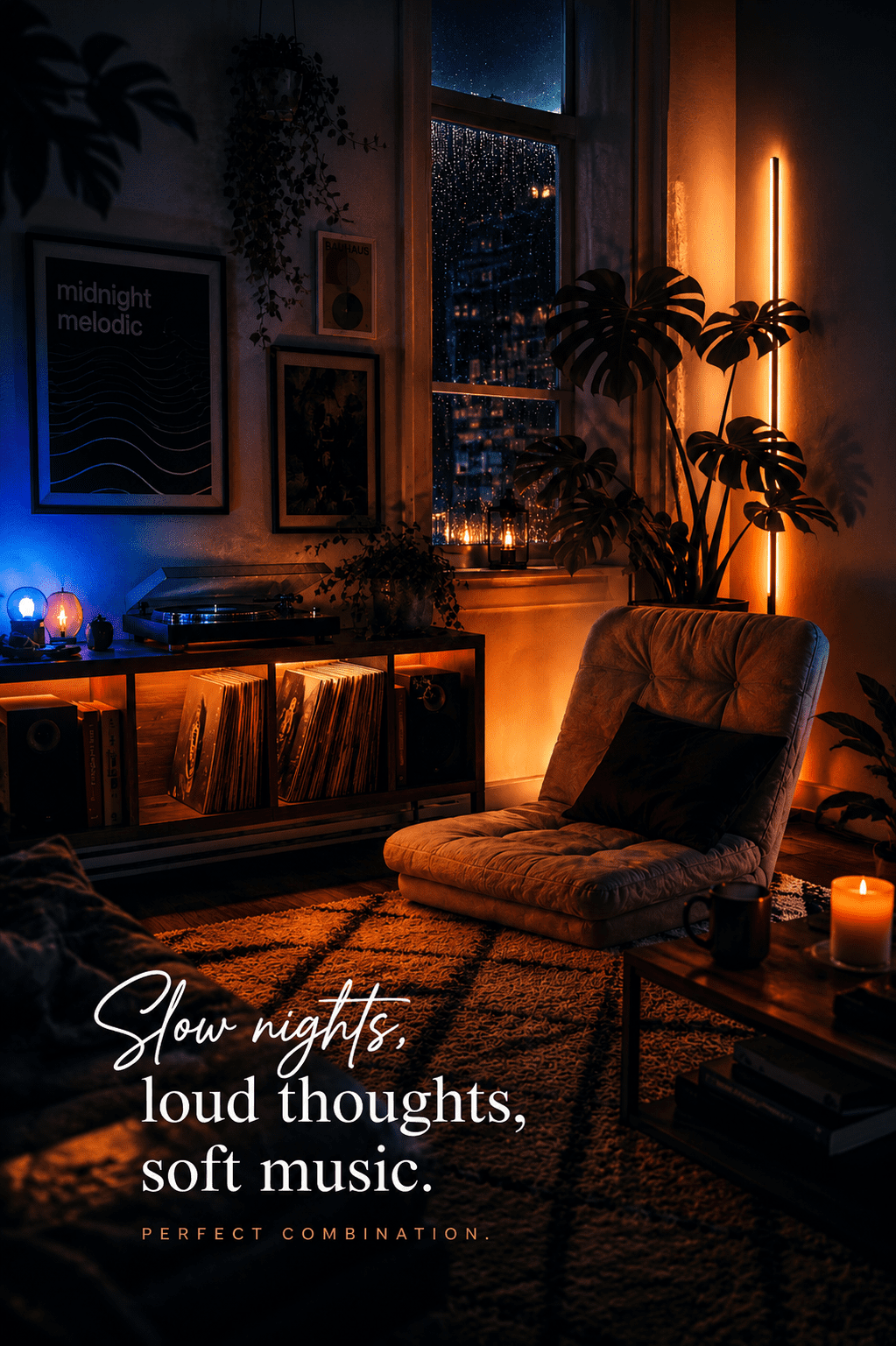
Lighting does more than brighten a room; it defines its soul. A well-executed ambient room lighting strategy transforms cold, flat spaces into warm, functional sanctuaries. By layering light correctly, you can highlight the rich textures of your marble coffee table decor and create a home that feels both balanced and professionally designed. In this comprehensive guide, we will step beyond basic illumination into the sophisticated art of residential lighting curation.
01 — The Foundation
What Is Ambient Room Lighting?
Ambient lighting acts as the canvas for your entire interior design. It is the primary, overarching layer of light that establishes the baseline visibility in a room. Rather than pointing sharply at a specific object or workspace, ambient light washes over walls, floors, and ceilings to create a soft, uniform glow. This general wash ensures that you can safely move throughout a space while feeling comfortable and relaxed.
From an interior styling perspective, ambient lighting is critical because it dictates how we perceive physical volume and surface textures. When lighting a room, the light bounces off walls and ceilings to bounce back into the space. If your walls feature a matte finish, they will absorb and diffuse the light softly. If you are showcasing polished surfaces—such as marble countertops, gold hardware, or metallic accents—the ambient light must be soft and scattered to prevent distracting, high-contrast glare.
For those seeking community-tested setups and real-world configurations, exploring the latest bedroom ambient lighting trends can yield excellent practical inspiration and layout templates designed by everyday enthusiasts.
The core objective of ambient lighting is not merely “illumination” but Visual Comfort. True visual comfort is achieved when dark, heavy corners are eliminated without exposing the human eye to direct, unshielded bulb filaments. This is why diffusing covers, frosted glass, and indirect bouncing are highly prized in high-end home design.
02 — Professional Principles
The Art of Light Layering
To truly understand ambient lighting, we must study how it interacts with its siblings: task and accent lighting. Relying on ambient lighting alone is one of the most common styling errors; it leaves a room looking flat, clinical, and devoid of depth. Conversely, using only task or accent lights turns a room into a series of harsh, disjointed spotlights.
To avoid these pitfalls, we recommend following the classic, three-tiered light layering framework:
- Layer 1: Ambient (General): The foundational background wash that keeps the space navigable and soft.
- Layer 2: Task (Functional): High-intensity, direct beams positioned exactly where activities happen—such as under-cabinet strip lights in the kitchen or an adjustable desk lamp in the study.
- Layer 3: Accent (Aesthetic): Dramatic, narrow-beam spotlights, up-lights, or picture lights that draw attention to artwork, structural columns, or decor pieces, creating a striking sense of vertical volume.
During our editorial team’s staging sessions, we have found that incorporating these layers is particularly crucial in open-concept living spaces. For a deep dive into how professional lighting designers construct these visual relationships, the Architectural Digest’s guide to lighting a room provides invaluable blueprints on balancing brightness levels for luxury residences.
03 — Fixture Varieties
Choosing Your Light Sources
Achieving a balanced ambient layout relies heavily on selecting the correct physical fixtures. Depending on your home’s architectural constraints—such as ceiling height, wall textures, and natural light exposure—your ambient tools will vary. Integrating a high-quality, sculptural ambient light lamp is a highly effective way to introduce a warm mid-level glow while serving as a beautiful decorative focal point.


Left: Recessed ceiling fixtures for an unobtrusive, modern canvas. Right: Dimmable wall sconces casting soft, hotel-style ambient warmth.
Let’s examine the primary fixture categories that form a strong general lighting framework:
1. Recessed Downlights (Can Lights)
Recessed lighting is the workhorse of modern architecture. Positioned flush with the ceiling, they provide a clean, uncluttered visual line. However, to use them successfully for ambient light, opt for fixtures with a wide beam angle (60 degrees or wider) and deep-set baffled trims. Deep baffles reduce side-glare, ensuring you only see the soft light casting down, rather than the raw, blinding glare of the bulb itself.
2. Chandeliers, Pendants, and Flush Mounts
These fixtures serve as visual anchor points. A central brass chandelier adds character and casts light outward and upward. When using pendants or flush mounts for ambient light, look for fixtures that utilize opal glass, frosted globes, or linen drums. These materials act as natural diffusers, scattering the light smoothly across the room instead of projecting harsh shadows on the walls.
3. Cove and Valance Lighting (The Floating Ceiling)
Cove lighting involves hiding high-output LED strips within structural ceiling ledges or crown molding. This technique shoots light directly upward to bounce off the ceiling and down into the room. In our styling trials, this has proven to be the most luxurious method of ambient delivery, as it completely hides the light source and creates the illusion of a soaring, weightless ceiling.
04 — Color Temperature
The Science of Mood: Kelvin Swatches
Color temperature is measured on the Kelvin (K) scale. The lower the number, the warmer and more golden the light; the higher the number, the cooler and bluer the light. Choosing the correct color temperature is the single most important factor in setting the emotional tone of your home.
“For residential living spaces, we strongly recommend keeping your light sources within the 2700K to 3000K range. This warm white glow naturally mimics the soothing, amber tones of golden hour, triggering the circadian rhythm to wind down and relax after a busy day.”
Beyond Kelvin temperature, keep an eye on the Color Rendering Index (CRI). CRI measures how accurately a light bulb reveals the true colors of objects, rated on a scale up to 100. Always select bulbs with a CRI of 90 or higher. Low-CRI lighting will turn rich velvet upholstery, warm wooden floorboards, and the intricate, earthy veins of a marble coffee table into a flat, graying wash.
05 — Implementation
Room-by-Room Ambient Strategy
Every room serves a distinct lifestyle function, meaning your general ambient light must adapt to support those daily rhythms. Here is our recommended design blueprint for the key rooms in your home:
The Living Room
The living room is a multifunctional space meant for conversation, entertainment, and deep relaxation. To support these shifting needs, rely on multiple dimmable ambient sources. Combine recessed ceiling lights with a warm central chandelier, and flank the seating arrangement with floor lamps that bounce light upward. If you have a polished marble fireplace or coffee table, place your lamps slightly off-center to prevent bright hotspots from reflecting directly into your eyes while seated.
The Bedroom
In the bedroom, the primary goal is comfort. Avoid placing recessed downlights directly over the head of the bed, as looking up into a bright light bulb is highly disruptive to rest. Instead, focus your ambient light on the perimeter of the room. Wall-mounted sconces positioned on either side of the bed, combined with low-level LED strips hidden under a custom bed frame or behind a headboard, create a gentle, hotel-like atmosphere. Keep the color temperature strictly at 2700K to foster healthy sleep hygiene.
The Kitchen
The kitchen requires a higher volume of general lighting due to its high-activity nature. However, do not make the mistake of using cold, clinical 4000K bulbs. Instead, use warm, dimmable 3000K recessed downlights spaced evenly across the ceiling lines. Pair this with under-cabinet LED strip lights (task layer) to illuminate your countertops without casting shadows. This combination keeps the space highly functional during meal preparation but comfortably warm for casual dining and late-night gatherings.
The Bathroom
Bathrooms are prone to harsh shadows when lit incorrectly. Relying solely on direct overhead downlights casts heavy shadows under your eyes and nose, making grooming difficult. To resolve this, complement your general overhead light with vertical wall sconces mounted at eye level on either side of the vanity mirror. This creates a balanced, shadow-free envelope of light that is incredibly flattering to skin tones.
06 — The Edit
Common Lighting Mistakes to Avoid
Designing a high-end lighting layout is as much about editing out mistakes as it is about adding beautiful elements. Here are the critical pitfalls our editorial team routinely encounters—and how to easily fix them:
-
The “Big Light” Trap: Relying exclusively on a single, high-wattage ceiling fixture to light the entire room. This washes out natural architectural details, flattens textures, and creates cold, uninviting shadows.
-
The Blue-Light Bedroom: Installing cool white bulbs (above 3500K) in private, cozy spaces like bedrooms and dens. High blue-light spectrum exposure suppresses melatonin, causing sleep issues and casting a cold, industrial feel over warm fabrics.
-
Skipping Dimmers: Installing lighting systems without dimming switches. Without dimmers, you lose the ability to shift your home’s atmosphere from high-intensity “daytime cleaning mode” to relaxed “evening cocktail hour.”
-
Ignoring Surface Reflections: Putting high-power downlights directly above reflective marble, glossy lacquer, or glass surfaces. This causes blinding glare spikes and detracts from the luxury feel of the materials.
07 — Knowledge Base
Frequently Asked Questions
What is the best color for ambient room lighting?
Warm white lighting between 2700K and 3000K is usually best for creating a cozy and relaxing atmosphere in residential spaces. This range mimics natural sunset tones, signaling the body to unwind while highlighting warm wooden and stone textures beautifully.
Are LED lights good for ambient lighting?
Yes. Modern LED lights are energy-efficient, long-lasting, and highly customizable. They are available in multiple brightness levels, high CRI ratings, and warm color temperatures, making them the industry standard for contemporary architectural design.
Is ambient lighting enough for a room?
While ambient lighting provides the necessary base illumination, professional designers recommend layering it with task and accent lighting. This layering adds essential functional focus, depth, and dramatic focal points to your layout.
How do I calculate how much ambient light a room needs?
As a general rule, calculate the room’s square footage and multiply it by 20 to find the required total lumens for a cozy living space. For highly active, functional zones like kitchens, bathrooms, and utility areas, increase this factor to 30 or 40 lumens per square foot to ensure adequate visibility.