
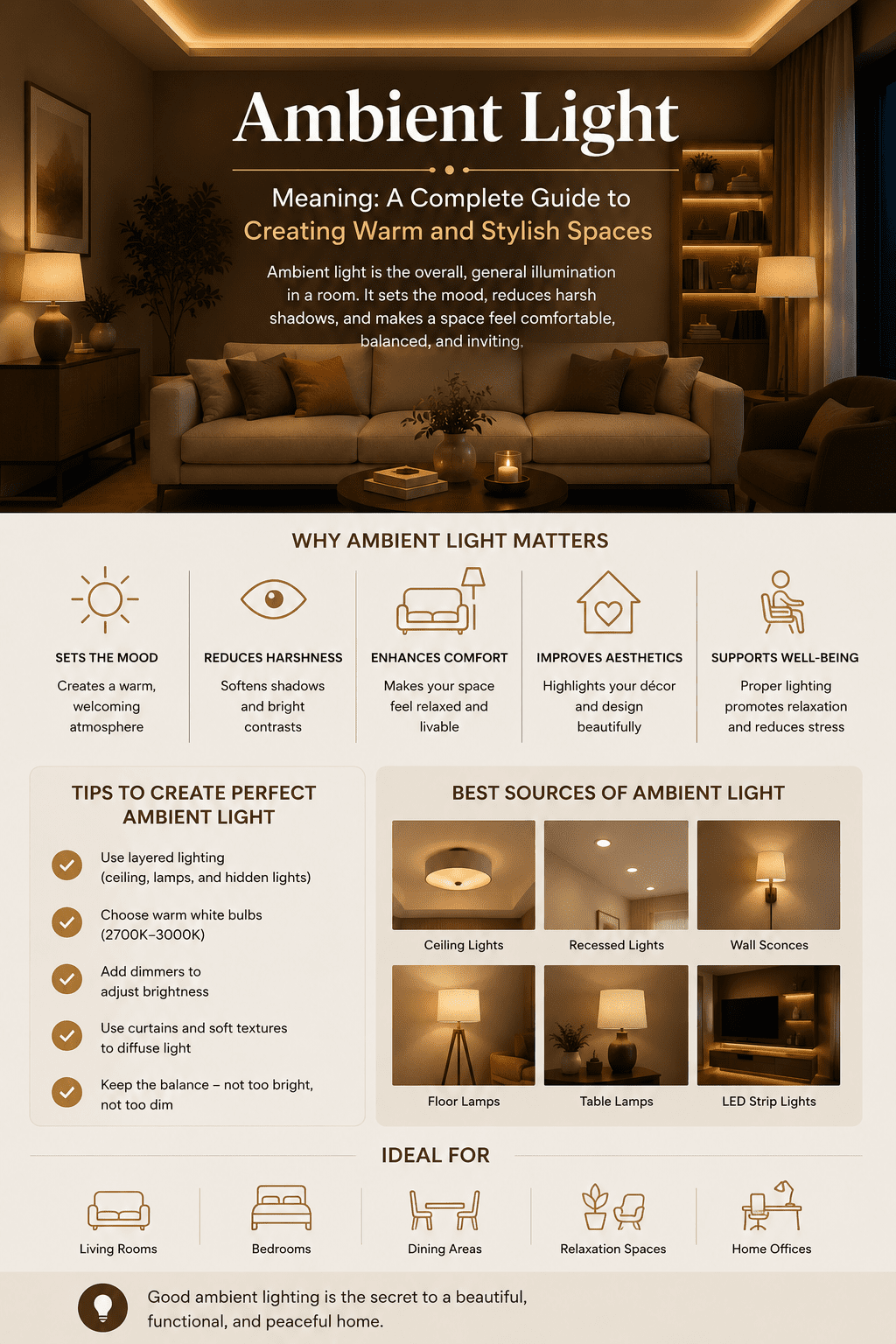
Ambient lighting is the heartbeat of a well-designed home. It serves as the silent, essential layer of design that effortlessly transforms a stark, cold house into a deeply welcoming sanctuary. By truly understanding the ambient light meaning and mastering its application, you can orchestrate environments that are not only functional but visually exquisite.
01 — The Definition
What Does Ambient Light Meaning?
In its most literal sense, ambient light—often referred to as general lighting—is the foundational layout of illumination in a room. It functions as the canvas upon which all other layers of light are painted. Unlike highly targeted task lighting (which directs focused beams onto reading nooks or kitchen counters) or sharp accent lighting (which spotlights art pieces), ambient light radiates throughout a space to ensure overall visibility and safety.
To fully grasp the concept, it helps to look at the architectural origins of lighting design. Pioneering lighting designer Richard Kelly famously categorized light into three distinct elements: “ambient luminescence,” “focal glow,” and “play of brilliants.” Kelly described ambient luminescence as the light of a misty morning, or the shadowless illumination of open outdoor spaces. In residential interiors, our goal is to recreate this diffuse, glare-free, and balanced distribution of light so that the eye can rest easy without dealing with harsh contrasts.
Editor’s NoteIn high-end interior design, we refer to ambient lighting as the “Base Layer.” Without a soft, diffused baseline of light, even the most expensive Italian marble or custom-made velvet sofas will appear flat, shadowed, and uninviting.
02 — The Design Philosophy
Why It Matters in Fine Decor
Lighting is the invisible medium that dictates how we perceive tactile materials. In luxury interior design, textures like polished Carrara marble, brushed brass, and heavy velvet drapes rely entirely on light rays to showcase their depth. When a space is lit incorrectly, these premium elements can easily lose their luster.
Through our editorial team’s extensive experience styling historic and modern estates, we have discovered that ambient lighting is the secret to softening shadows. Without a properly scaled ambient foundation, high-contrast overhead fixtures will cast dramatic shadows beneath furniture and moldings. When soft ambient light bounces off ceilings and walls, it wraps around furniture contours, gently highlighting the nap of velvet upholstery and catching the organic veining of marble surfaces without creating distracting, blinding glares.
Furthermore, ambient light directly interacts with our psychological well-being. A room bathed in gentle, low-glare light signals the brain to lower cortisol levels. By introducing balanced general light, you create a space that feels visually cohesive, structurally larger, and emotionally grounding.
03 — Light Sources
Primary Sources of Ambient Illumination
Achieving the ideal interior glow requires a deliberate mix of architectural installations and portable light fixtures. Relying on a single type of ceiling light is a surefire way to create a clinical, uninspired look. Instead, think of your lighting scheme as an orchestra where different instruments play together harmoniously.

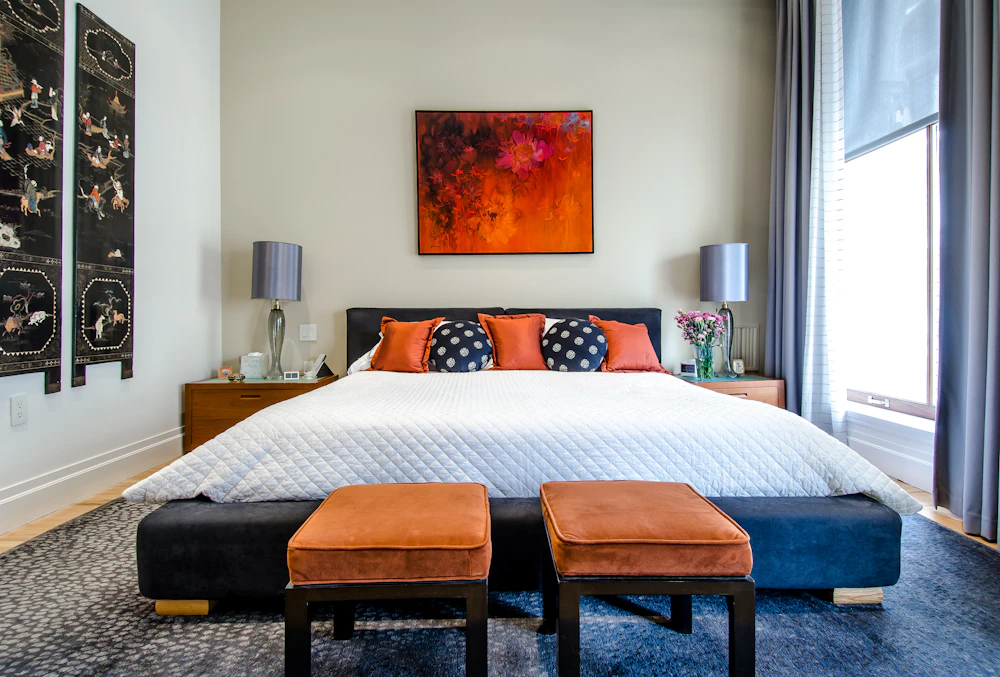
A thoughtful combination of soft architectural fixtures and low-level decorative lamps produces a professionally balanced aesthetic.
The most successful luxury residential spaces utilize several key methods to build their ambient layers:
- Flush Mounts & Chandeliers: While a statement chandelier acts as a stunning visual anchor, its primary functional job is often to cast a wide, generalized pool of light across the center of a room.
- Recessed Architectural Cans: When spaced properly and fitted with baffle trims to reduce glare, recessed ceiling lights can evenly distribute illumination across large spaces.
- Cove and LED Strip Lighting: Installing professional-grade LED light strips along ceiling coves, drop ceilings, or behind customized valances creates a breathtaking floating effect. This method bounces light off the ceiling, creating an incredibly soft, indirect glow.
- Wall Sconces: Mounting sconces at eye level throws light upwards and downwards against wall surfaces. This technique emphasizes wall textures while effectively filling in shadow gaps.
- Natural Daylight: Designing with large windows, skylights, and sheer linen drapery allows soft, natural ambient light to flood the home during daytime hours.
04 — Warmth & Kelvin
The Science of Color Temperature
The entire mood of your home is dictated by color temperature. Measured on the Kelvin (K) scale, light temperature determines whether a space feels clinical and energetic, or cozy and sophisticated. Choosing the wrong Kelvin rating is one of the most common styling errors we observe in newly renovated homes.
2700K
3000K
3500K
4000K
5000K
“Warm, low-temperature ambient lighting ranging from 2700K to 3000K aligns beautifully with our natural circadian rhythms. It signals the body to relax, softening the hard edges of your day and making your home feel like an intimate sanctuary.”
When selecting bulbs, look closely at their Color Rendering Index (CRI). A high CRI (90+) ensures that the warm hues of your woods, the rich color of your velvets, and the subtle veining in your marble accents are represented accurately. Cheap, low-CRI LED bulbs often emit a greenish or grayish tint, draining the vibrancy right out of your carefully selected decor pieces.
05 — Practical Application
Room-by-Room Ambient Strategies
Every room serves a different purpose, meaning your approach to laying down ambient light must adjust from space to space. Here is a room-by-room guide to implementing a balanced lighting plan:
The Living Room: The Ultimate Social Hub
In a formal living room, avoid relying solely on bright overhead recessed cans. Instead, couple a dimmer-controlled central chandelier with indirect cove lighting. Layer in floor lamps tucked into corners and beautiful table lamps on console tables. This strategy ensures light is distributed at multiple vertical heights, creating a rich, three-dimensional warmth that invites long, cozy conversations.
The Bedroom: A Cozy Sanctuary
Bedrooms demand the softest levels of ambient light. We suggest steering clear of central overhead fixtures altogether, or selecting designs with heavy fabric diffusers. Emphasize warm wall sconces mounted on either side of the bed, complemented by low-wattage dresser lamps. Focus on a strict 2700K temperature to prepare your mind and body for restful sleep.
The Kitchen: Blending Utility with Elegance
While kitchens are highly active work zones that require plenty of direct task lighting, they still need a strong ambient base. To bridge the gap, install soft, dimmable LED tape lighting inside glass-front cabinets and above upper cabinetry. Bouncing light off the ceiling in this way softens the stark shadows created by focused under-cabinet task lights, making the kitchen feel integrated with the rest of the home.
The Bathroom: Spa-Like Serenity
Rather than placing harsh spotlights directly above the mirror—which creates deep shadows under your eyes—opt for diffused, moisture-rated ceiling flush mounts or indirect backlit mirrors. This configuration wraps your face in soft, flattering light, creating an upscale, spa-like atmosphere.
If you’re looking for an expert explanation of how ambient lighting works and why it matters in interior design, this comprehensive guide from LIFX offers valuable insights for beginners and design enthusiasts alike.
Outbound Link:
06 — Design Hazards
5 Ambient Lighting Mistakes to Avoid
Creating a beautiful lighting layout is as much about what you omit as what you include. Through our design consultations, we regularly encounter these common missteps:
-
The “Interrogation Room” Effect: Installing harsh, cool-white bulbs (4000K-5000K) in living rooms and bedrooms. This makes cozy materials look sterile and washed out.
-
Single Source Reliance: Hanging a single overhead light fixture and expecting it to light the entire space. This leaves the room’s corners dark and disconnected.
-
Skipping Dimmer Switches: Failing to put your lights on dimmers. Dimming controls are the single most affordable way to transition your home’s atmosphere from morning utility to evening luxury.
-
Ignoring Architectural Shadows: Arranging furniture without considering light placement. This can block light flow and create awkward, dark voids in high-traffic zones.
-
Incorrect Scale: Choosing fixtures that are too small or too large for your ceiling height and room volume, throwing off the room’s visual proportions.
07 — Expert Q&A
Frequently Asked Questions
Can ambient lighting improve my mental health and sleep?
Yes, definitely. Mimicking natural light transitions by dimming your ambient lighting and shifting to warmer color temperatures in the evening supports melatonin production. This reduces eye strain, lowers stress levels, and helps you ease into a deep, natural sleep cycle.
Is smart lighting worth the investment for ambient setups?
Absolutely. Smart lighting systems allow you to program automatic transitions. Your ambient lights can seamlessly transition from energizing, neutral white tones during midday to a soft, golden glow as soon as the sun begins to set.
How do I calculate how many light fixtures I need for a space?
A reliable rule of thumb is to multiply your room’s square footage by 15 to find your target total lumen output. For example, a 150-square-foot room needs around 2,250 lumens. For the best visual results, distribute this target across 3 or 4 dimmable fixtures rather than relying on a single, high-powered bulb.
What is the difference between direct and indirect ambient light?
Direct ambient light shines downward from fixtures like ceiling cans, providing clear visibility. Indirect ambient light bounces off other surfaces first—such as walls or ceilings—via cove lighting or upward-facing sconces, resulting in a much softer, glare-free quality of light.