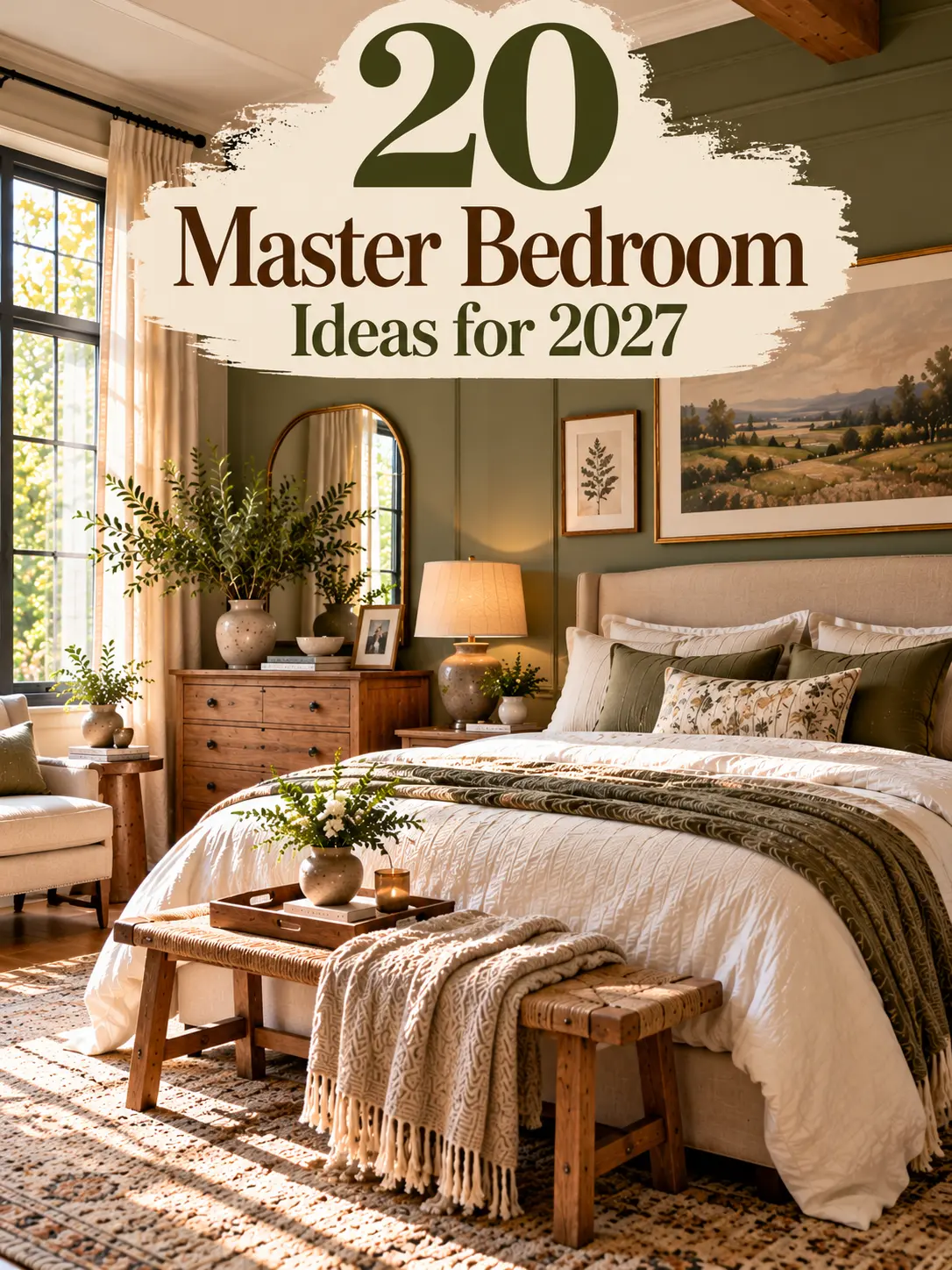
20 Master Bedroom Ideas for 2027
 Save to Pinterest
1. Layer Warm Neutrals
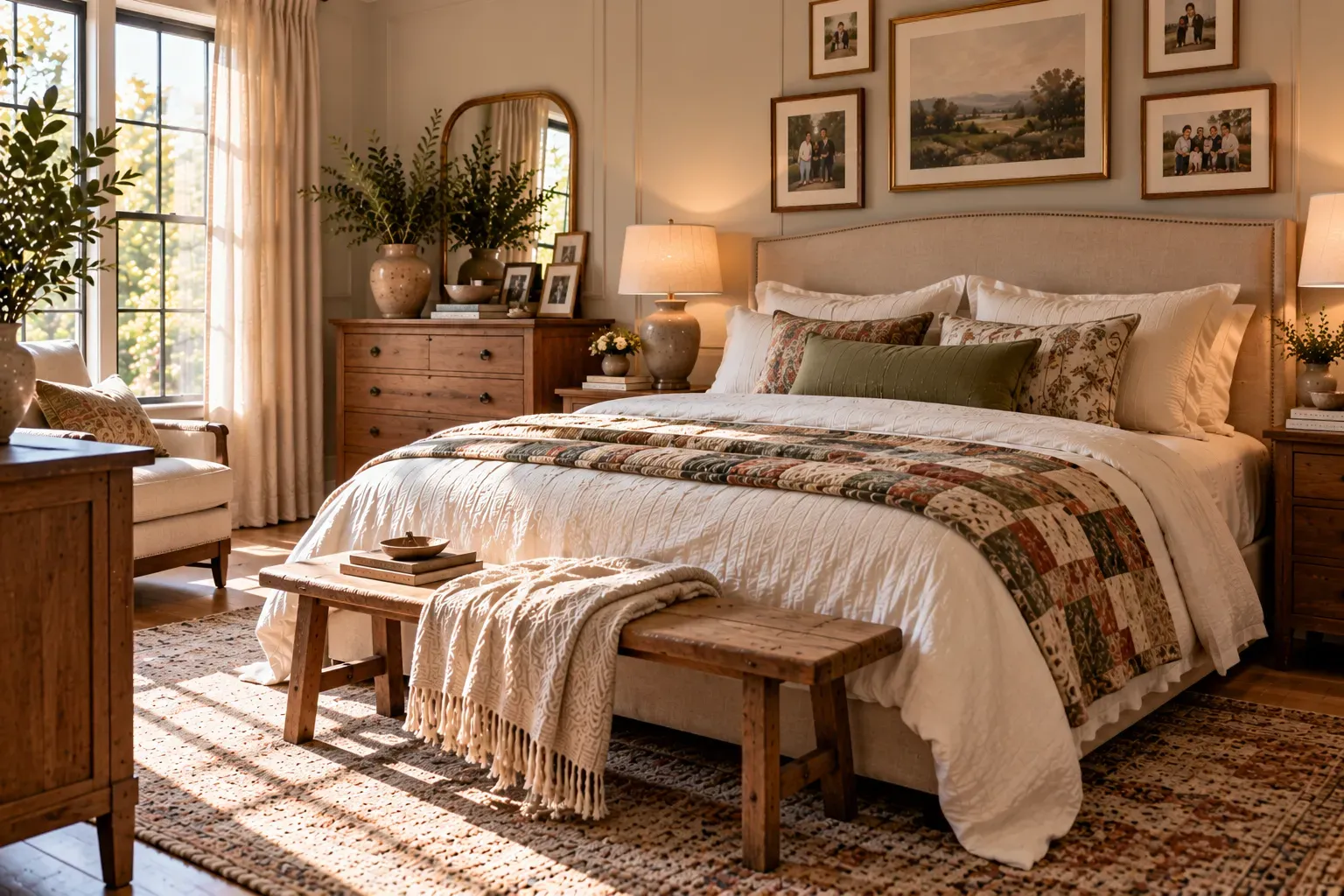
A warm neutral bedroom scheme feels welcoming when cream, oatmeal, and taupe appear in different textures rather than one flat shade. Begin with the largest surfaces, then introduce contrast through a darker bedside table.
Choose washable cotton bedding and a wool-look throw before replacing furniture. Test paint colors beside the bed in morning and evening light; a beige that looks inviting at noon may turn yellow after sunset.
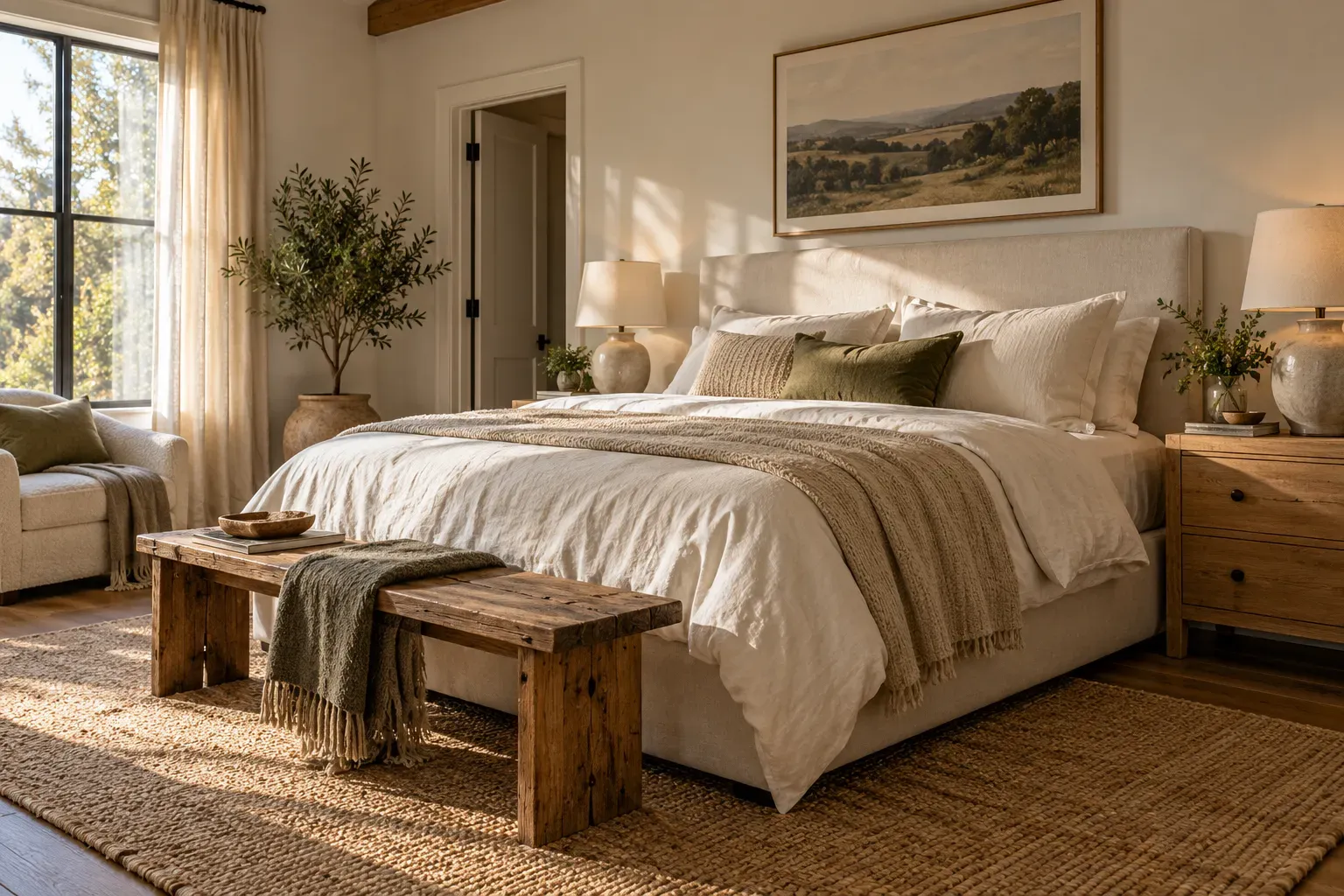
2. Create a Statement Headboard
An oversized upholstered headboard can give a plain bedroom architectural character without a full renovation. Keep the surrounding wall quiet so the shape, fabric, and scale remain the focal point.
Measure the wall and nearby outlets before ordering. A headboard wider than the mattress often looks balanced, but avoid extending it into door swings or squeezing the space between bedside tables.
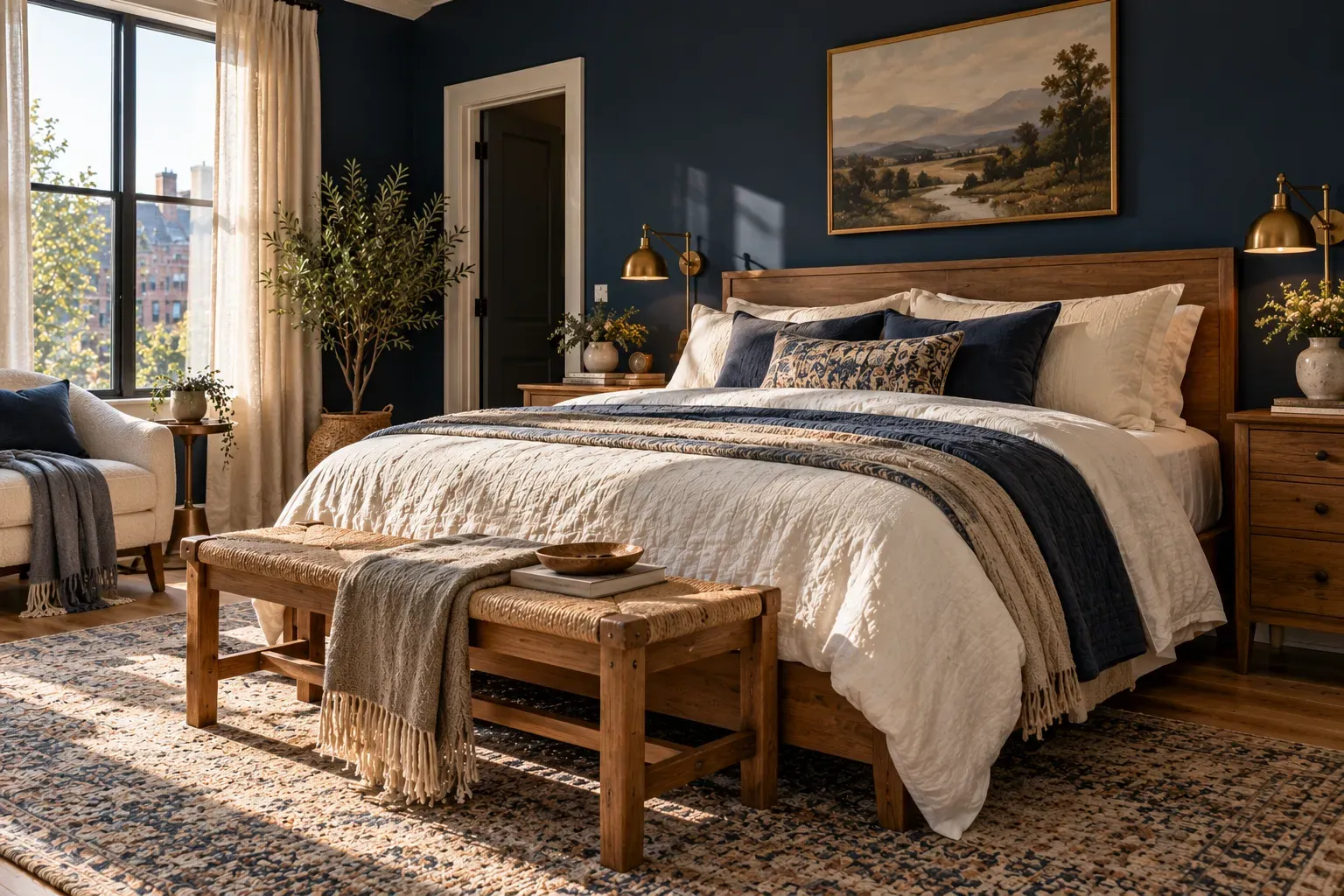
3. Use Moody Blue Walls
Deep blue walls create a restful, enveloping atmosphere, especially when paired with warm timber and soft off-white bedding. Try the color on the wall behind the bed before painting the whole room.
Dark paint is not automatically gloomy; lighting makes the difference. Include dimmable bedside lamps and check how the finish looks under your actual bulbs. Matte paint may show scuffs more readily.
4. Bring in Natural Greenery
A leafy bedroom plant can soften hard furniture lines and introduce a fresh accent without adding another pattern. Position greenery where its shape is visible but does not crowd your sleeping area.
Select plants according to the room’s real daylight, not a styled photograph. If the window is shaded, use an appropriate low-light indoor plant or realistic faux stems; avoid placing damp pots on wood. Explore more greenery bedroom ideas for plant placement inspiration.
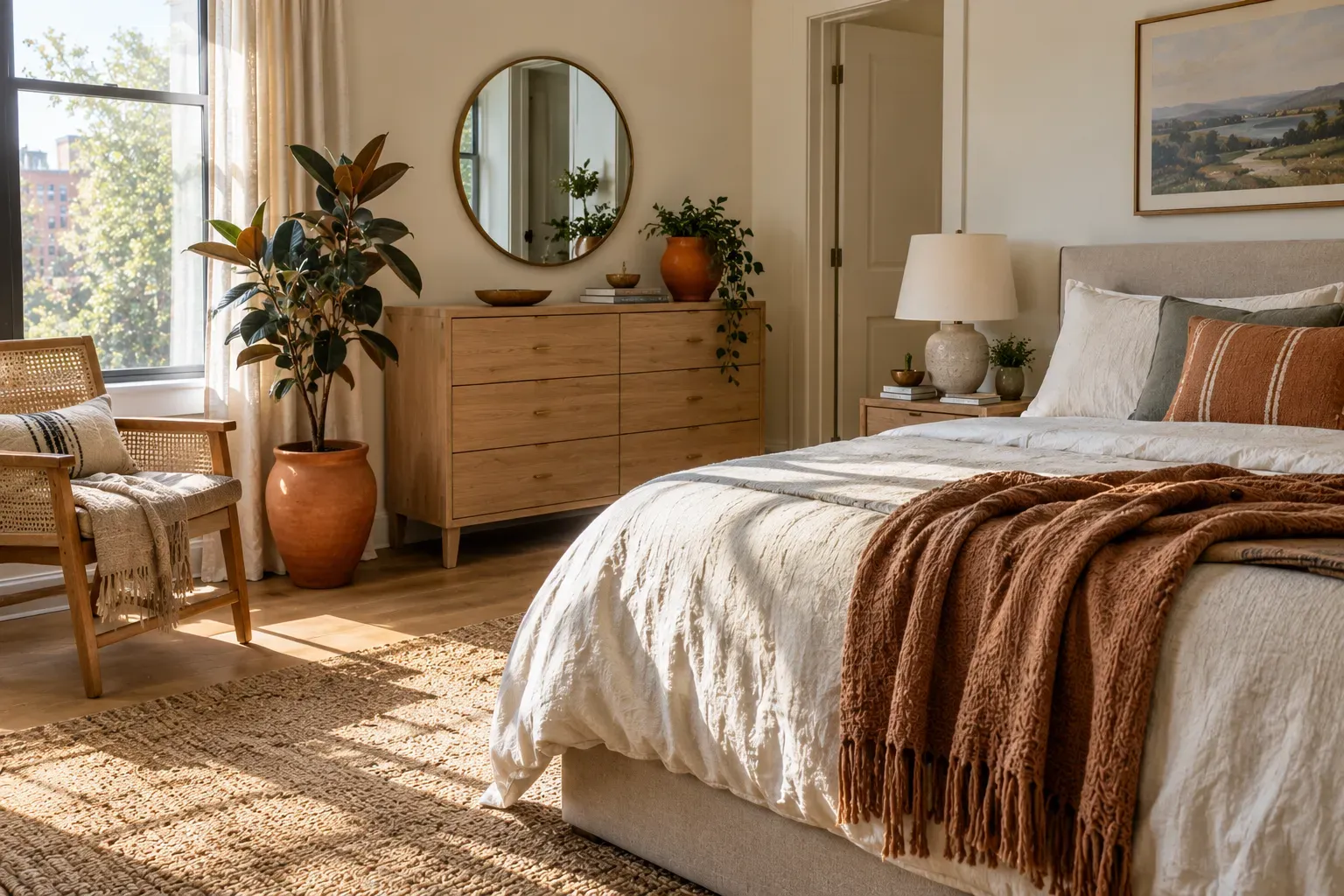
5. Choose a Low Platform Bed
A low platform bed frame makes the ceiling feel more expansive and works particularly well in compact contemporary rooms. Its simple silhouette leaves space for interesting bedding, artwork, or a textured wall.
Check the mattress height before purchasing; a very low sleeping surface may be inconvenient for some people. Leave enough clearance for drawers, cleaning, and safe movement around the frame. For frame sizing and mattress options, see our queen bed guide.
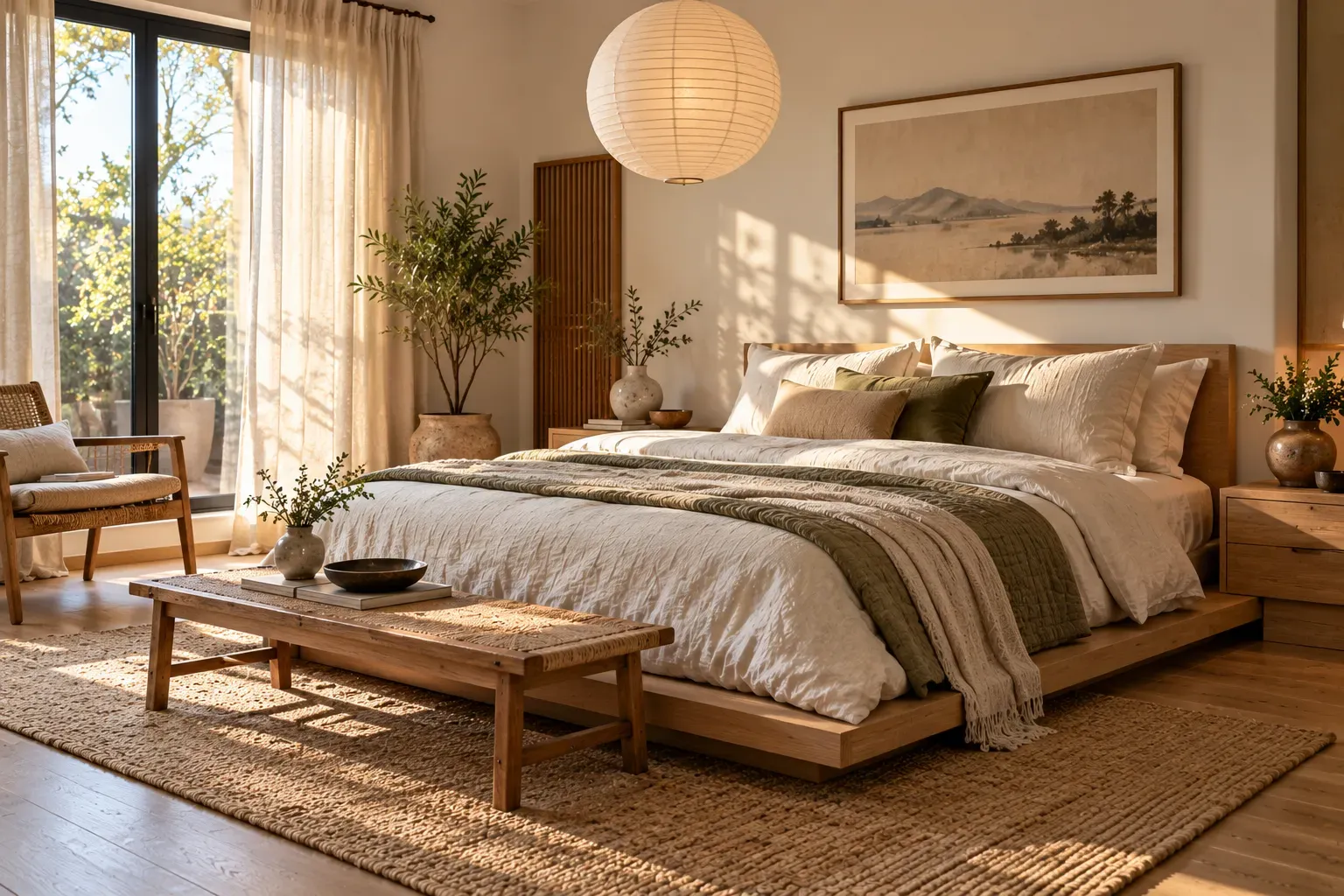
6. Add Bedroom Ideas for Better Lighting
Good bedroom lighting ideas use layers: ambient light for dressing, focused light for reading, and a softer glow for winding down. Separate switches help each layer serve its purpose.
Try plug-in wall sconces if rewiring is not in the budget. Position reading lights so they illuminate a book without shining directly into your partner’s eyes; use warm, comfortable bulbs.
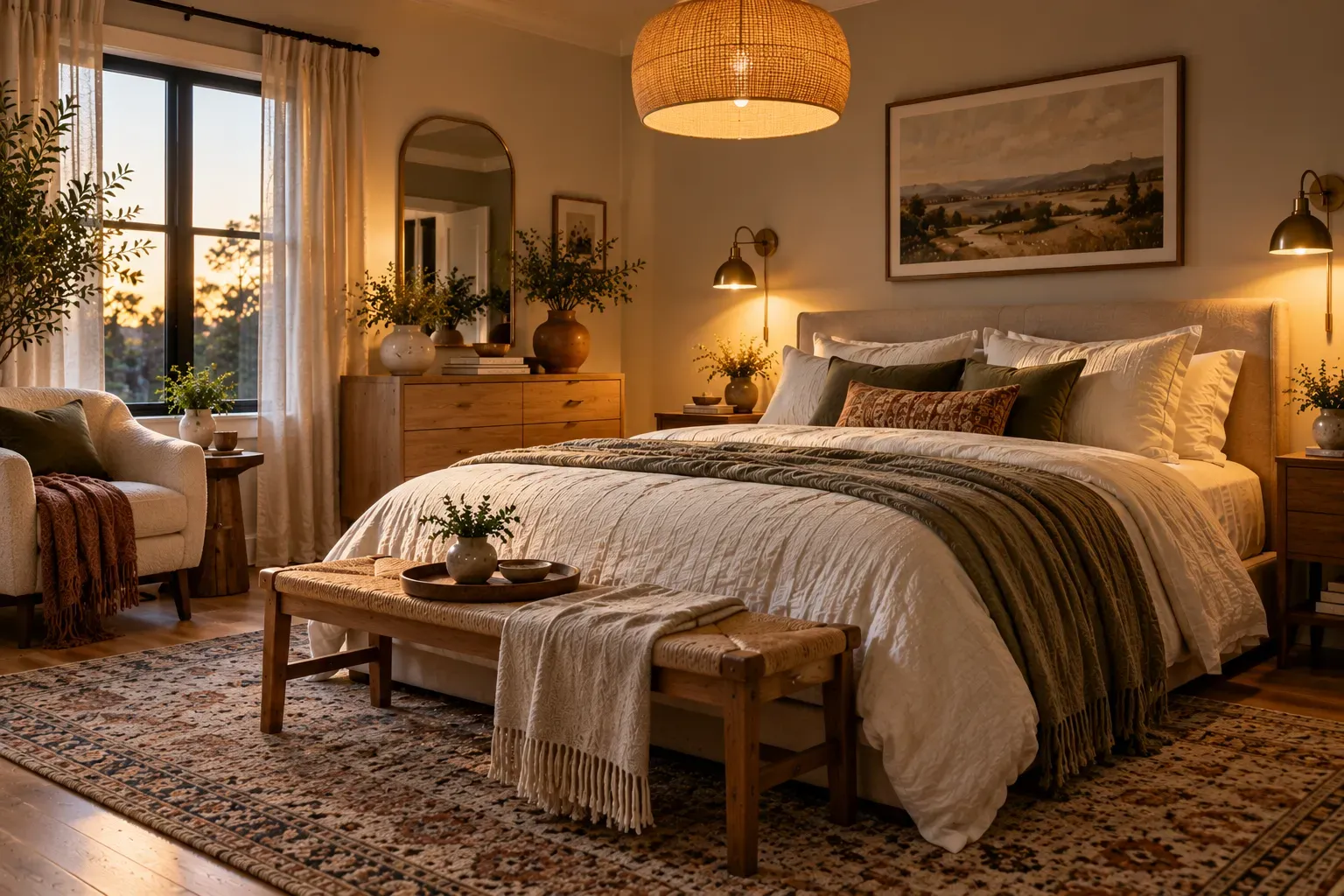
7. Style an End-of-Bed Bench
A bedroom bench provides a convenient place to sit while dressing and gives a long bed a more finished appearance. Upholstered styles soften a room filled with hard-edged cabinetry.
Choose a bench narrower than the mattress and preserve walking space at its foot. In a small room, a lightweight stool or slim storage ottoman may be more practical.
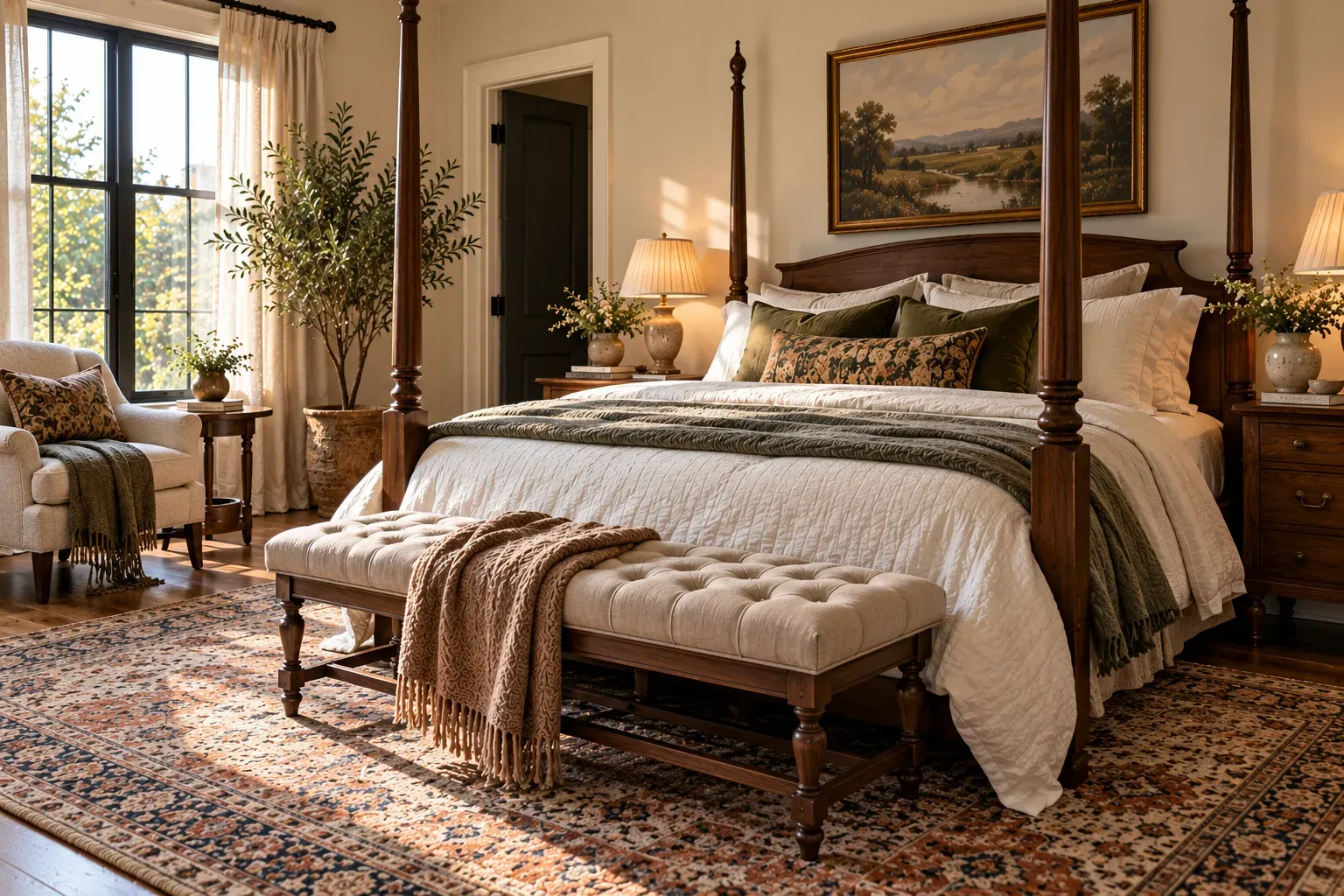
8. Mix Vintage and Modern Pieces
Combining a vintage dresser with a contemporary bed adds personality and prevents a bedroom from looking like a furniture showroom. Repeat one material or color to make contrasting eras feel connected.
Inspect secondhand drawers, joints, and odors before buying. Updating handles can be inexpensive, but retain distinctive original details when they contribute to the piece’s character.
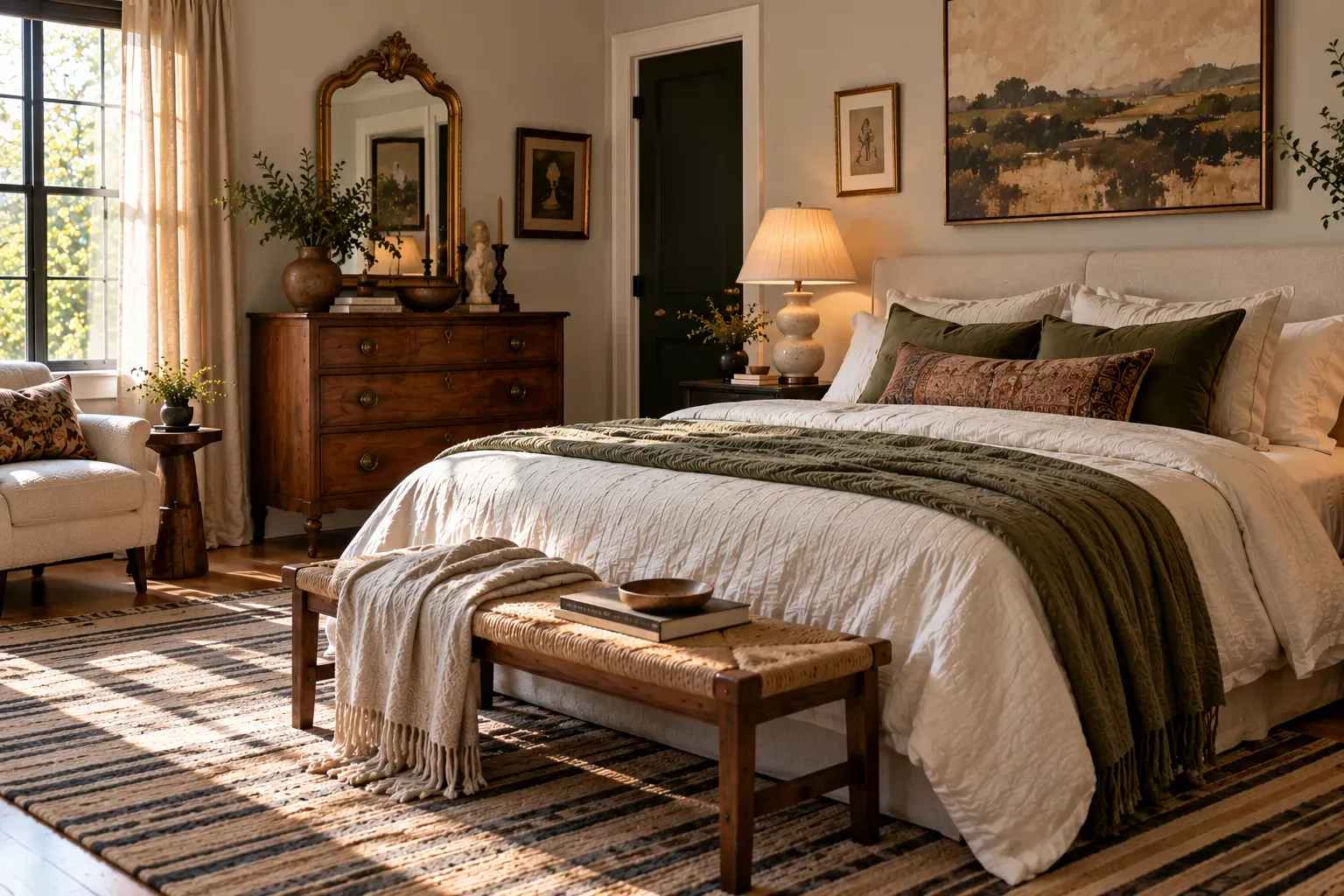
9. Try Bedroom Ideas for Small Spaces
In a small master bedroom, visual calm often matters more than adding furniture. Wall-mounted shelves, slender lamps, and a bed with built-in storage can free valuable floor area.
Measure the usable walkway after doors and drawers open. Avoid buying an oversized king bed simply because it fits on paper; daily movement should determine your furniture choices.
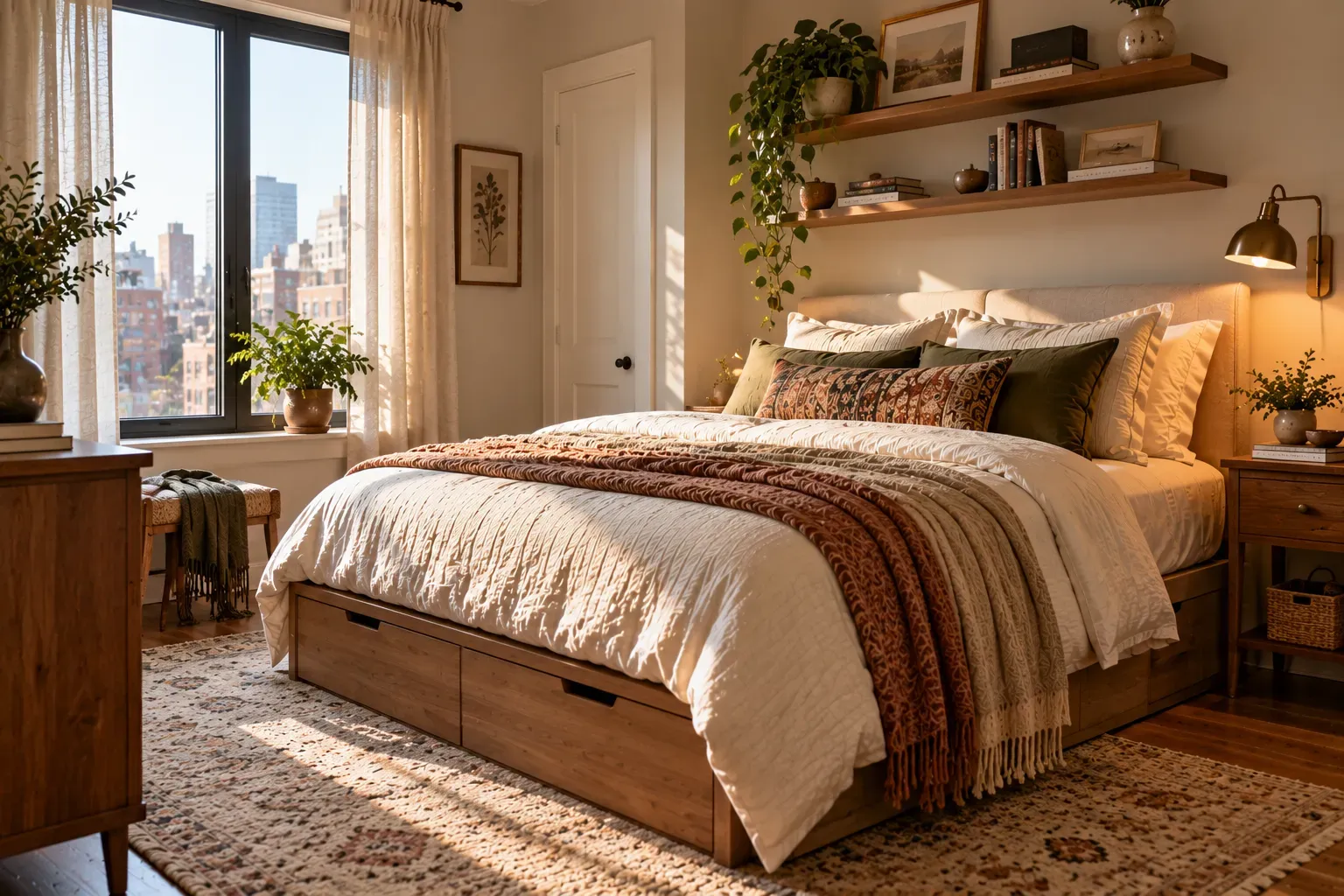
10. Hang Floor-Length Curtains
Floor-to-ceiling curtains hung close to the ceiling can make windows appear taller and add softness to otherwise plain walls. Linen-look panels suit relaxed rooms, while lined drapes improve light control.
Measure from the installed rod to the floor, not just the window frame. Allow a modest hem break if desired, but avoid excess fabric pooling where it collects dust or catches under furniture.
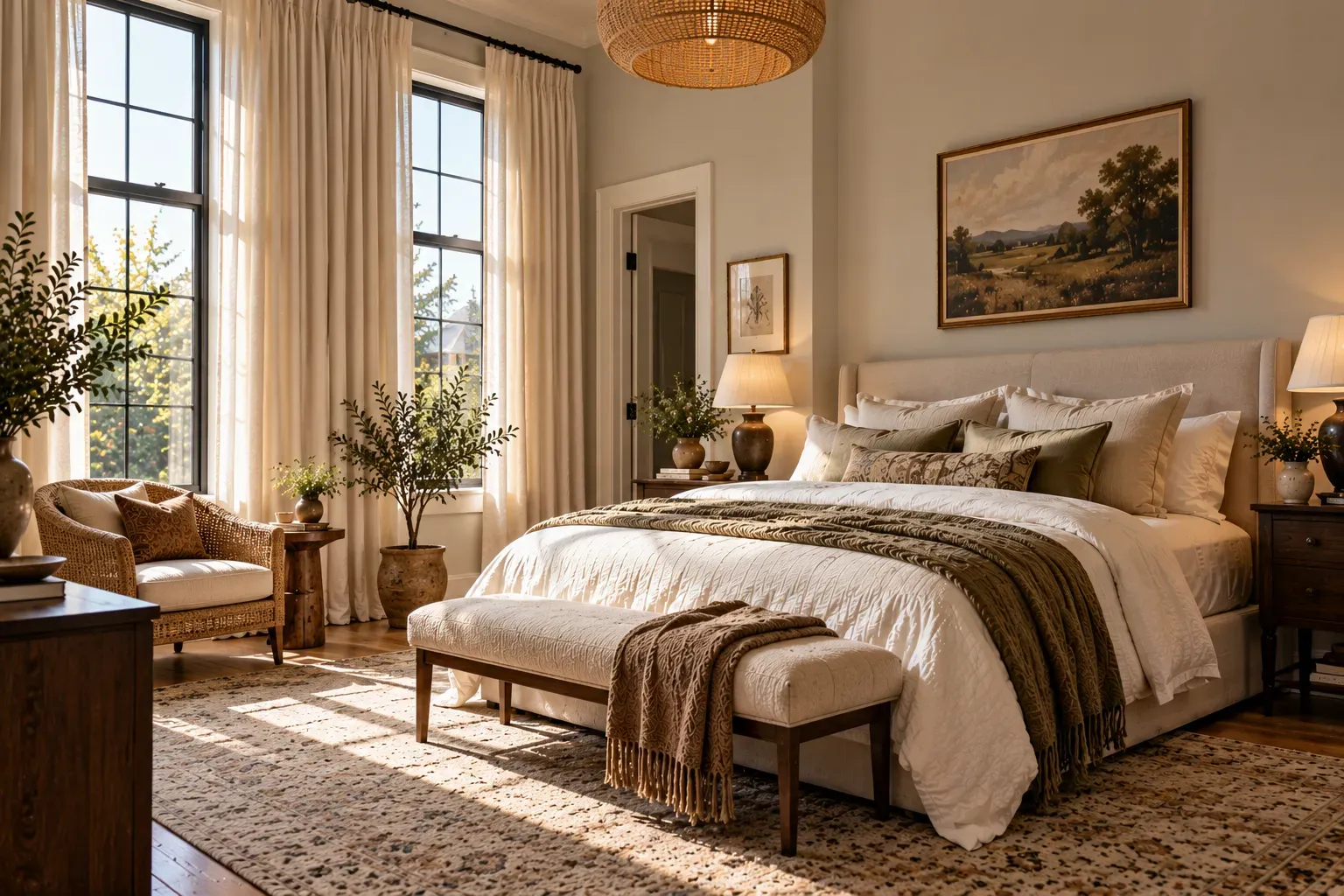
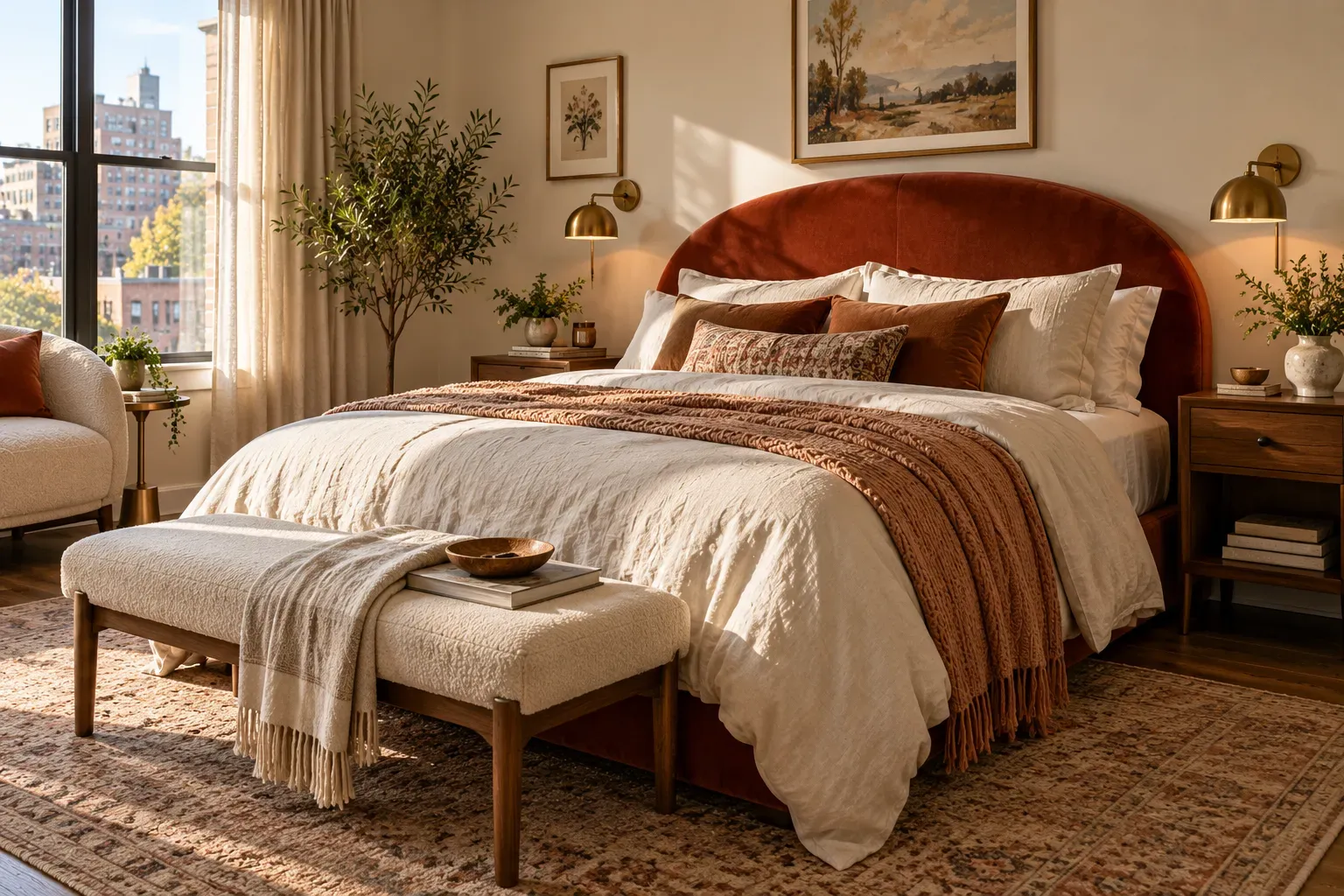
11. Introduce Earthy Terracotta
Terracotta, clay, and muted rust tones bring warmth to neutral bedrooms without requiring bold wall color. Start with pillows, artwork, or a quilt rather than committing every surface.
Balance reddish accents with cream, pale oak, or subdued olive. Compare fabric samples in daylight; too many orange-toned items together can make a small room feel visually heavy.
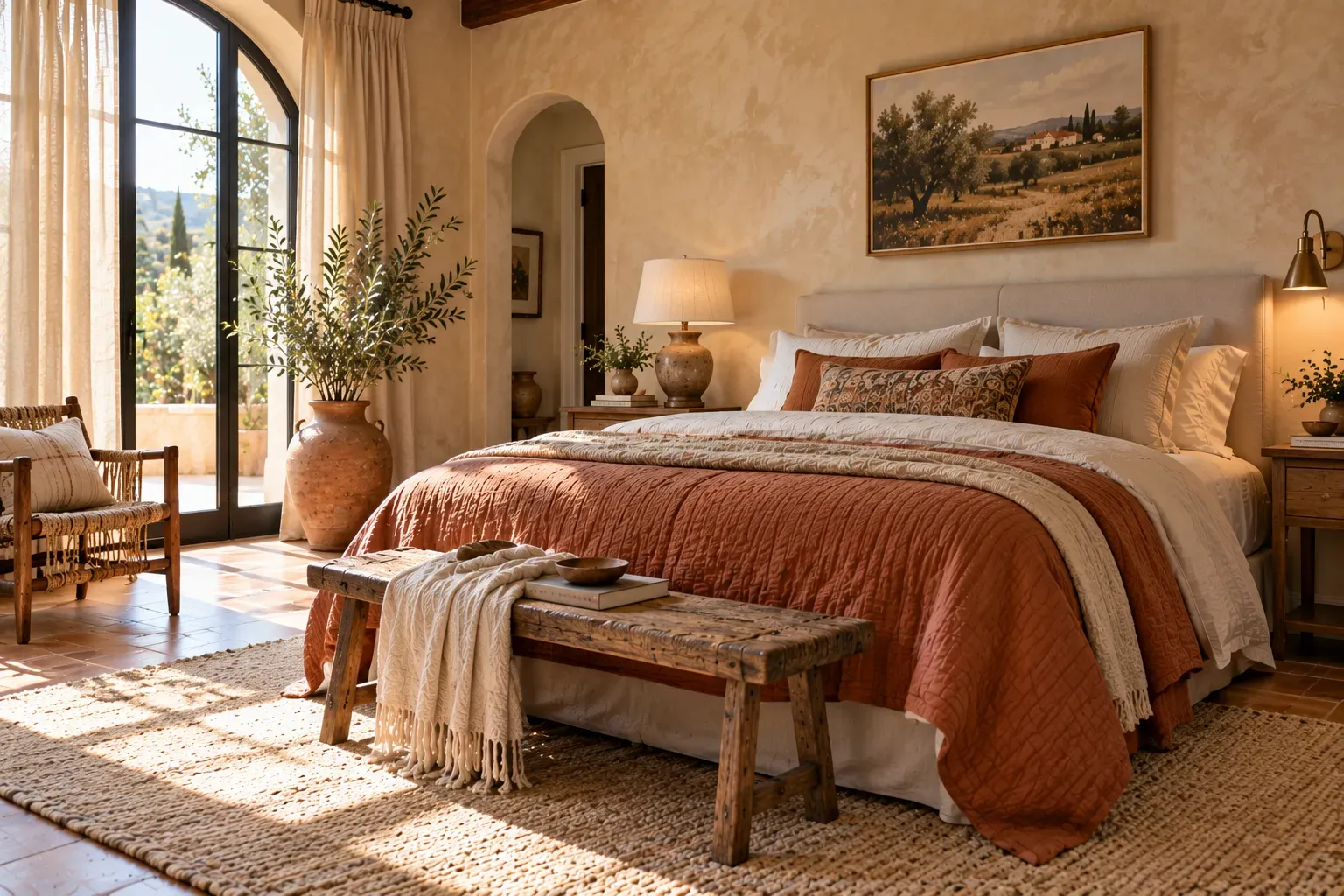
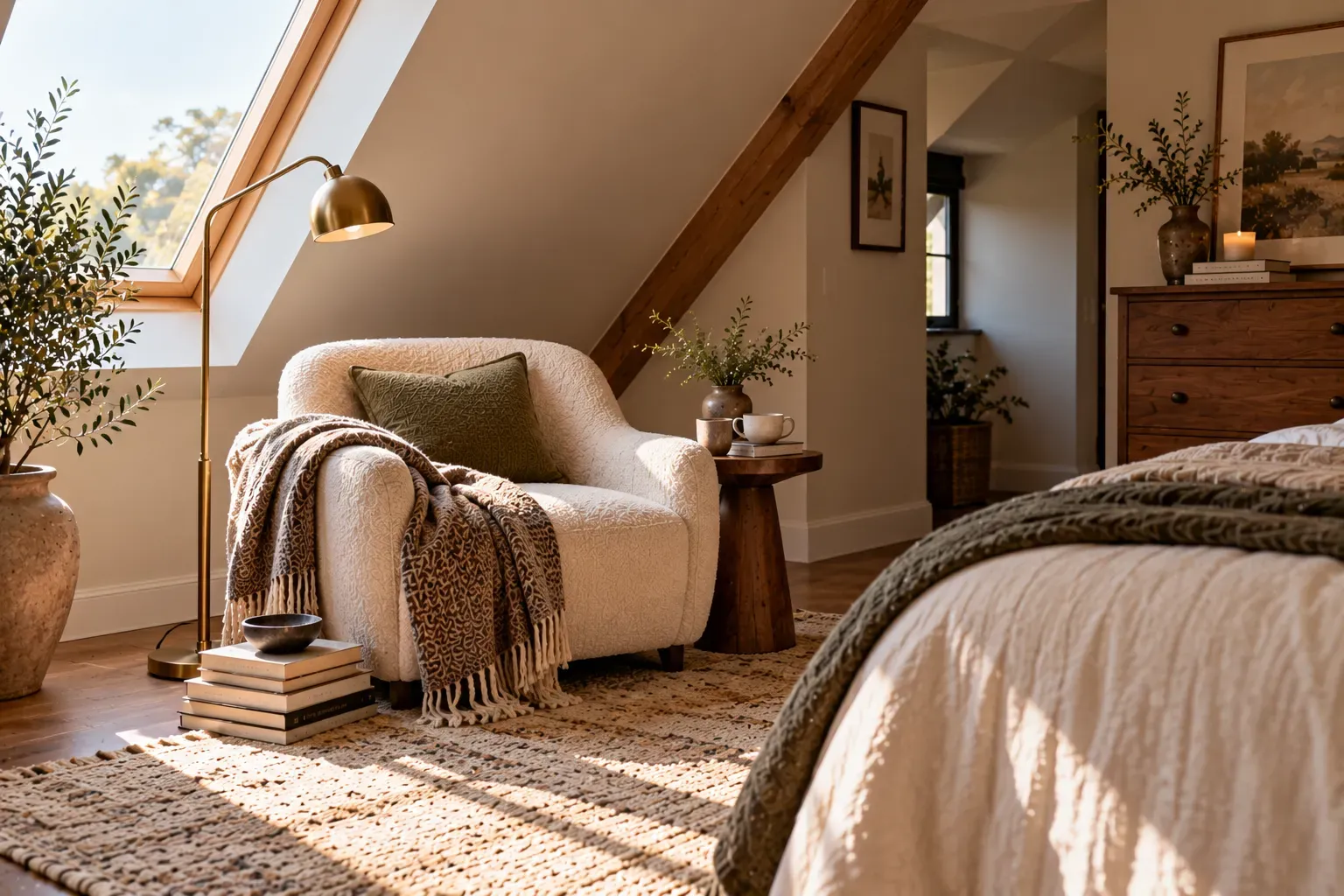
12. Build a Cozy Reading Corner
A reading chair turns an unused corner into a small retreat and makes the master bedroom useful beyond sleep. A lamp and a nearby surface for books complete the setup.
Choose a chair with comfortable back support instead of prioritizing appearance alone. Keep the chair clear of wardrobe doors, and use a compact side table when floor space is limited.
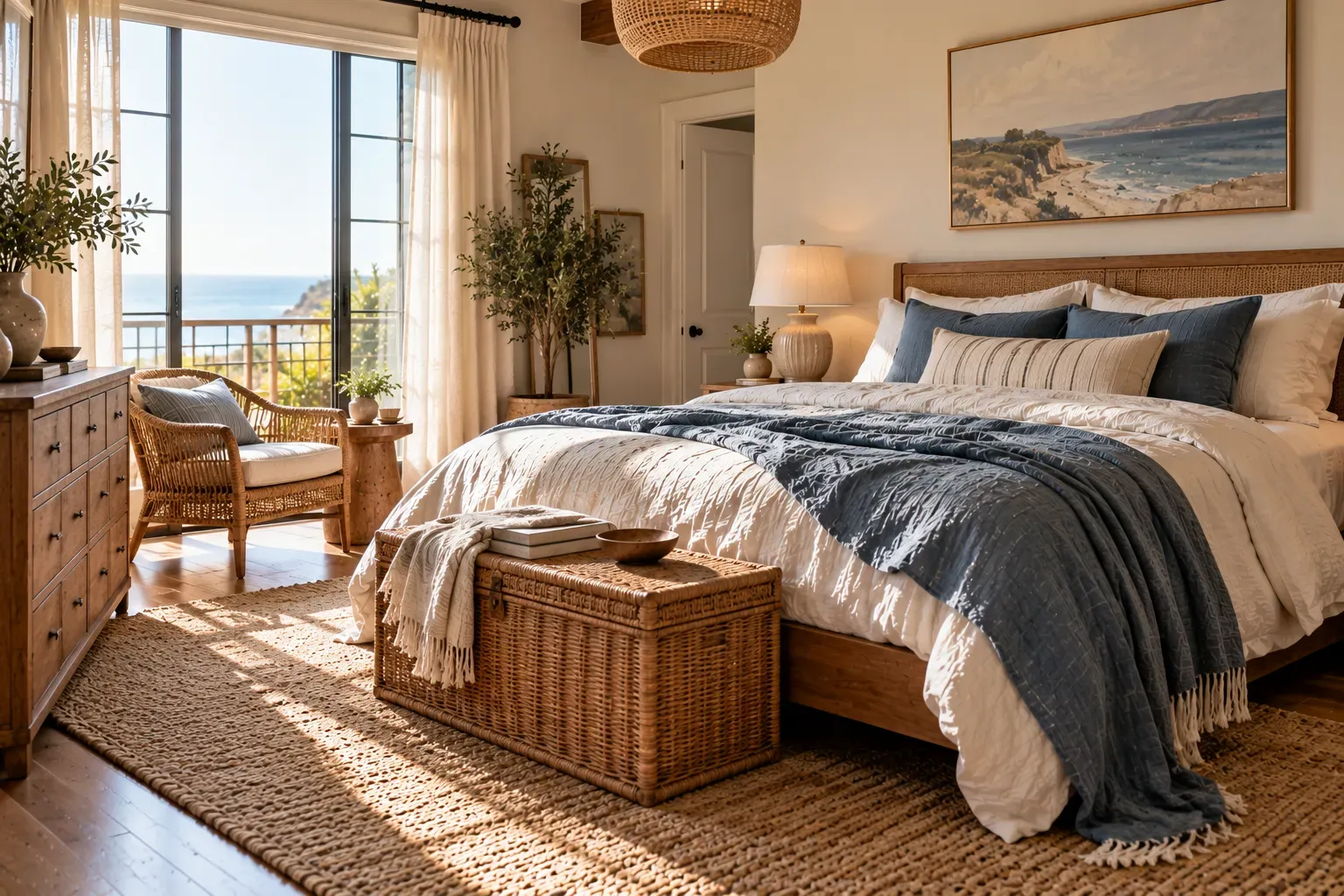
13. Refresh Bedroom Ideas With Texture
Bedroom texture gives an understated room depth: combine crisp cotton, washed linen, wood grain, and a woven area rug. Limit the palette so the surfaces, rather than competing colors, create interest.
Avoid piling on decorative cushions that must be moved every night. Invest first in breathable bedding and a comfortable rug; affordable pillow covers can introduce seasonal variation.
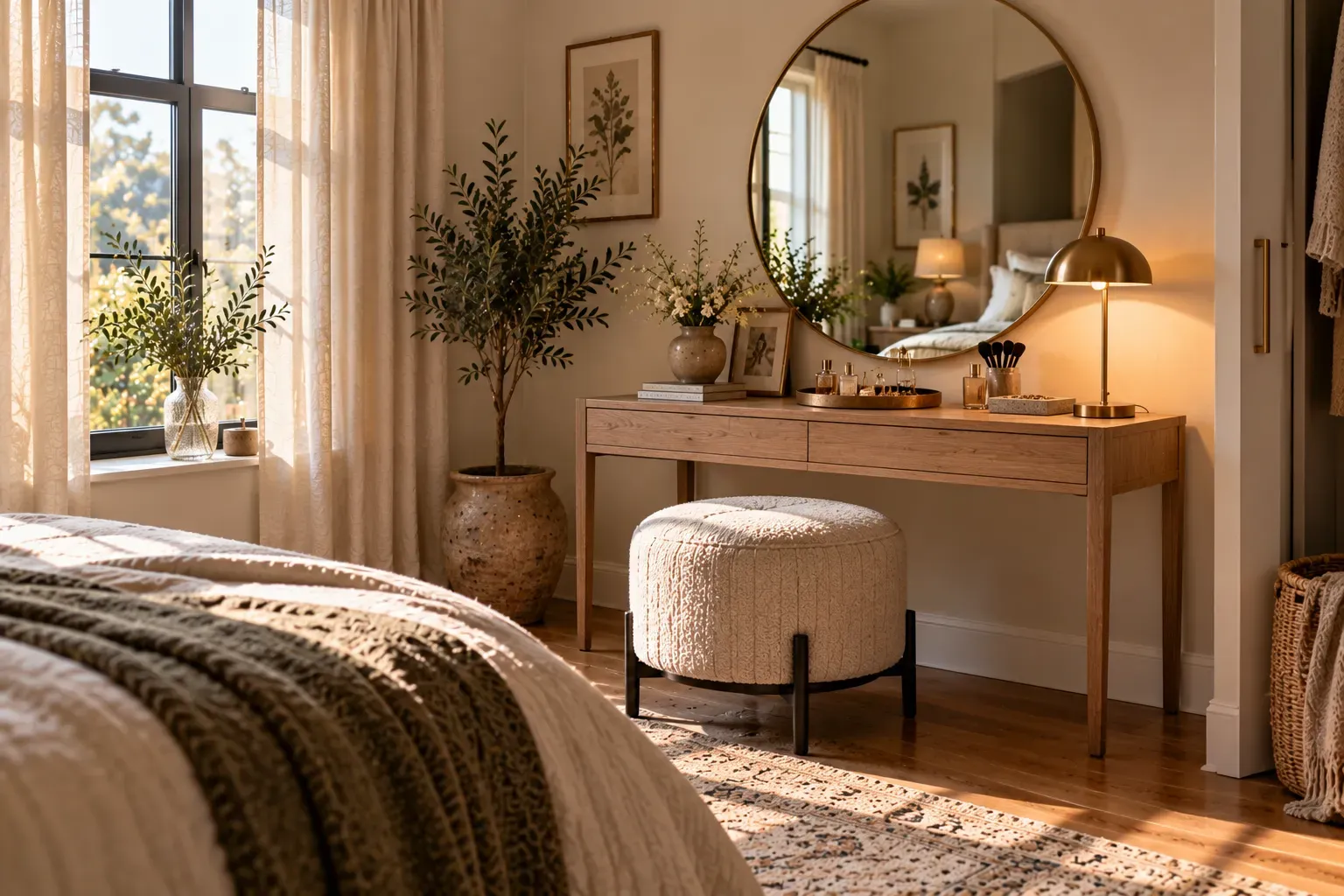
14. Make Space for a Dressing Area
A small dressing area can organize morning routines without requiring a separate room. A mirror, narrow console, and task light are often enough for a useful setup.
Place the mirror where daylight reaches your face rather than behind you. Secure tall furniture safely and keep electrical cords away from the walkway; a wall-mounted surface can save space.
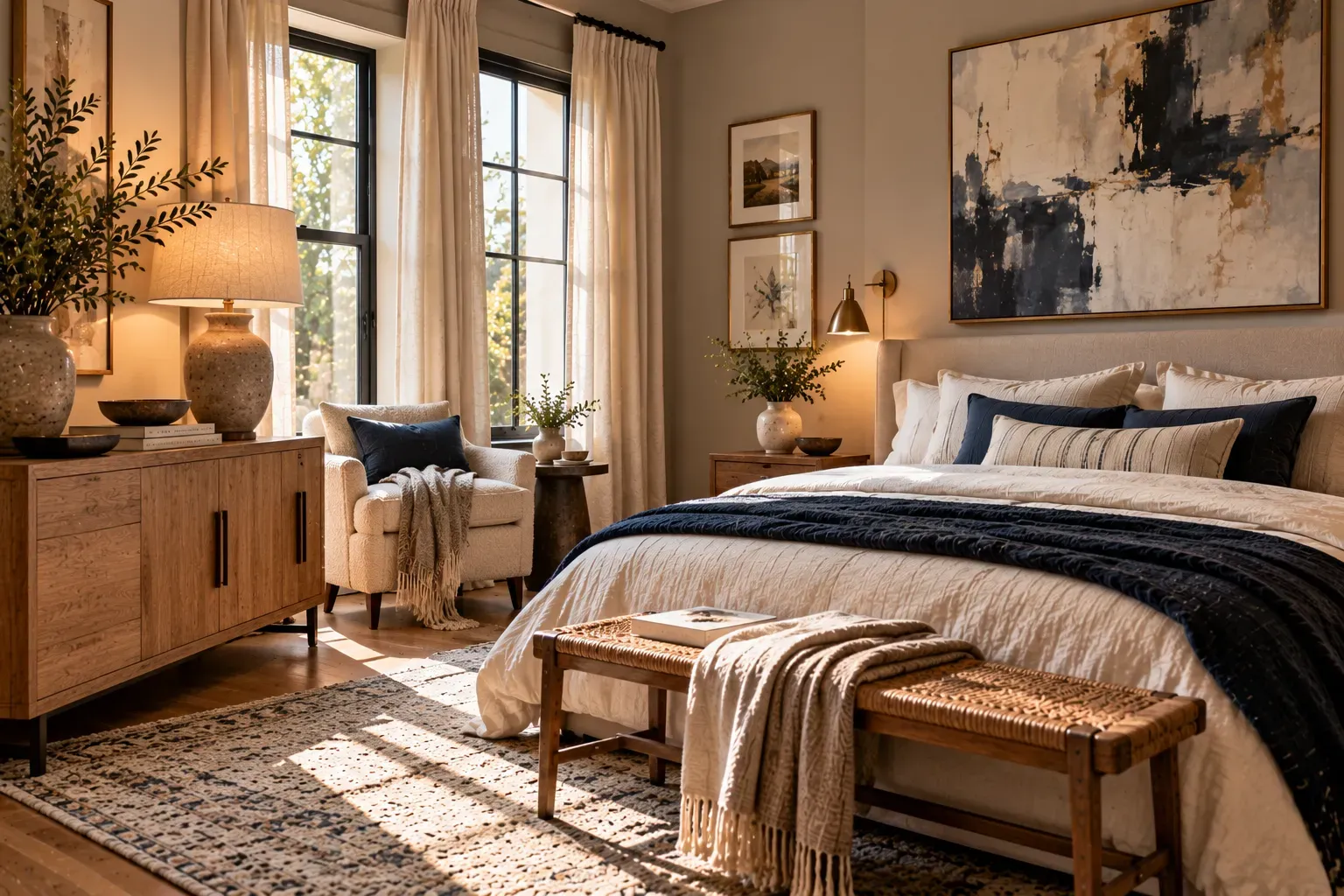
15. Use Bedroom Ideas With Bold Art
One large bedroom wall art piece can establish a bedroom’s color story more effectively than many small accessories. Choose a piece that feels personal and repeat one subtle color in the bedding.
Mock up the artwork size with paper before hanging it. Use suitable fixings for the wall and avoid placing heavy, unsecured pieces directly above the pillow area.
16. Choose Soft Sage Accents
Sage green brings a gentle connection to nature and pairs well with warm white, oak, and muted brass. A painted accent wall or quilt can introduce it without overwhelming the room.
Sample green paint beside existing flooring; cool gray floors and warm wood can shift how sage appears. Keep additional greens limited so the palette looks intentional rather than mismatched.
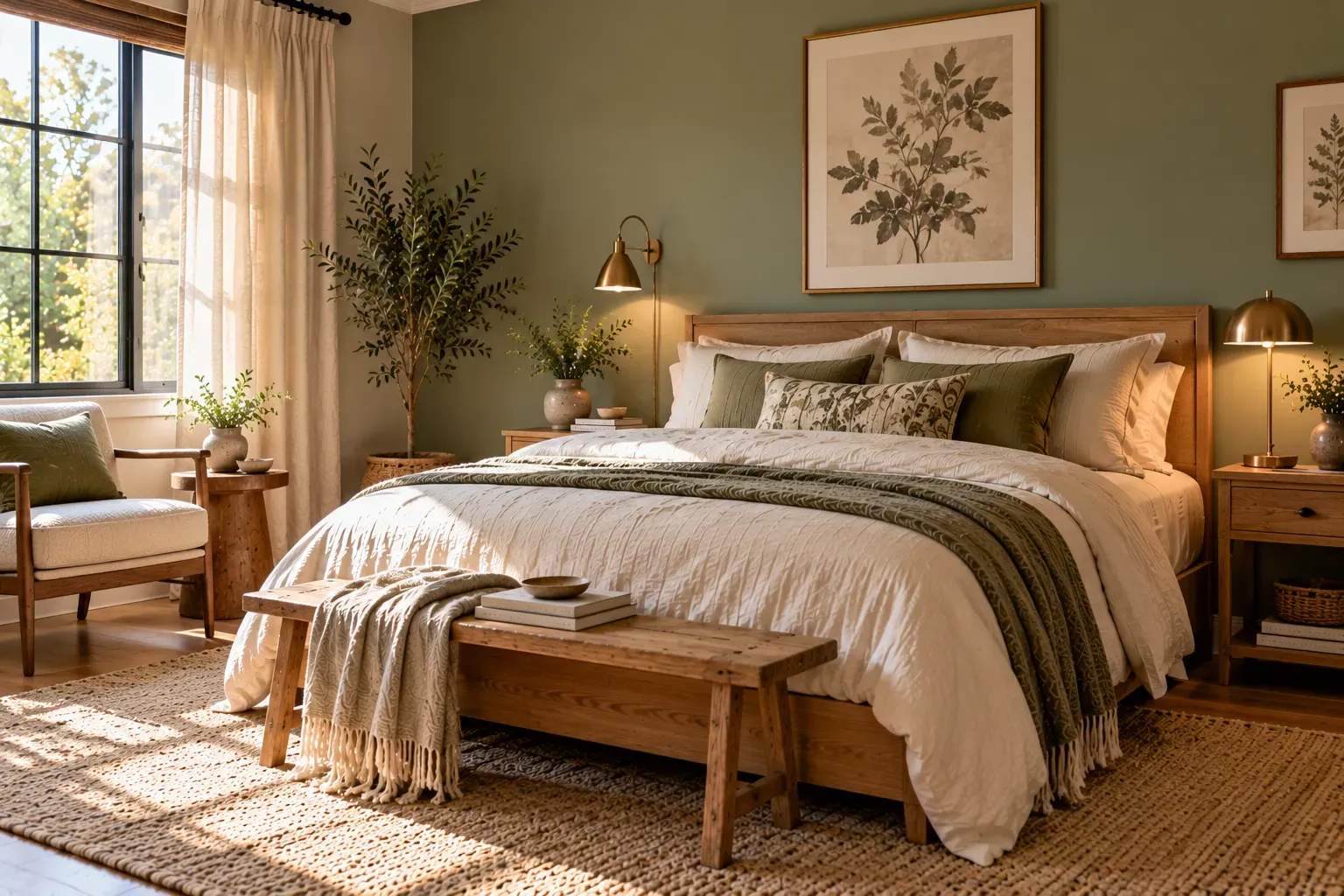
17. Try a Canopy-Inspired Bed
A simple four-poster bed frame introduces height and structure while keeping a room airy when the rails remain uncovered. It works best where the ceiling and circulation allow generous clearance.
Measure ceiling height, fan placement, and delivery access first. In a smaller room, suggest the look with a tall headboard and long curtains rather than forcing in an oversized frame.
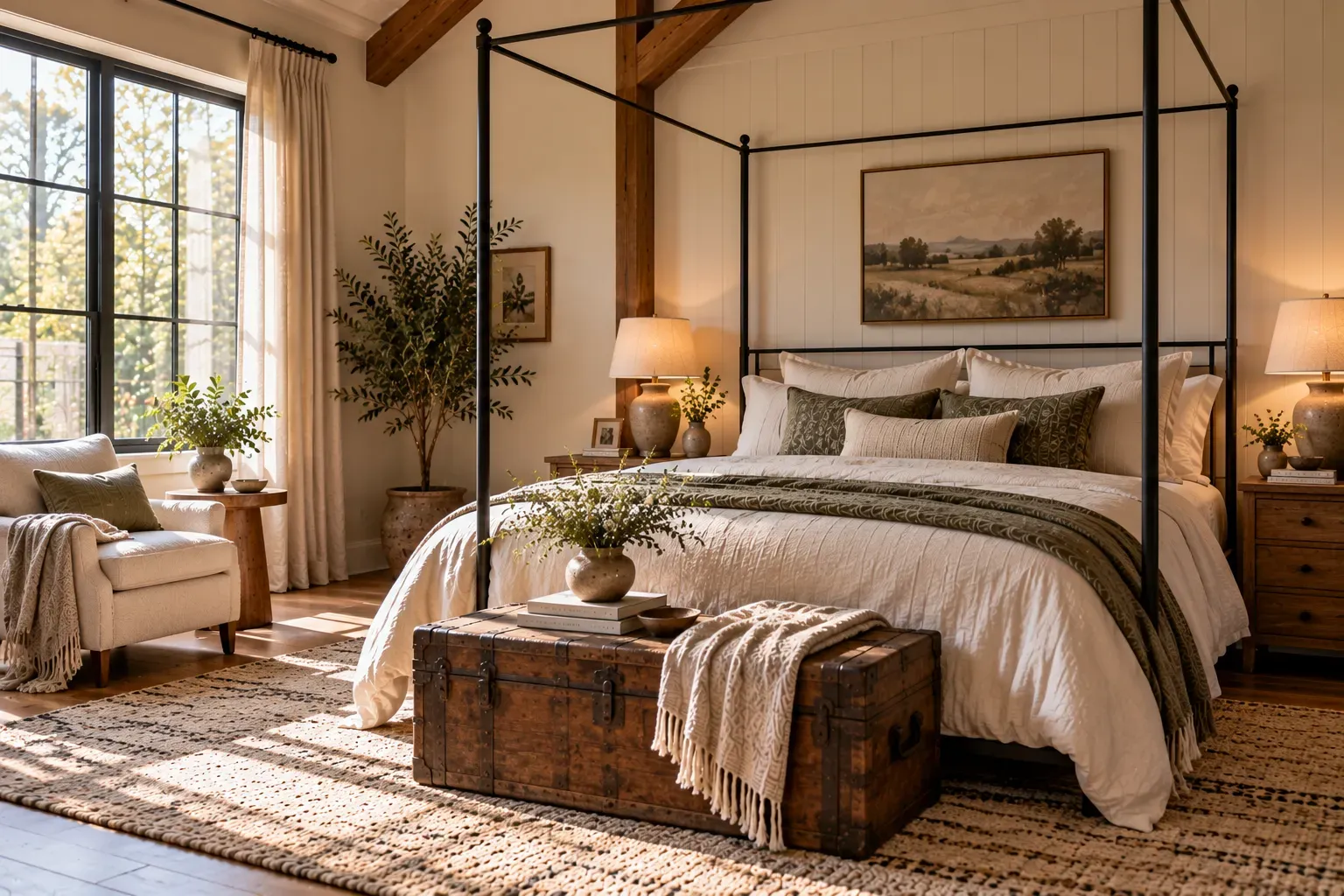
18. Design a Hotel-Inspired Bed
A hotel-style bedroom relies on clean layers, generous pillows, and a consistent palette rather than expensive matching furniture. Start with well-fitting sheets and a duvet that suits your climate.
Use pillow sizes proportional to the bed and avoid decorative layers that interfere with sleep. A washable coverlet adds polish while making everyday upkeep easier than complicated styling.
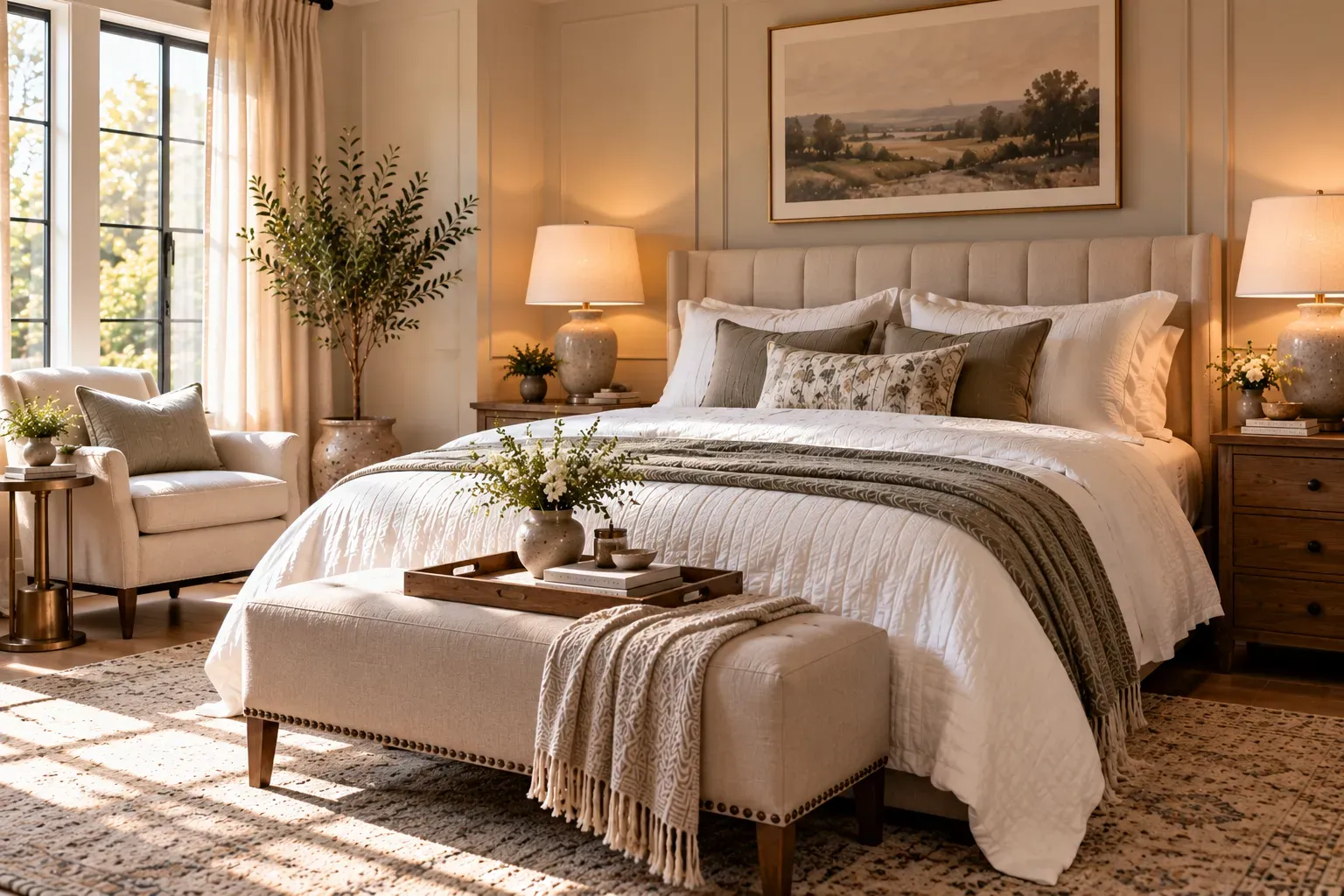
19. Add Hidden Storage
Thoughtful bedroom storage ideas help maintain a relaxing bedroom when clothing and accessories have assigned places. Under-bed drawers, shallow organizers, and a wardrobe divider can reduce visible clutter.
Measure under-bed height and drawer clearance before purchasing bins. Avoid storing moisture-sensitive textiles in damp spaces, and label seasonal containers so the system stays easy to maintain.
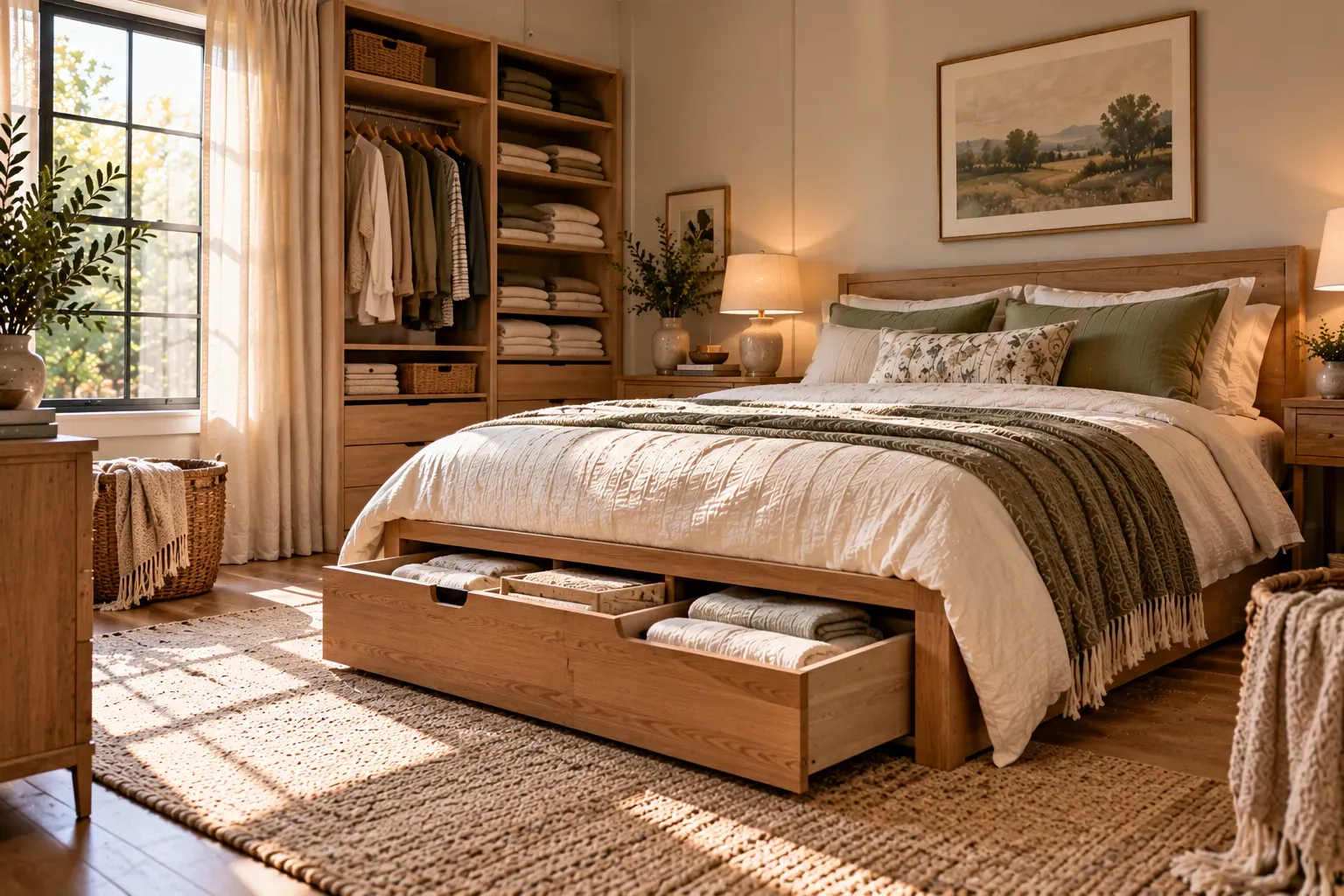
20. Finish With Personal Details
The most memorable master bedroom decor reflects the people who live there. A framed photograph, handmade ceramic, or travel keepsake can make a polished scheme feel genuinely lived-in.
Edit accessories rather than filling every surface. Keep bedside essentials within reach and leave space for water, glasses, and books; a comfortable room should work on ordinary weekdays.
Practical Tips Before You Redecorate
Measure the room, including door swings and wardrobe access, before shopping. Choose a realistic budget and prioritize sleep comfort, bedroom lighting, and bedroom storage. Save decorative purchases for last. For additional layout inspiration, browse bedroom design examples from Livspace, then adapt ideas to your own dimensions and needs.
Conclusion: Make Bedroom Ideas Work for You
The best Bedroom Ideas are not always the most expensive. A thoughtful combination of practical furniture, layered lighting, comfortable textiles, and meaningful details can transform the way your room feels. Choose two or three changes that address your biggest frustrations, and build gradually. A well-designed master bedroom should be peaceful at night, functional in the morning, and easy to maintain throughout the week.
Frequently Asked Questions
What bedroom colors are popular for 2027?
Warm neutrals, sage green, muted terracotta, and deep blue are versatile options. Choose according to your daylight, furniture, and personal preference rather than trends alone.
How can I update a master bedroom on a budget?
Start with better lighting, new pillow covers, rearranged furniture, and fresh paint samples. Secondhand bedside tables can offer character without the cost of a full suite.
How do I make a small master bedroom feel larger?
Keep walkways clear, use proportional furniture, add wall-mounted lighting, and reduce visual clutter. Floor-length curtains can also emphasize room height.
