12 Floor Lamps for Living Room Ideas (2027)
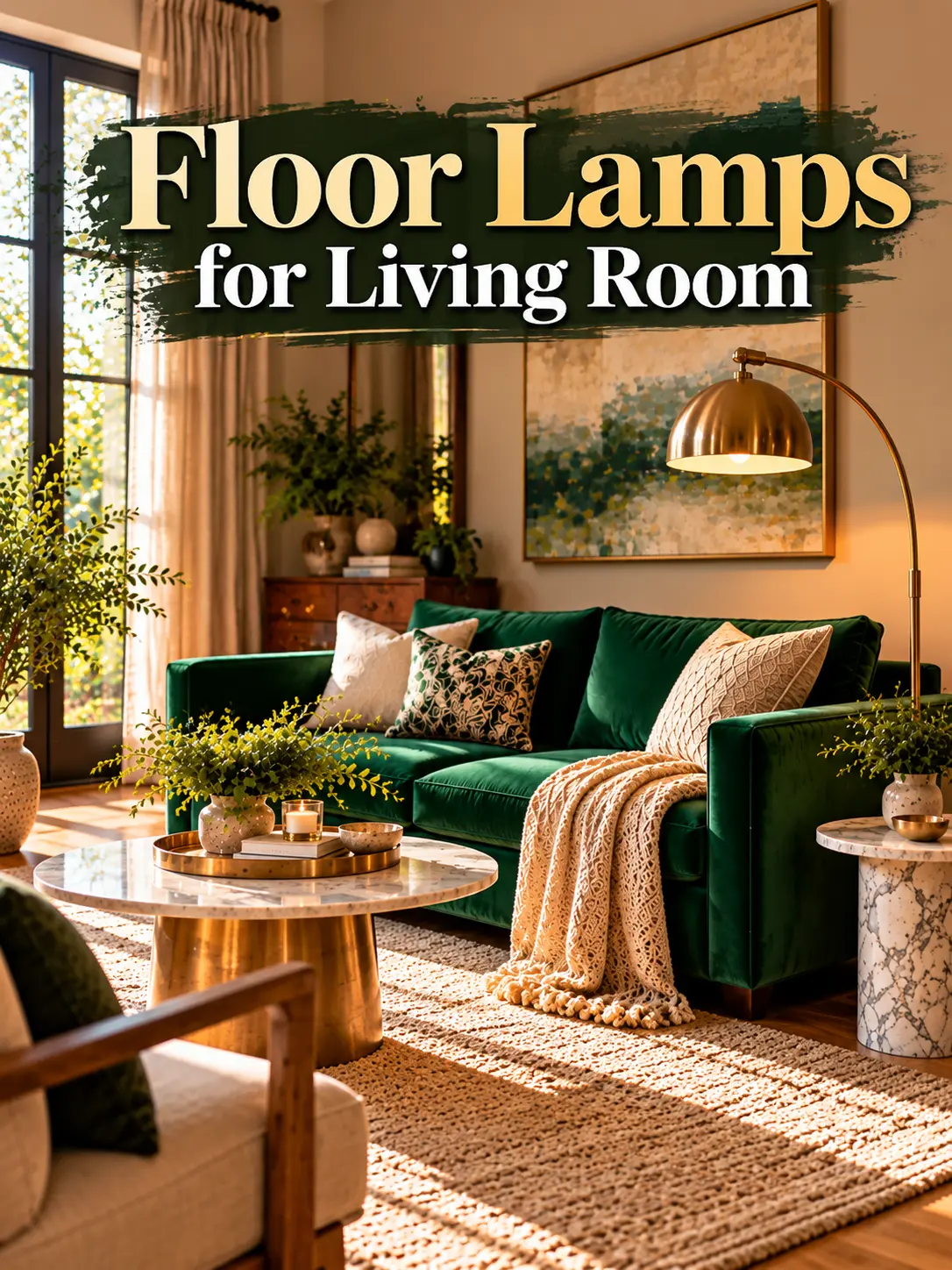 Save to Pinterest
Choosing floor lamps for living room spaces in 2027 is less about following one trend and more about placing the right light where life happens. A good lamp can make reading easier, soften a shadowy corner, or give a plain sofa a more finished look. These twelve ideas cover proportions, shade materials, placement, and everyday usability so you can find a style that suits your room and budget.
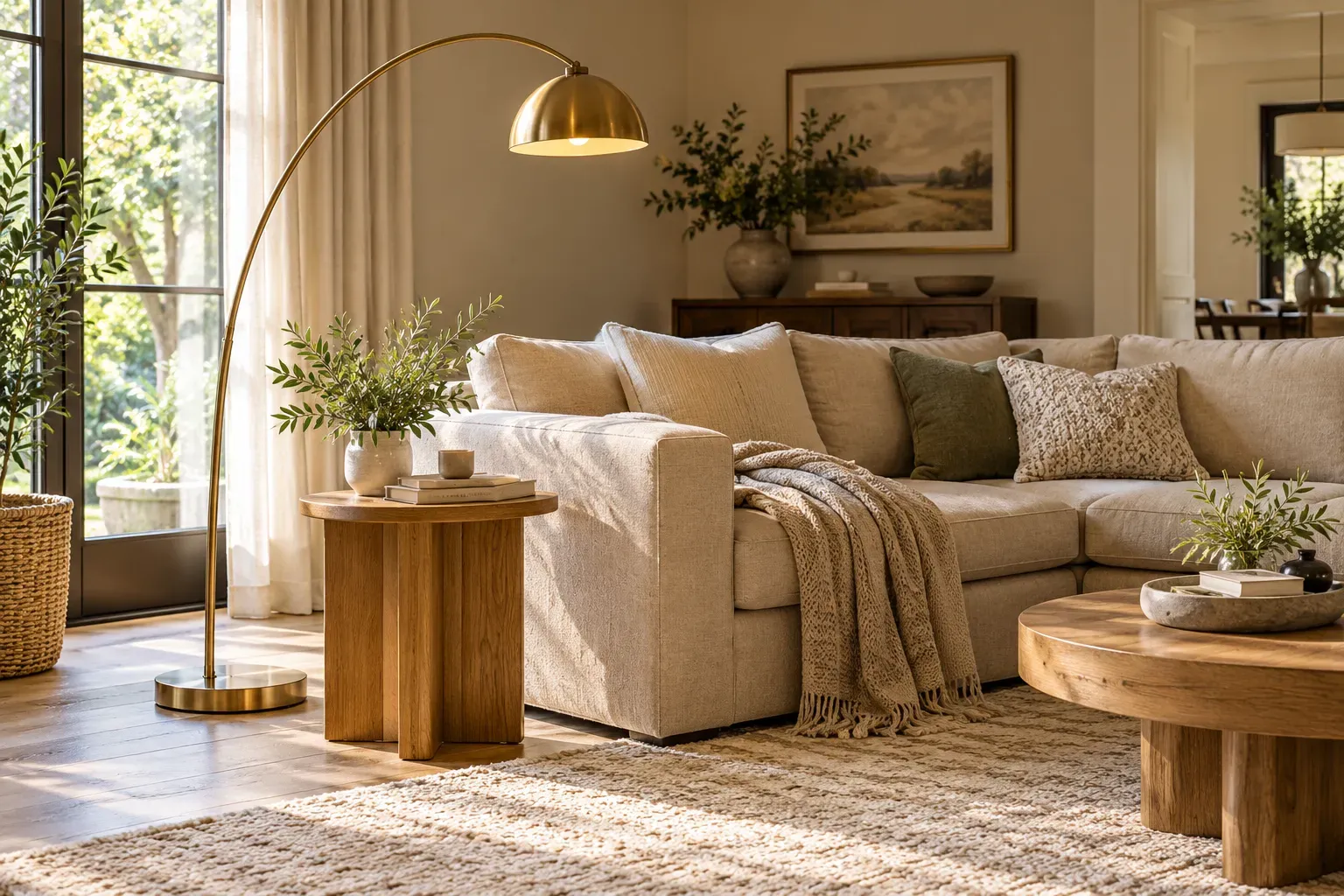
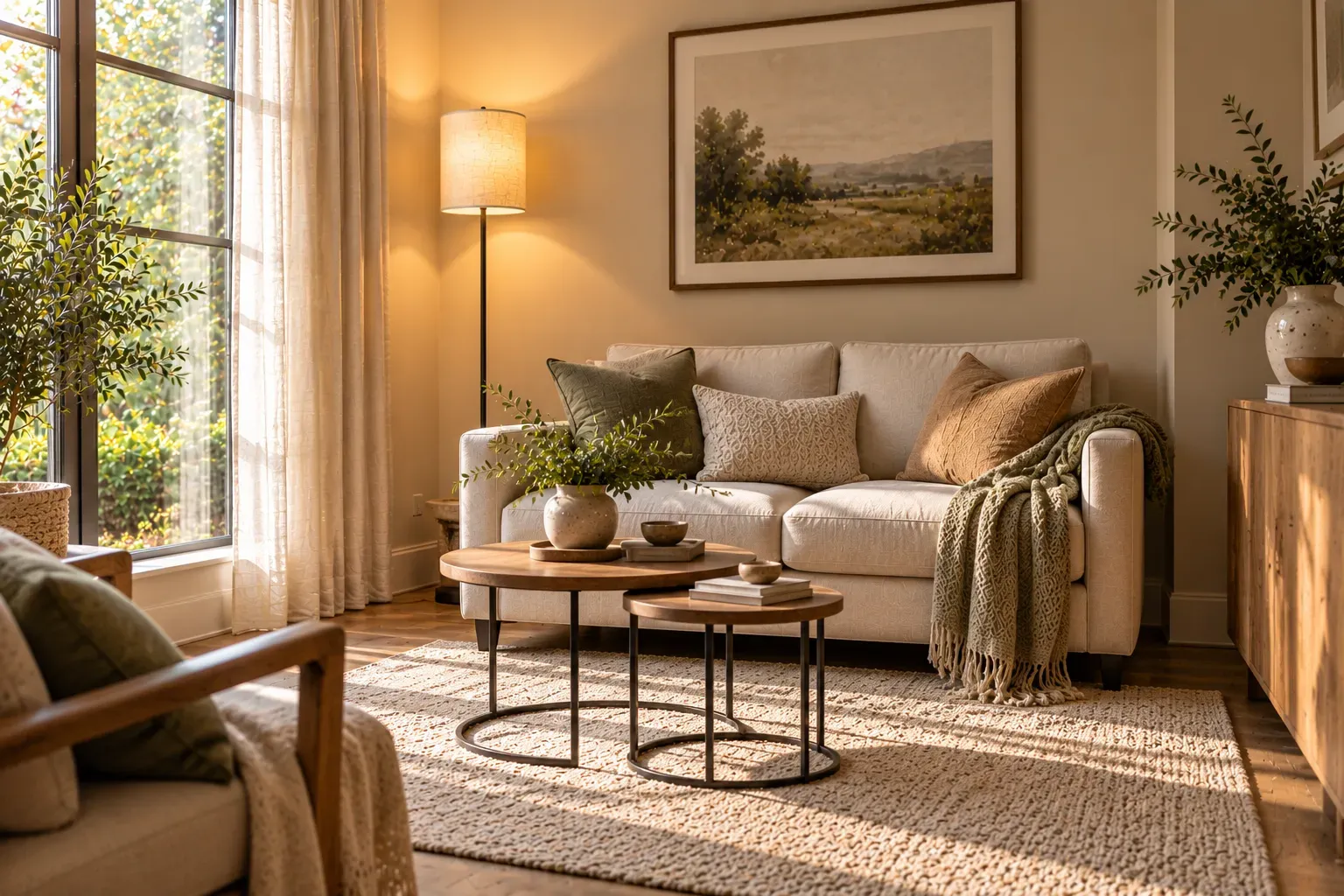
1 Choose a Slim Arc Lamp for Sofa-Side Reading
A slim arc lamp brings light over a sofa without requiring a side table. Look for a stable, weighted base that can tuck beside the sofa rather than in the walking path. A shade positioned slightly behind your shoulder makes reading comfortable and keeps glare out of the television.
Measure the reach before ordering. An oversized arc can hover awkwardly above the coffee table, while a short arm may leave your book in shadow. Check the manufacturer’s clearance and keep cords against the wall with a suitable cable cover. Pair the lamp with a warm, dimmable bulb and a shade that hides the bright point of light.
2 Soften a Corner with a Linen Drum Shade
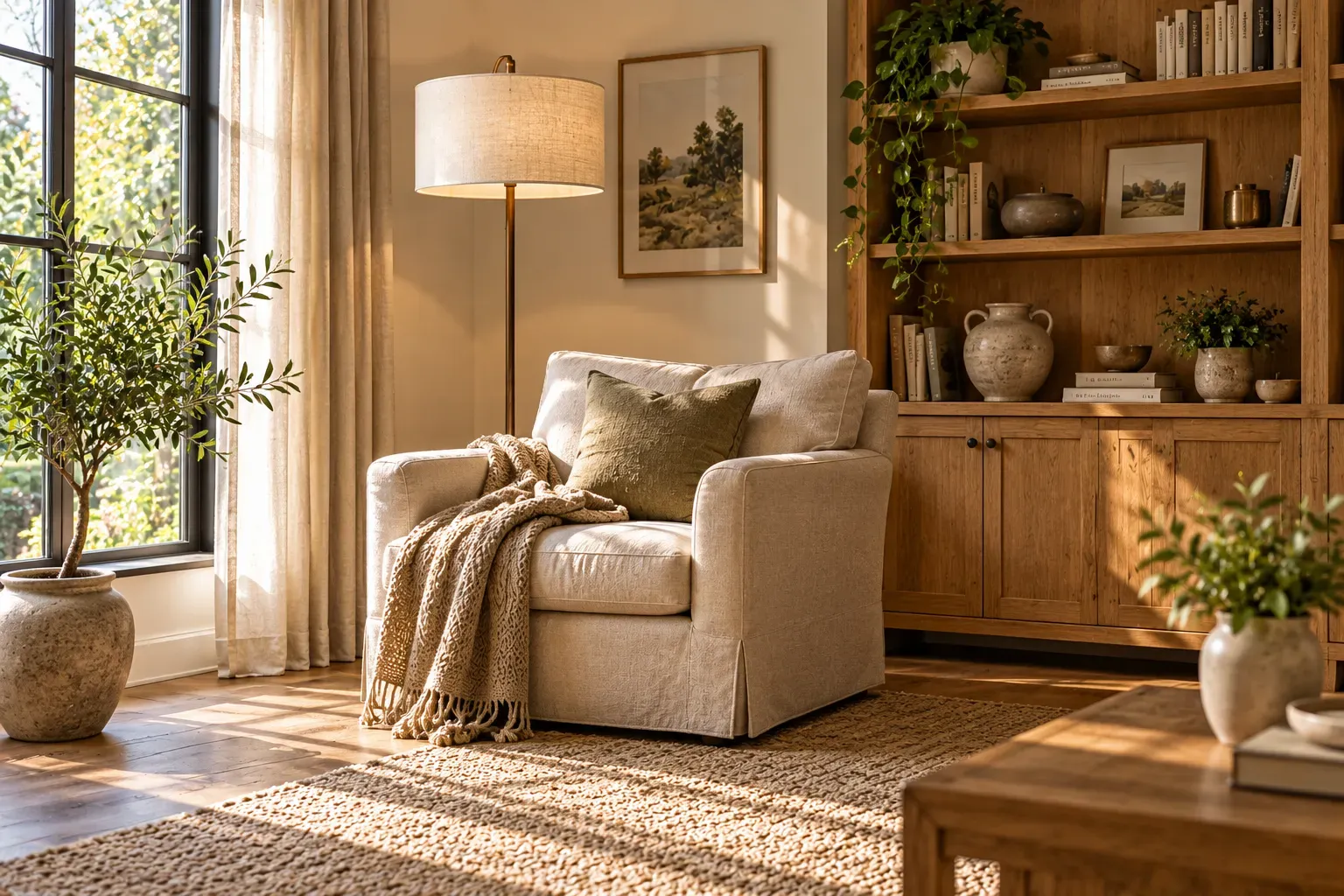
A linen drum shade gives a living room gentle ambient light rather than a sharp spotlight. It works especially well beside a bookcase, in a neglected corner, or near a comfortable armchair. Choose a shade wide enough to diffuse the bulb but not so wide that it crowds the furniture.
Look at the shade when the lamp is switched on, not just in a product photo. Thin fabric can reveal the bulb silhouette, while an opaque lining may send most light upward and downward. For relaxed evenings, start with a warm-white LED around 2700K and adjust brightness to the room.
3 Add a Sculptural Statement Beside a Neutral Sofa
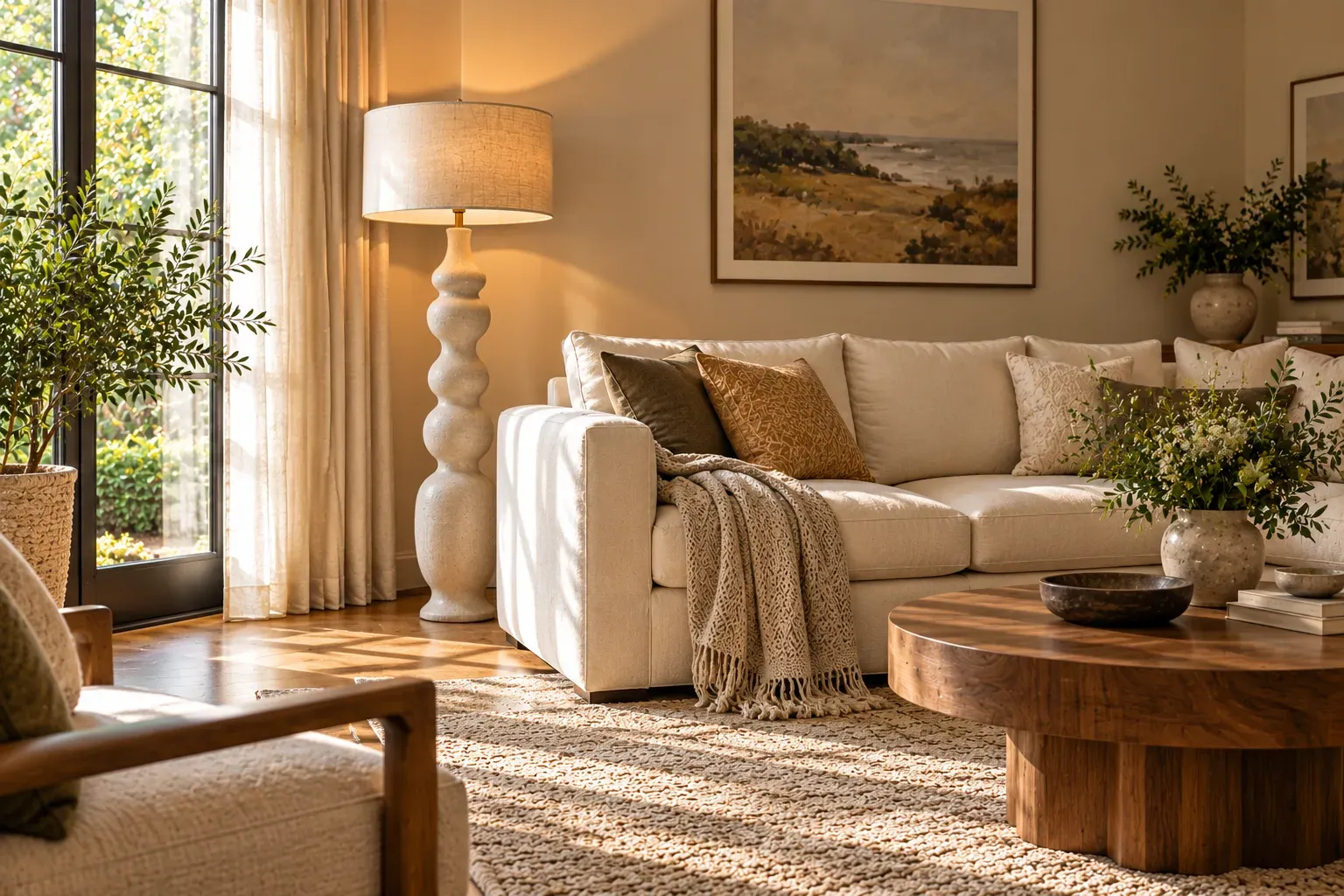
A sculptural floor lamp can supply the visual interest that a quiet living room needs. Think of a curved wooden stem, stacked ceramic forms, or a restrained geometric metal base. Keep nearby furniture simple so the lamp reads as one considered focal point.
Before buying, check the lamp from the doorway and from your usual seat. A dramatic base may look striking in isolation but become cluttered beside a narrow sofa. Confirm the switch is reachable and the shade directs usable light. If you have children or pets, favor a low center of gravity and secure placement.
4 Use a Tripod Lamp to Balance a Wide Wall
Tripod lamps have enough visual presence to anchor an empty stretch of wall, particularly near a long sectional or a media console. Wooden legs introduce warmth; slim metal versions fit a more contemporary scheme. Their three-point footprint gives the room a relaxed architectural rhythm.
The footprint is the main trade-off. A tripod that looks narrow online may spread much farther at floor level. Tape its dimensions on the floor before purchasing, especially in a small apartment. Use a shade with a comfortable diffusion level, and keep the legs away from loose rug edges.
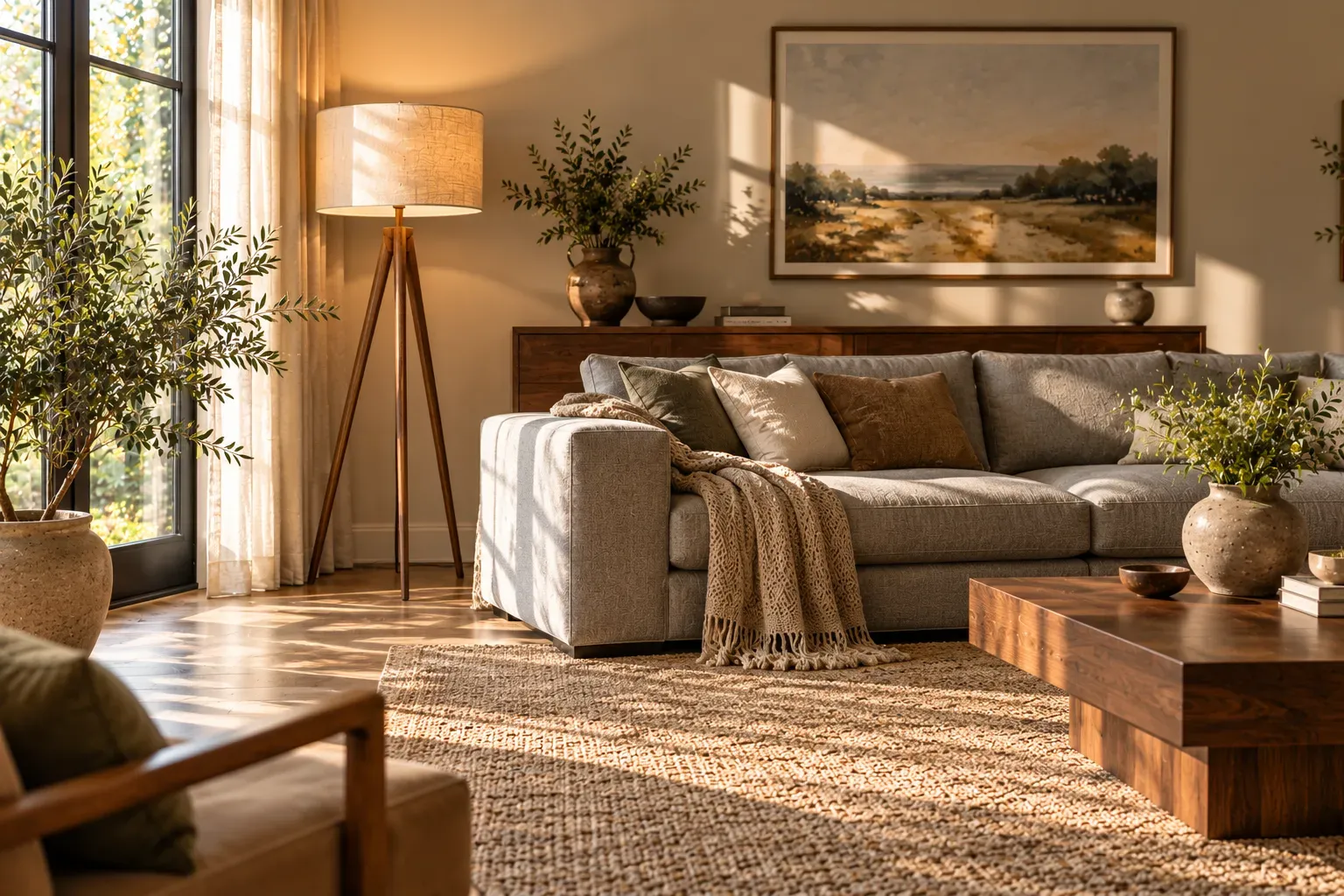
5 Create a Cozy Glow with an Uplighter
An uplighter sends light toward the ceiling, where it reflects back as soft general illumination. This makes it useful when a living room has harsh overhead fixtures or little natural light. A simple torchiere can brighten the room without putting a bare bulb in your direct sightline.
Use the uplighter as one layer, not the only source. Reading and detailed tasks still benefit from a nearby directional lamp. Check the fixture’s heat and bulb compatibility, and avoid placing it directly under low shelves or delicate materials. Dimming is especially valuable because the amount of reflected light changes with ceiling height and paint color.
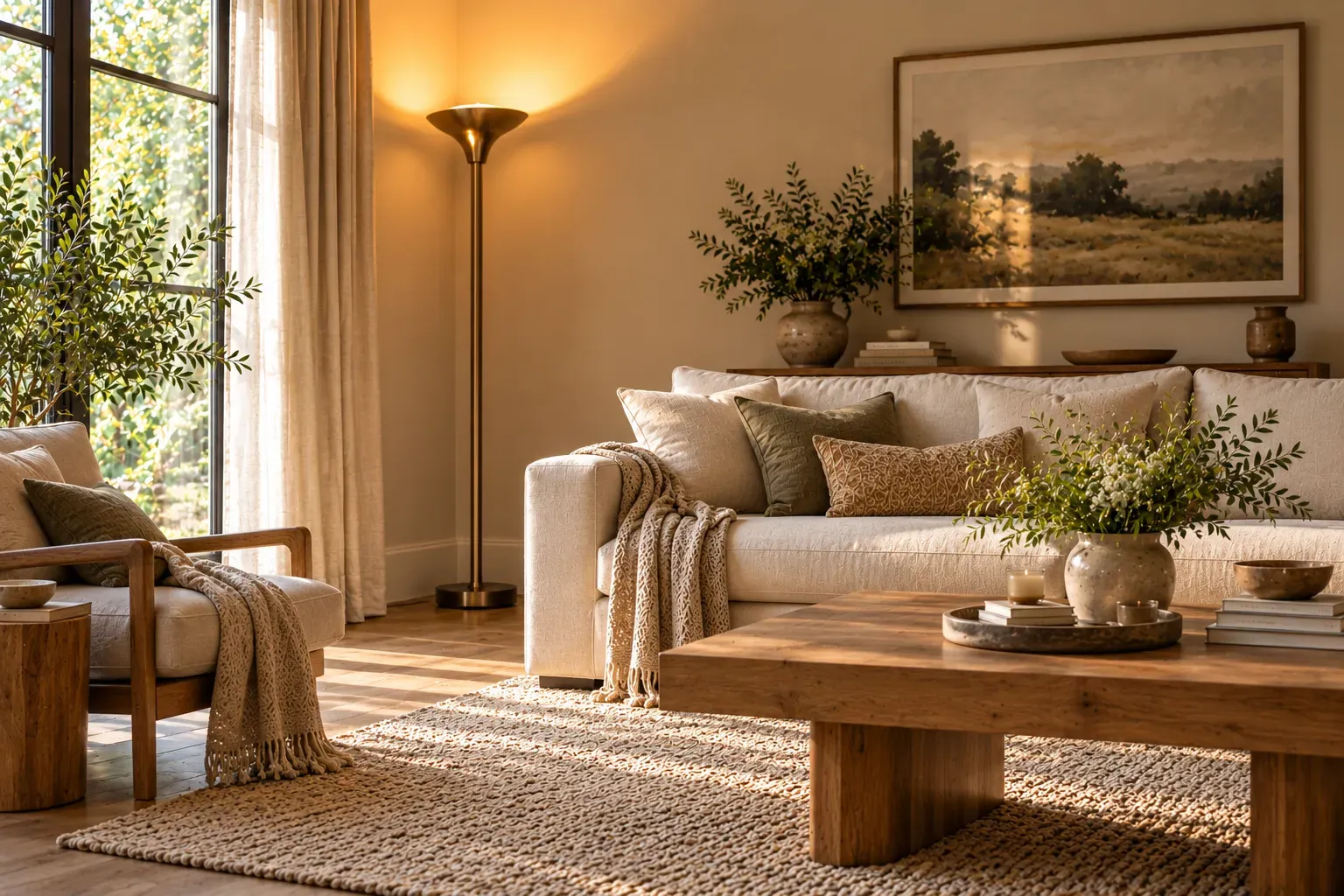
6 Try a Black Metal Lamp for Clean Contrast
A matte black floor lamp creates a crisp outline against cream walls, pale oak furniture, and light-colored upholstery. Choose a thin stem and modest shade if you want contrast without heaviness. In a contemporary living room, a black lamp can visually connect window frames, picture frames, or cabinet hardware.
Avoid matching every accessory in black; too much repetition can flatten a soft interior. Instead, echo the finish once or twice and let warmer materials provide balance. Dust and fingerprints show on some dark finishes, so a slightly textured coating can be easier to maintain.
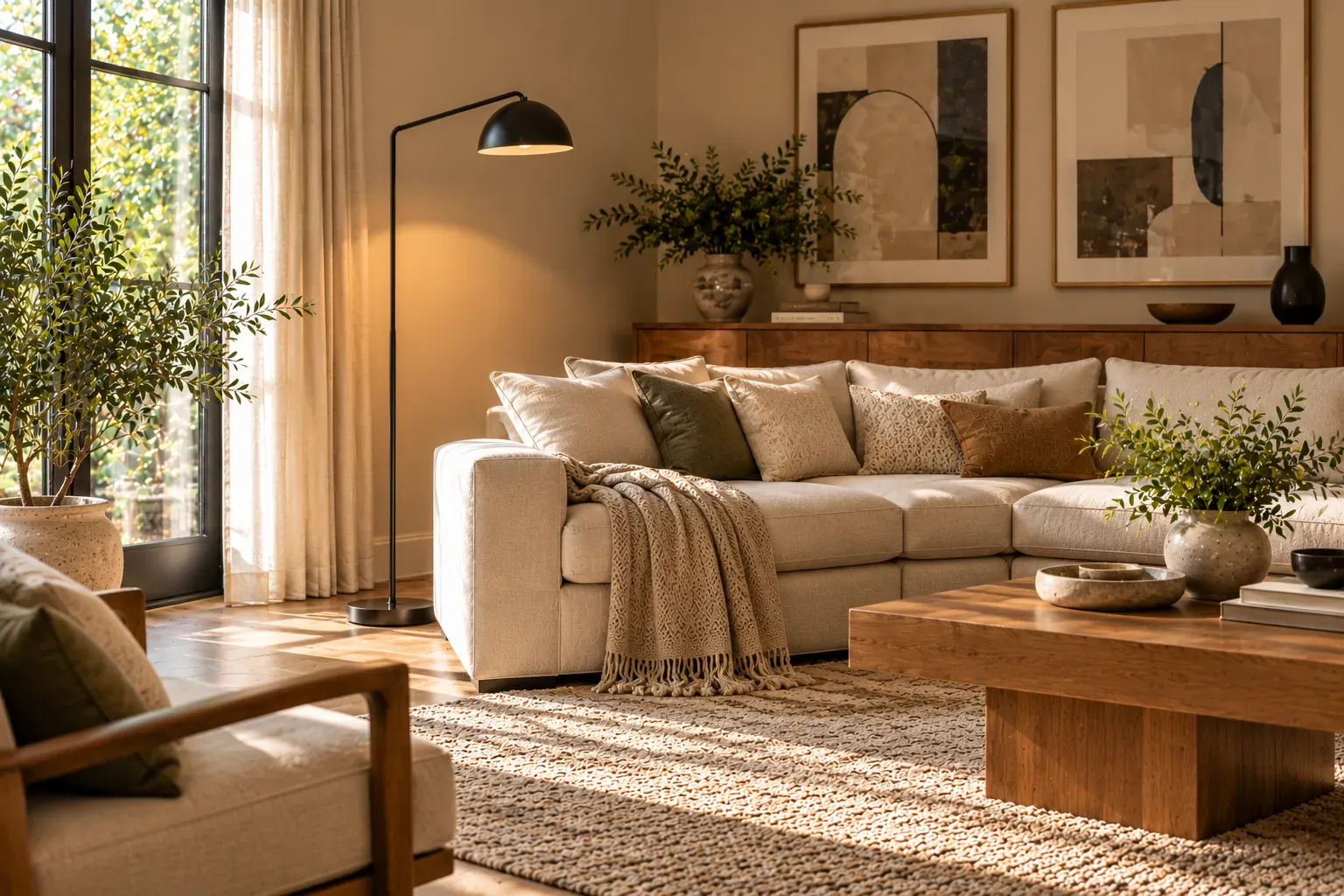
7 Bring Warmth with a Natural Wood Floor Lamp
Natural wood makes a floor lamp feel at home in Scandinavian, Japandi, and relaxed transitional interiors. Oak, ash, or walnut tones add subtle grain beside linen sofas and woven rugs. Choose a clean silhouette rather than a heavily carved base if the room is compact.
Wood tone matters more than an exact furniture match. A slightly different shade can look layered and believable, while an identical stain may appear overly coordinated. Keep the lamp away from persistent moisture and inspect how the wiring is routed through the frame.
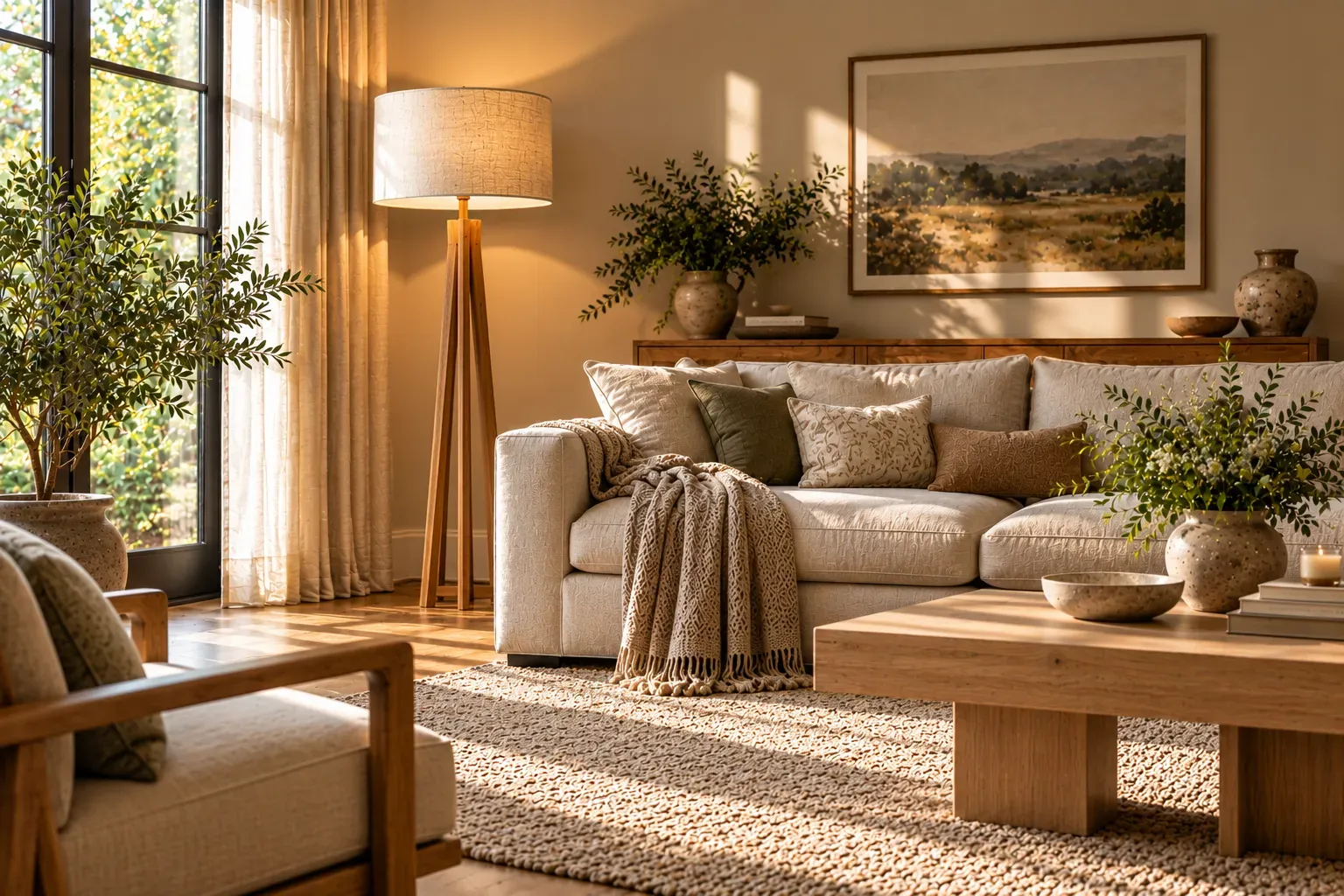
8 Fit a Compact Lamp into a Small Living Room
For a tight living room, choose a floor lamp with a narrow base and a shade that stays within the footprint of the furniture beside it. A simple pole lamp can slide behind an armchair or next to a compact sofa, freeing valuable tabletop space.
Measure the actual floor area, including the plug and cord route, before choosing a model. A small base is not automatically stable, so check the product’s weight and construction. Avoid a shade at eye level when seated; direct glare makes even a stylish room uncomfortable.
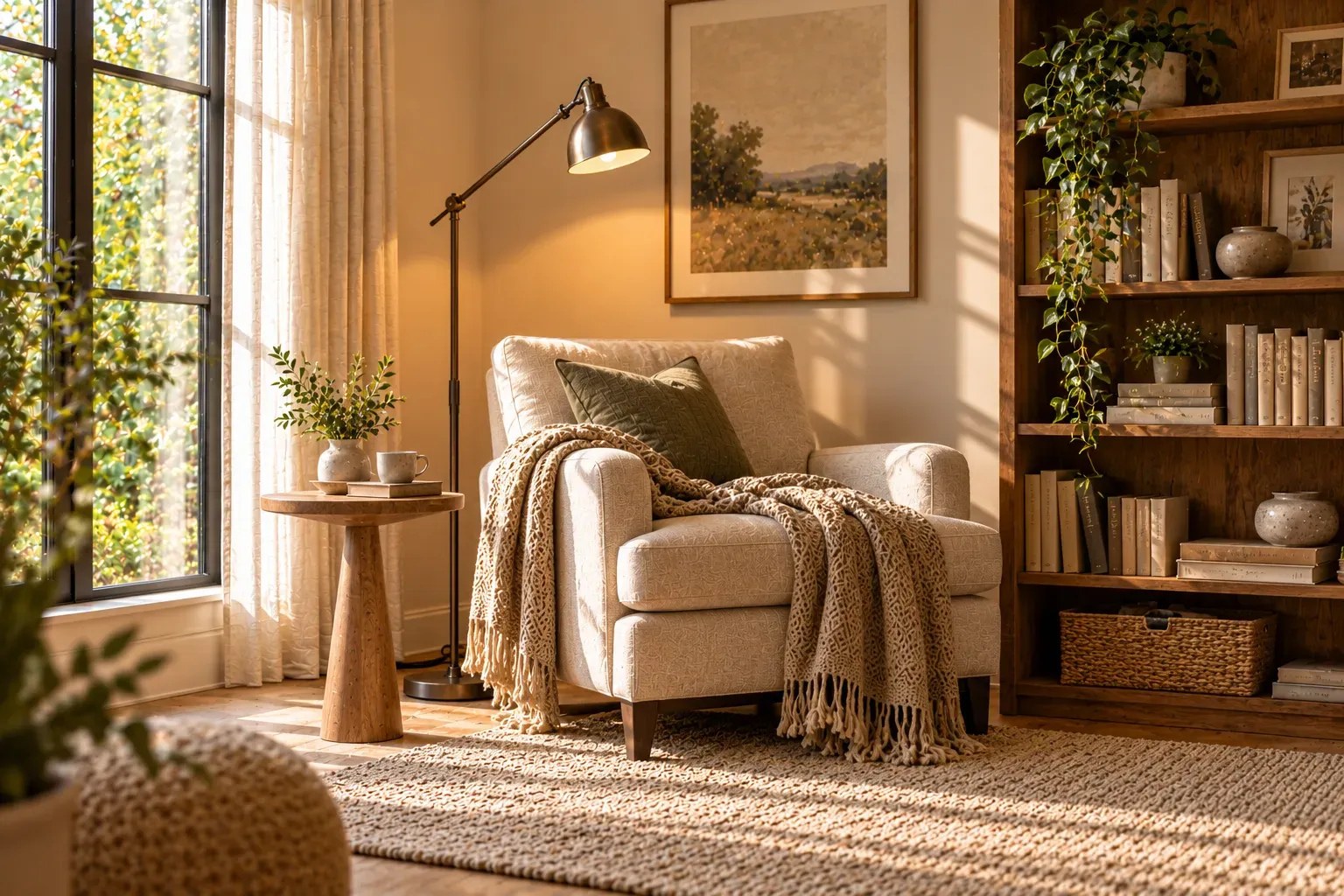
9 Position an Adjustable Task Lamp by Your Favorite Chair
An adjustable floor lamp earns its place when someone reads, knits, or works on a laptop in the living room. A pivoting arm or directional head lets you bring light to the task instead of flooding the entire room. Position it slightly behind and beside the chair to reduce glare on pages and screens.
Test the arm’s reach and the switch position before committing. Some attractive models have stiff joints or controls awkwardly located near the floor. Choose a bulb with comfortable color rendering so fabric, artwork, and book pages look natural. A dimmer is helpful when the same chair is used for both focused reading and relaxed conversation.
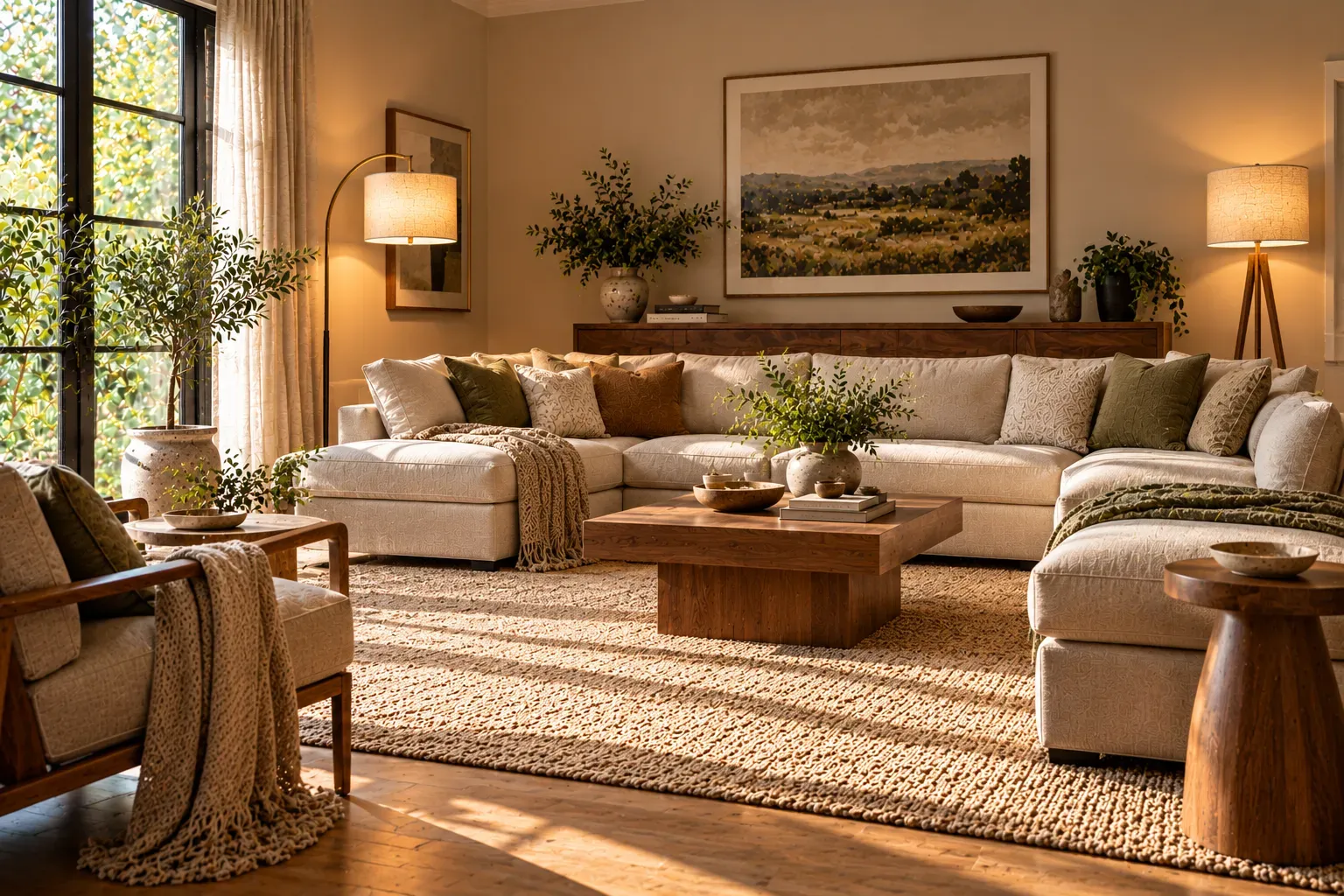
10 Layer Two Floor Lamps in a Long Living Room
A long living room often has bright and dark zones, especially when the ceiling light sits near the center. Two different floor lamps can create a more even, lived-in atmosphere. Try a shaded lamp beside the sofa and a directional reading lamp at the far end.
Switch both lamps on after sunset and assess the balance from several seats. If one corner looks glaring and the other feels dim, adjust the shade or bulb output before moving furniture. Smart plugs or accessible switches can make the arrangement easier to use daily.
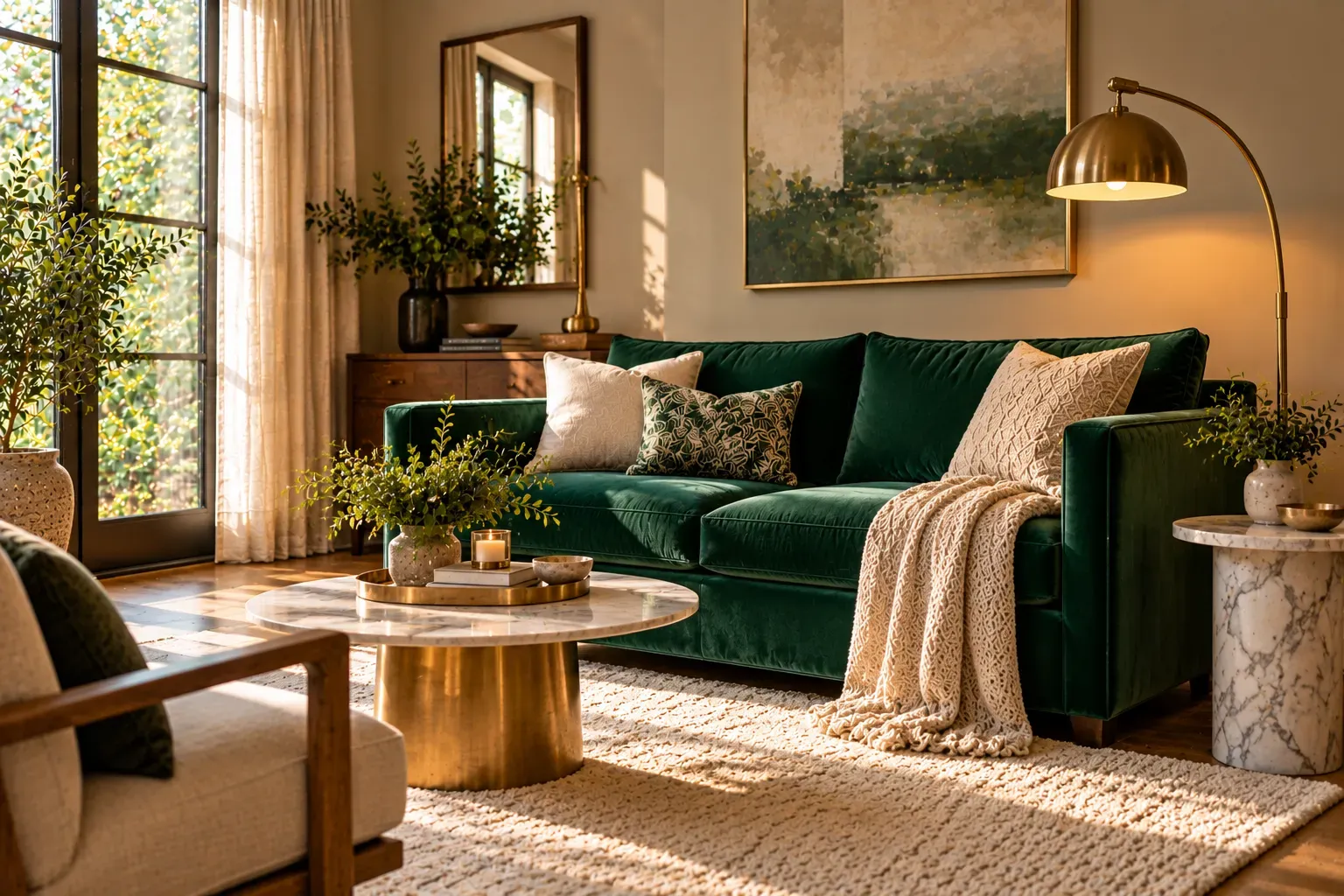
11 Pair a Brass Floor Lamp with Rich Velvet Seating
Brushed brass brings a gentle glow to living rooms with deep green, navy, rust, or burgundy upholstery. Next to a velvet sofa, a narrow brass lamp adds contrast without competing with the fabric’s texture. A warm cream shade keeps the combination approachable, while an adjustable metal head makes it more tailored.
Place the lamp where evening light can skim across the upholstery and reveal its texture. Very bright cool-white bulbs can make velvet look flat, so start with a warmer dimmable option. If you are styling a plush seating area, explore our velvet sofa ideas for complementary colors and proportions.
12 Use a Minimalist LED Lamp for Flexible Lighting
A minimalist LED floor lamp suits rooms where clean lines and adjustable brightness matter more than a decorative shade. Look for an integrated fixture with a comfortable diffuser, a stable base, and clear controls. Some models offer directional light or multiple brightness settings, which can make one lamp useful for both conversation and reading.
Check the manufacturer’s specifications carefully: integrated LEDs may not have replaceable bulbs, and advertised brightness can differ from the light you experience at the sofa. Favor a good warranty and controls you can operate easily. If the fixture offers adjustable color temperature, keep it warmer in the evening for a relaxed setting.
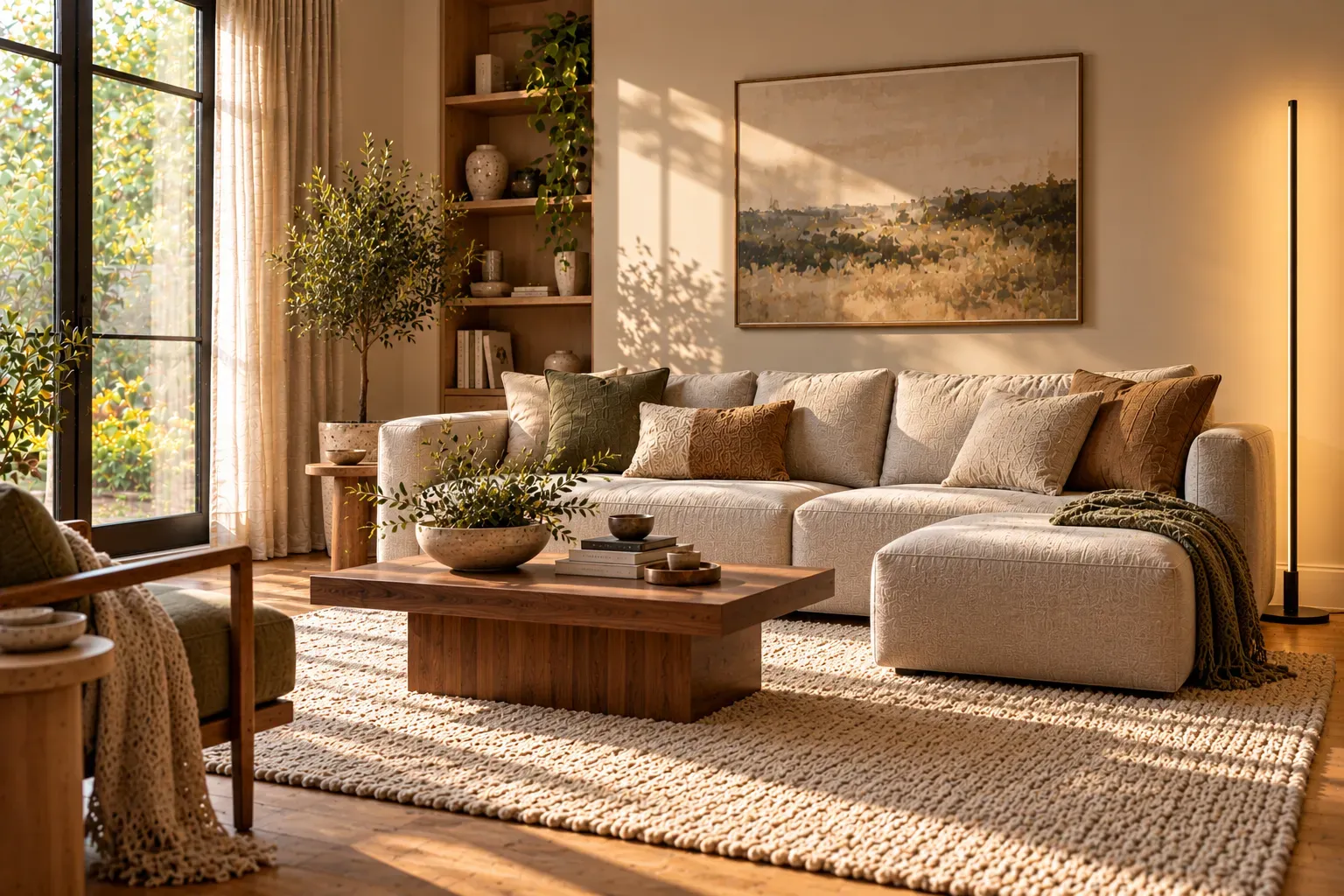
Practical Buying Tips and Common Mistakes
Before buying living room floor lamps, measure ceiling height, the lamp’s base, and the space between furniture. Compare bulb brightness, shade diffusion, switch access, and cord placement. A lower-cost lamp with a stable base and comfortable light is often a better purchase than an expensive statement piece that creates glare. Mix ambient lighting with task lighting instead of expecting one fixture to do everything.
In an open-plan home, aim for a consistent evening mood between the lounge and eating area. Our dining room renovation ideas offer useful context for coordinating adjoining spaces. For additional examples of lamp shapes and placement, see Kelley Nan’s floor lamp inspiration. Always follow the fixture’s bulb and safety specifications.
Conclusion
The best floor lamp ideas for living room design in 2027 start with your habits: where you sit, what you do after sunset, and which corners need more light. An arc lamp helps a reader, a linen shade softens conversation areas, and a slim task lamp makes a small room work harder. Choose comfortable light and sensible proportions first, then let the finish and silhouette express your style.
Frequently Asked Questions
Where should a floor lamp go in a living room?
Place it beside or slightly behind a sofa or reading chair, or in a dark corner where it will not block circulation. Check the view from seated eye level to avoid glare.
What color temperature is best for a cozy living room?
Warm-white lighting around 2700K is a common starting point for relaxing evenings. Choose a dimmable bulb where supported, and adjust brightness to your tasks and preferences.
Can a floor lamp be the only light in the room?
It can work in a very small room, but most living rooms benefit from layered sources such as a reading lamp, a shaded ambient lamp, and optional ceiling or wall lighting.
