
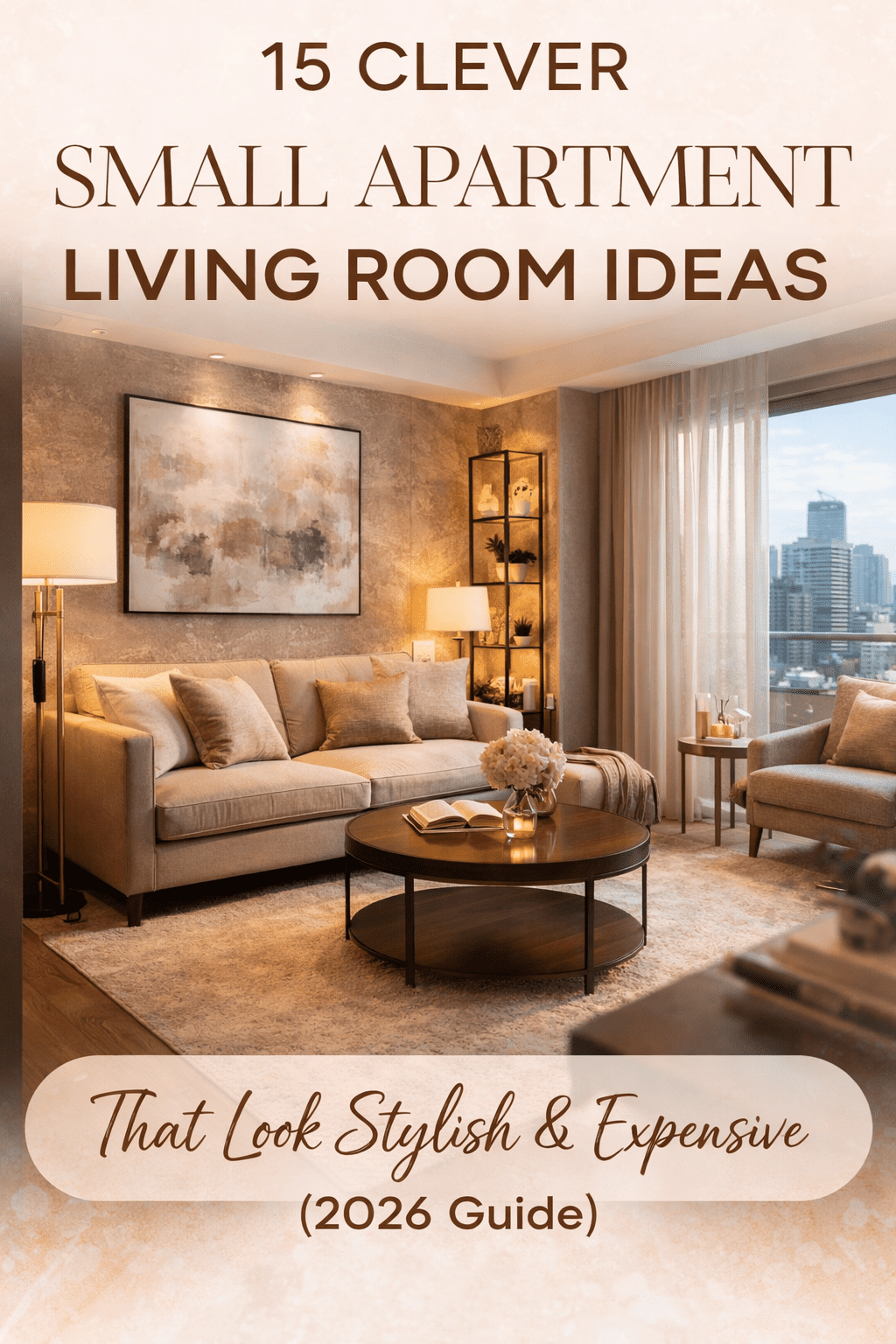
Creating a high-end feel within a compact footprint is one of the most rewarding challenges in modern interior design. Many design enthusiasts search for small apartment living room ideas that look stylish and expensive without needing major architectural overhauls. By mastering the relationships between visual weight, textile layers, and spatial geometry, you can seamlessly introduce a penthouse-inspired aesthetic into an urban studio or small apartment.
At FreeOnline-Calculator, our editors approach luxury styling with spatial precision. We leverage architectural scale calculations—balancing furniture proportions to open floor paths—to ensure every layout recommendation optimizes physical flow while maximizing high-end visual appeal.
01 — Editorial Trends
Why Micro-Luxury is the Defining Interior Movement of 2026
With metropolitan floor plans scaling down, the demand for highly refined, curated micro-environments has grown significantly. Design authorities note that “Micro-Luxury” has transitioned from a styling trend into a fundamental standard for modern apartments. Instead of packing a room with temporary, low-profile assembly pieces, the modern strategy prioritizes a curated selection of high-quality items that feature rich textures, solid craftsmanship, and distinct design narratives.
Palette Curation
The “Quiet Luxury” Cozy Palette
02 — The Master List
15 Clever Small Apartment Living Room Techniques
1. Install Floor-to-Ceiling Sheer Curtains
Mounting your drapery hardware directly below the ceiling line creates a continuous vertical line that draws the eye upward, beautifully mimicking high-ceilinged spaces. Opt for lightweight, off-white, or soft linen sheers to diffuse natural light while keeping the backdrop feeling airy, cohesive, and custom-made.
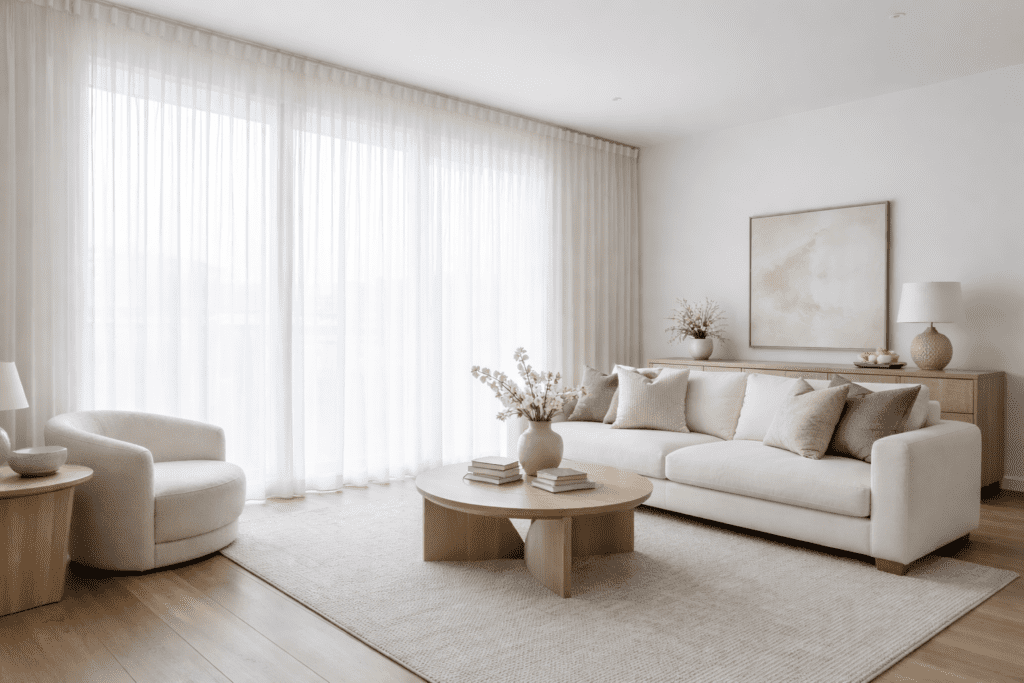
Ethereal drapery maximizing natural light diffusion and vertical scale.
2. Employ the “Float” Furniture Placement
A frequent misstep in small spaces is pushing every seating element flat against the perimeter walls. Shifting your sofa forward by just 3 to 4 inches creates clean shadows and natural breathing room, implying spatial depth and giving the entire layout a more thoughtful, designer feel.
3. Scale with Tall Statement Mirrors
Reflecting light is a fundamental way to make a room feel larger. A tall, floor-length arch or rectangular mirror framed in slim brass can serve as a stunning focal point. Place it opposite or perpendicular to your main window to catch incoming light and distribute it to darker areas of the room.
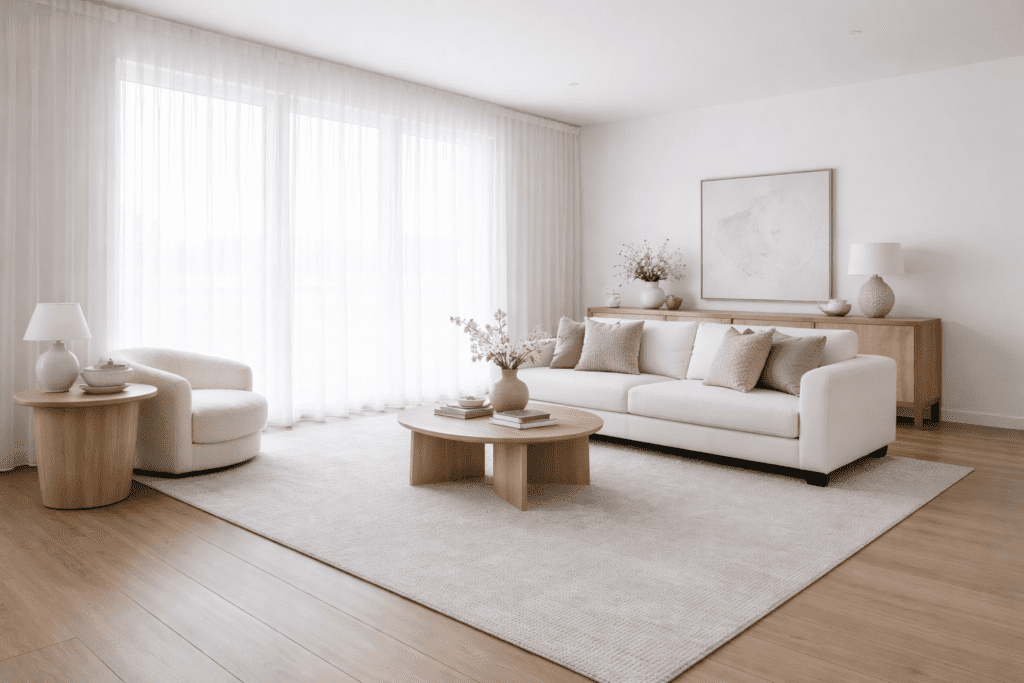
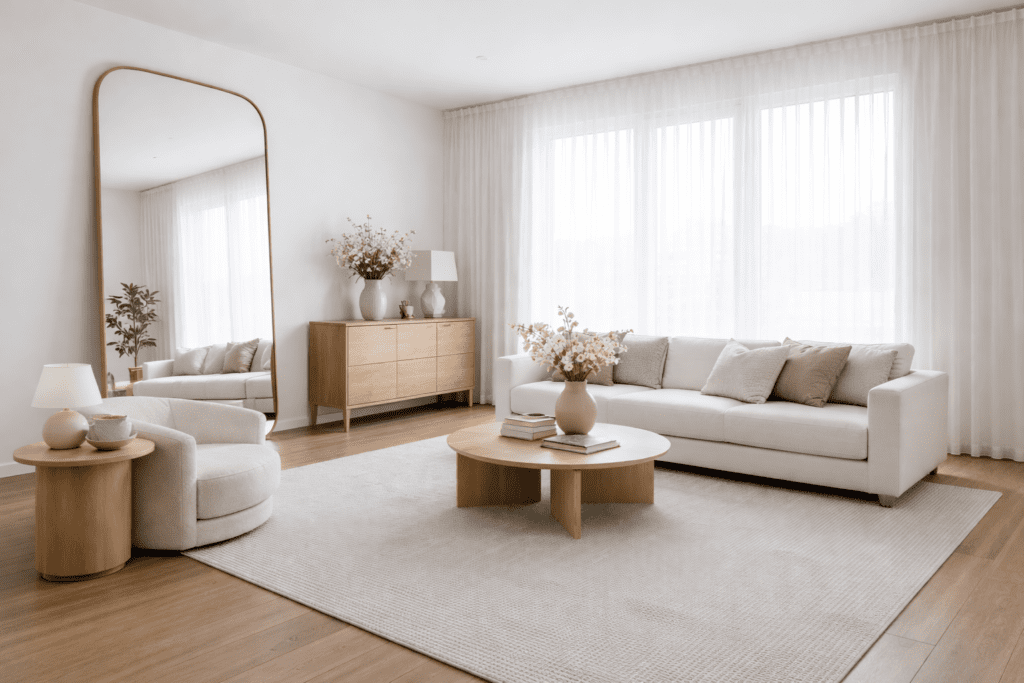
Left: The “Float” furniture technique. Right: Strategic positioning of light-enhancing mirrors.
4. Curate Glass and Polished Lucite Furniture
Choosing clear acrylic, glass, or polished Lucite tables helps preserve important surface space without adding visual clutter. Using glass-topped coffee tables or nested acrylic end tables allows your rugs or floor finishes to remain visible, keeping the room’s sightlines open and fluid.
5. Curate Strategic Monochromatic Layering
Using a unified color foundation—such as warm cream, stone, or soft taupe—allows you to experiment with rich, tactile textures. Mixing a plush bouclé armchair with a smooth silk throw, woven wool rugs, and cold stone accents delivers sophisticated depth without the noise of competing colors.
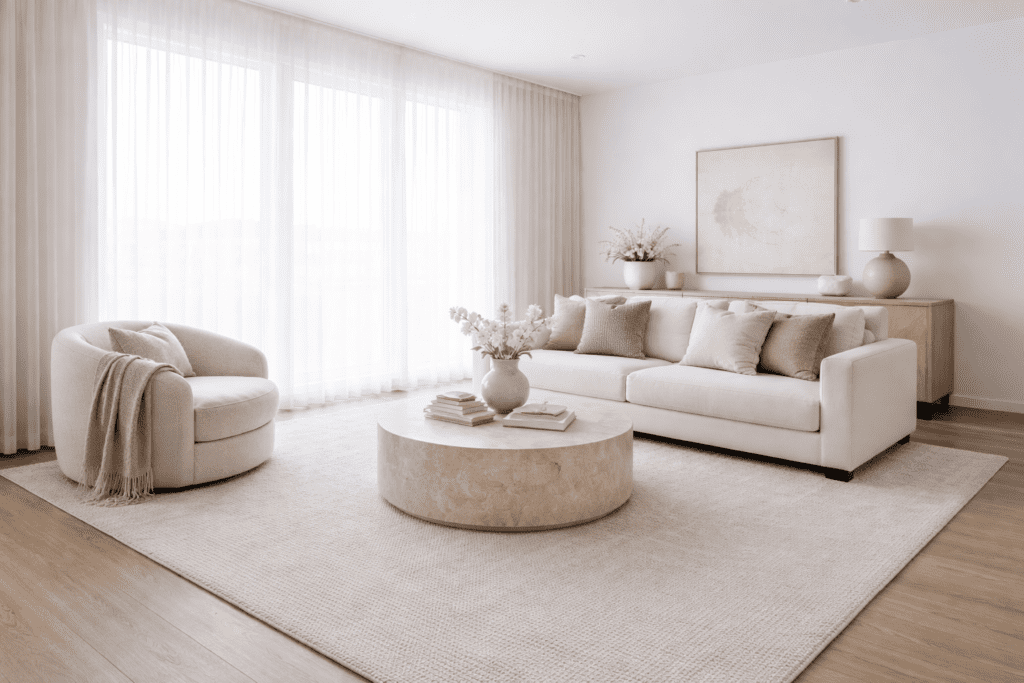
Layered tonal depth delivers a premium feel without color-clashing noise.
6. Incorporate Concealed Storage
Clutter instantly disrupts the flow of a small room. Look for clever, dual-purpose furniture, such as sleek tailored storage benches, structured ottomans with hidden compartments, or custom side tables. Keeping loose items neatly tucked away protects the clean, intentional lines of your space.
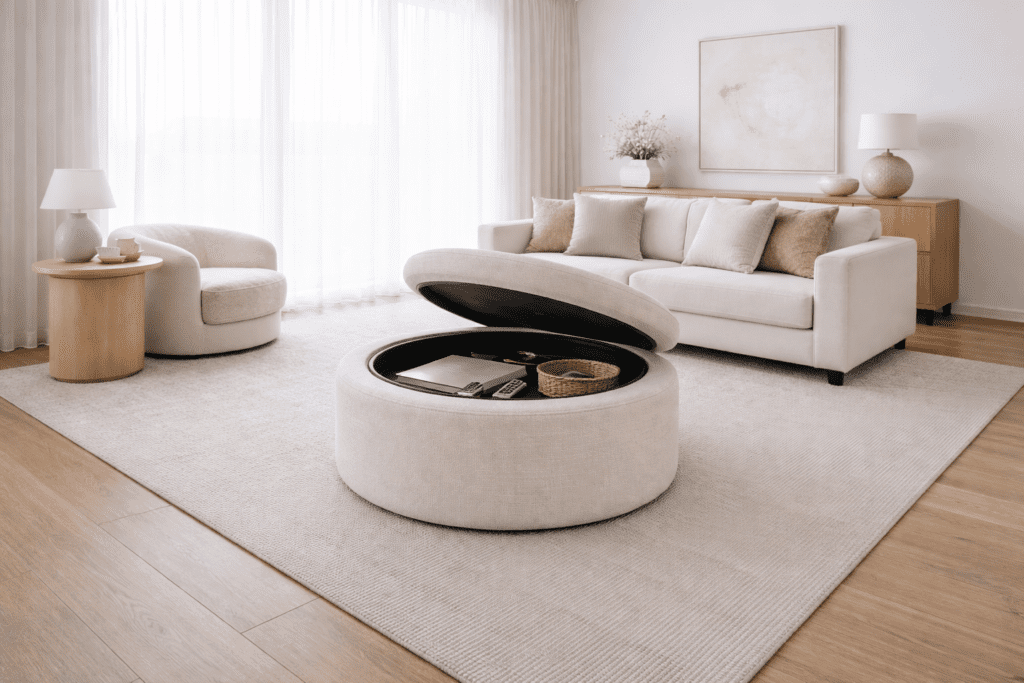
Minimalist concealed storage preserves neatness and enhances architectural lines.
7. Construct Tiered Lighting Landscapes
Relying on a single overhead ceiling fixture can flatten a room’s architectural features. Instead, layer your lighting with three distinct height zones: a structural floor lamp for reading, a warm table lamp on a stack of books for middle-level ambiance, and dimmable accent lighting or LED strips to gently highlight open shelving.
8. Mount Integrated Vertical Greenery
Rather than overcrowding low tables or floor space with multiple small plants, opt for vertical height. A single tall, slender plant—like a Fiddle Leaf Fig or a classic Olive Tree in an organic ceramic pot—adds fresh texture and guides the eye upward without occupying precious room.
9. Feature a Singular Hero Piece
Grouping small, mismatched art frames on a single wall can make a small living room feel cluttered. Instead, opt for one large-format, high-quality framed piece. This singular, gallery-style statement piece immediately anchors the room and makes it feel spacious and curated.
10. Introduce Stone and Warm Metallic Details
Juxtaposing rich organic stone against clean metallic finishes adds instant luxury. A marble catchall tray styled on a soft textile ottoman, paired with brushed brass hardware or matte black finishes, elevates simple base pieces with custom, professional-grade styling.
11. Prioritize Low-Profile Furniture Lines
Selecting furniture with sleek, low-slung profiles helps keep your view across the apartment unobstructed. Low sofas and low-backed lounge chairs preserve sightlines, making the ceiling feel higher and the overall room much roomier.
12. Anchor the Room with Large Rugs
Using a small rug that floats in the middle of a room visually chops up your floor space. To create a high-end look, choose a larger size (such as an 8×10) that allows the front legs of all seating to sit comfortably on the weave, instantly pulling the layout together.
13. Design with Symmetry and Balance
Symmetry brings a sense of calm and order that naturally feels expensive. Try framing a media console with a pair of matching table lamps, or arranging a pair of identical stools opposite a sofa to establish a structured, professionally designed layout.
14. Introduce Raw, Natural Textures
Using raw materials like rustic white oak, woven jute, and coarse linen keeps a neutral room from feeling cold or uninviting. These textured surfaces ground the space, creating the cozy, layered feel that forms the foundation of “Quiet Luxury” design.
15. Curate a Signature Scent Profile
An upscale environment should engage all the senses. Elevate your apartment using a cold-air diffuser with elegant notes of white tea, amber, cedarwood, and bergamot. This invisible detail creates an inviting, unforgettable atmosphere that mirrors high-end boutique hotels.
Three Crucial Mistakes to Avoid
-
The Floating Island Rug: Placing a small, floating rug that doesn’t touch any furniture legs, which visually shrinks the layout.
-
Wall-Hugging Layouts: Shoving all furniture tightly against the walls, which strips the room of natural shadow lines and depth.
-
One-Dimensional Lighting: Pointing a single harsh overhead light down, flattening the space instead of casting warm, layered pools of light.
03 — Layout Formula
How to Frame the Ideal Spatial Layout
A smart spatial layout serves as the absolute blueprint for any upscale small home. In compact spaces, establishing clear boundaries without relying on physical walls is key. Try using the back of a floated sofa or a slender, open console table to define a transition zone between the entryway and the living room. Organizing these zones allows a smaller layout to feel expansive, purposeful, and comfortably lived-in.
“The hallmark of luxury is not abundance; it is the deliberate presence of empty space, allowing the eye to rest and admire the curated surroundings.”
04 — Minimalist Editing
Elevating Your Space with Simple Accents
Achieving a high-end look doesn’t require a massive budget; it relies on careful, intentional editing. Try clearing your surfaces of small, busy decorative objects. Swap clusters of clutter for one or two high-impact statements, such as an architectural marble bowl or a beautifully photographed coffee table book. Emphasizing space over objects is the simplest way to introduce sophisticated, high-end energy into your apartment.
05 — Design FAQ
Frequently Asked Design Questions
How can I make my small living room look expensive on a budget?
Focus on editing, lighting, and textiles. Mount your curtain hardware high and wide to visually extend the walls, clear cluttered surfaces, and use multiple warm accent lamps. These simple adjustments instantly elevate the room without requiring a major investment.
What is the most space-saving layout for a small living room?
An L-shaped configuration with a compact, low-profile sectional positioned against a corner is highly effective. This approach maximizes seating space while keeping the central floor area open, clean, and comfortable for walking through.
How do I choose the correct rug dimensions for an apartment?
Opt for a larger size, such as an 8×10. Ensure the front feet of your principal furniture pieces (sofa and accent chairs) sit comfortably on the rug. This setup anchors the layout and makes the seating zone feel spacious and integrated.