12 Stunning Retro Bathroom Styles to Try in 2027
 Save to Pinterest
Great Bathroom Ideas do not have to look brand new. The most inviting retro bathrooms borrow a recognizable detail from another decade—checkerboard tile, a pastel wall or a curved mirror—then adapt it to modern routines. These twelve retro bathroom styles balance nostalgic character with realistic maintenance, storage and renovation costs. Whether you have a tiny powder room or a family bath, start with one signature element and build carefully around it.
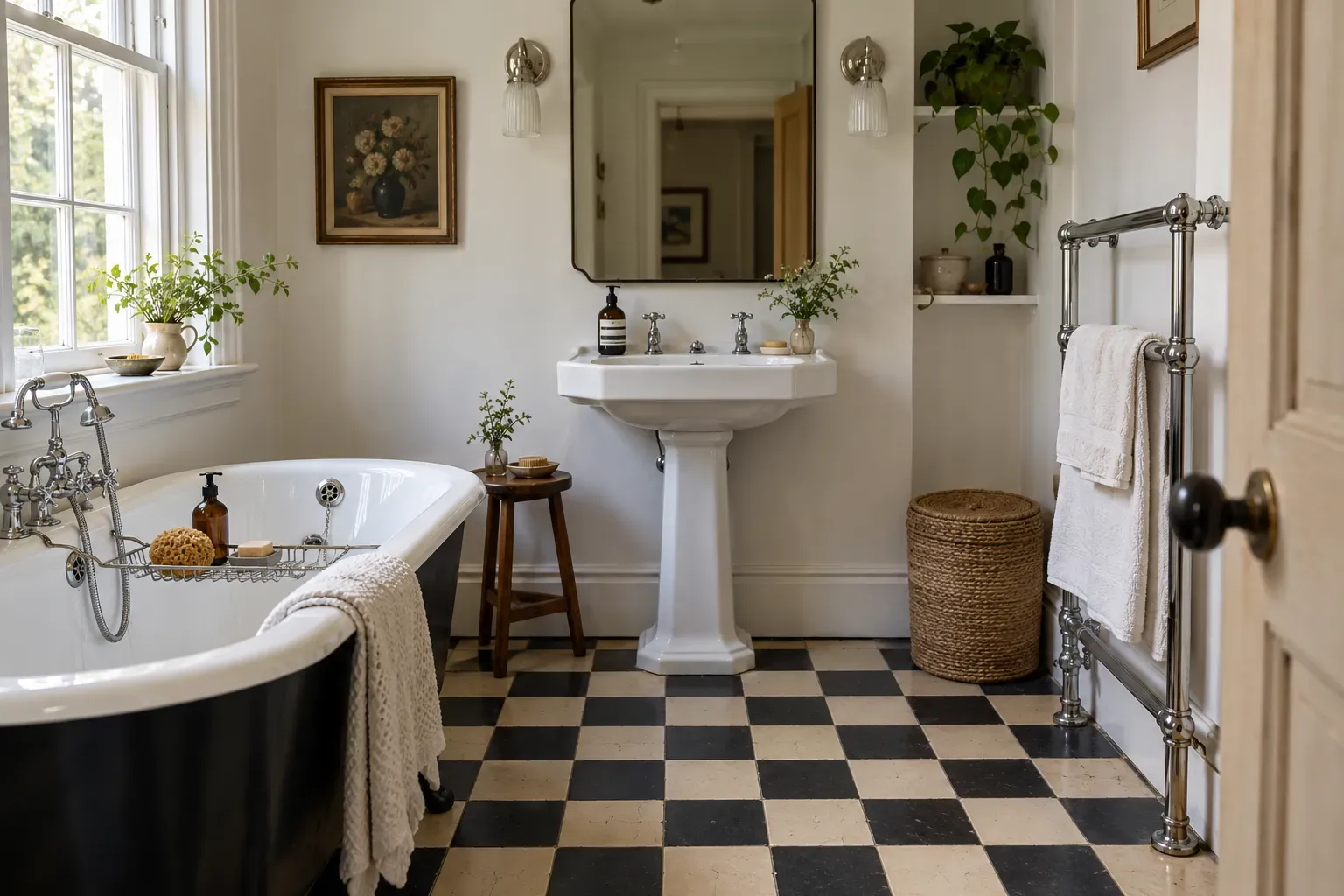
1. Checkerboard Floors with Warm White Walls
Choose matte porcelain tiles rather than slippery polished stone, and test the scale with paper templates before ordering. A small checkerboard pattern can make a narrow bathroom feel busy, while larger squares create a calmer rhythm.
The contrast works best when the surrounding surfaces stay restrained. Warm white walls, a simple mirror and one wooden accent prevent the floor from becoming theatrical.
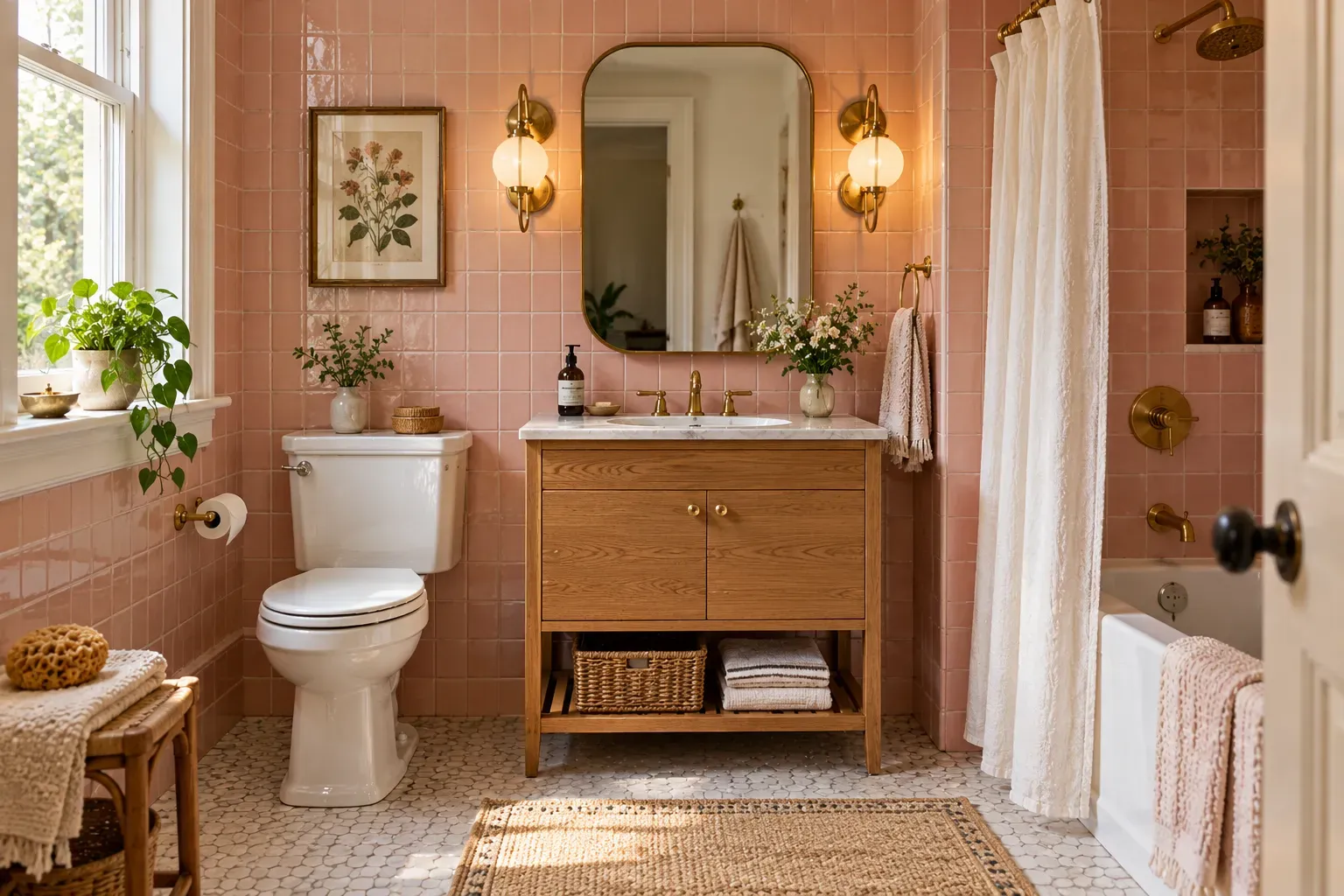
2. Pastel Pink Tile with Modern Brass
Soft pink tile brings a genuine midcentury mood without requiring an entirely vintage room. Use a muted blush instead of saturated bubblegum and sample it under both daylight and evening bulbs.
Brushed brass pairs nicely with pink, but mixing every fitting in gold can feel forced. Keep the shower hardware and drain finishes coordinated where possible. Choose a stain-resistant grout and check that any tile selected for a shower is rated for that installation.
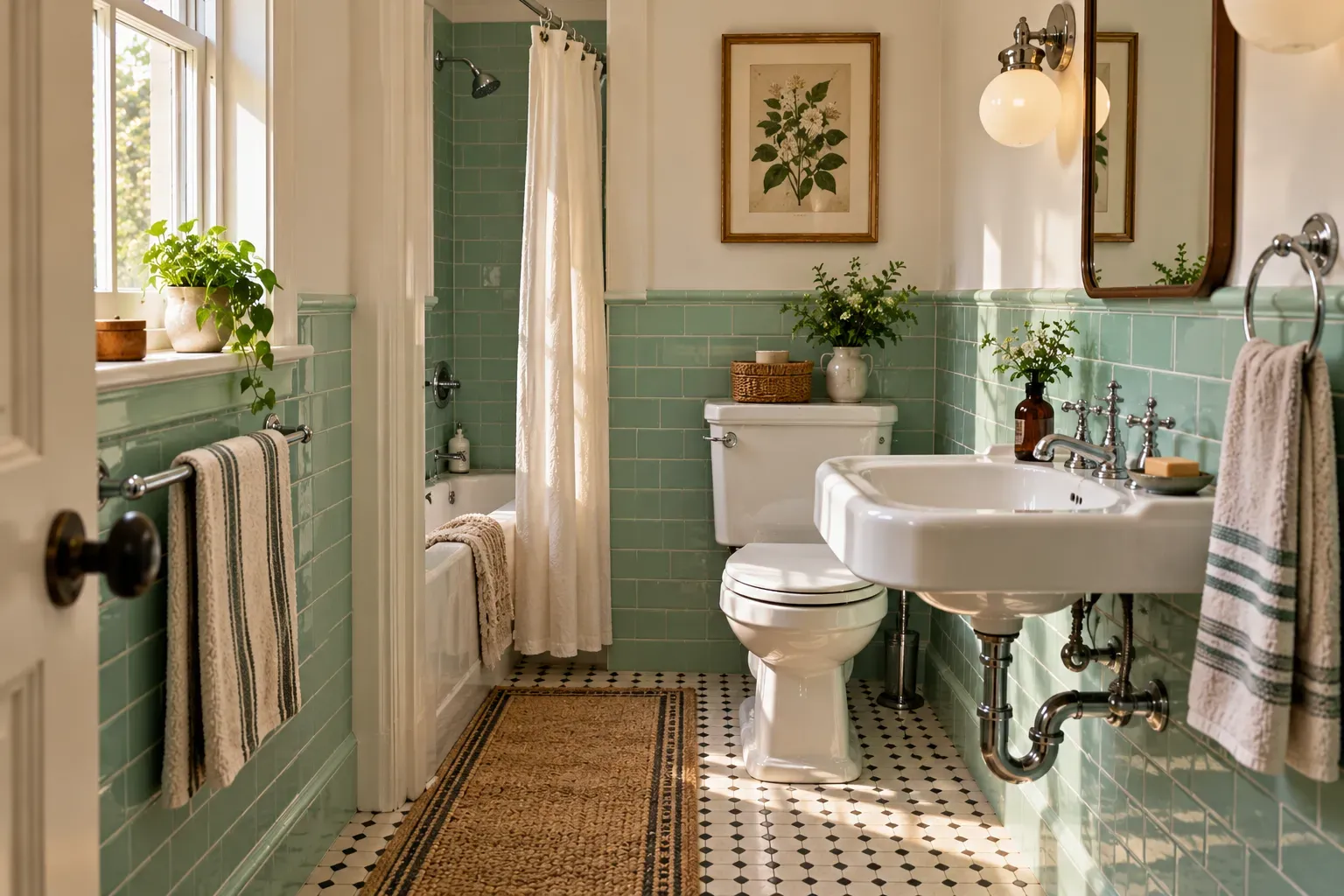
3. Seafoam Green Subway Tile
Seafoam green is one of the easiest retro shades to live with because it reads fresh rather than overly sweet. Install it as wainscoting around a basin or bathtub, with paint above to keep costs manageable.
Before committing, compare green samples beside your existing white fixtures; some shades turn gray or yellow in artificial light. Chrome is a reliable, affordable finish that suits the era. Add one botanical print and striped textiles instead of several nostalgic accessories.
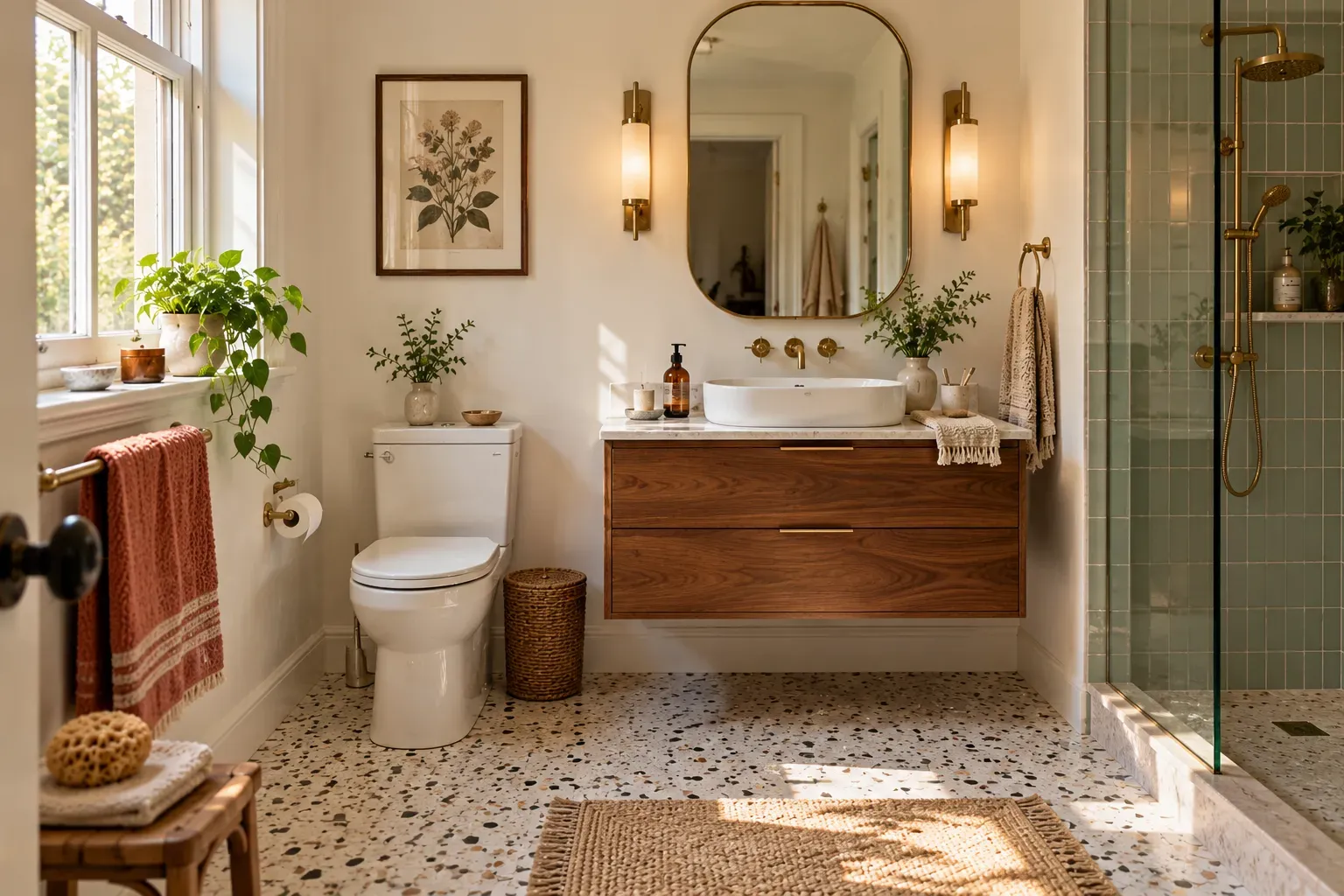
4. Terrazzo Floors with Walnut Details
Terrazzo brings playful speckles that suit both vintage and modern interiors. For a practical renovation, look at porcelain terrazzo-look tiles, which often cost less and require less specialized upkeep than poured terrazzo.
Walnut cabinetry gives the speckled surface a visual anchor. Use a simple white basin, modest mirror and warm lighting so the floor remains the focal point. Order tile samples and view several together: a single sample rarely reveals how busy a repeated pattern will appear.
5. Art Deco Arches and Deep Emerald
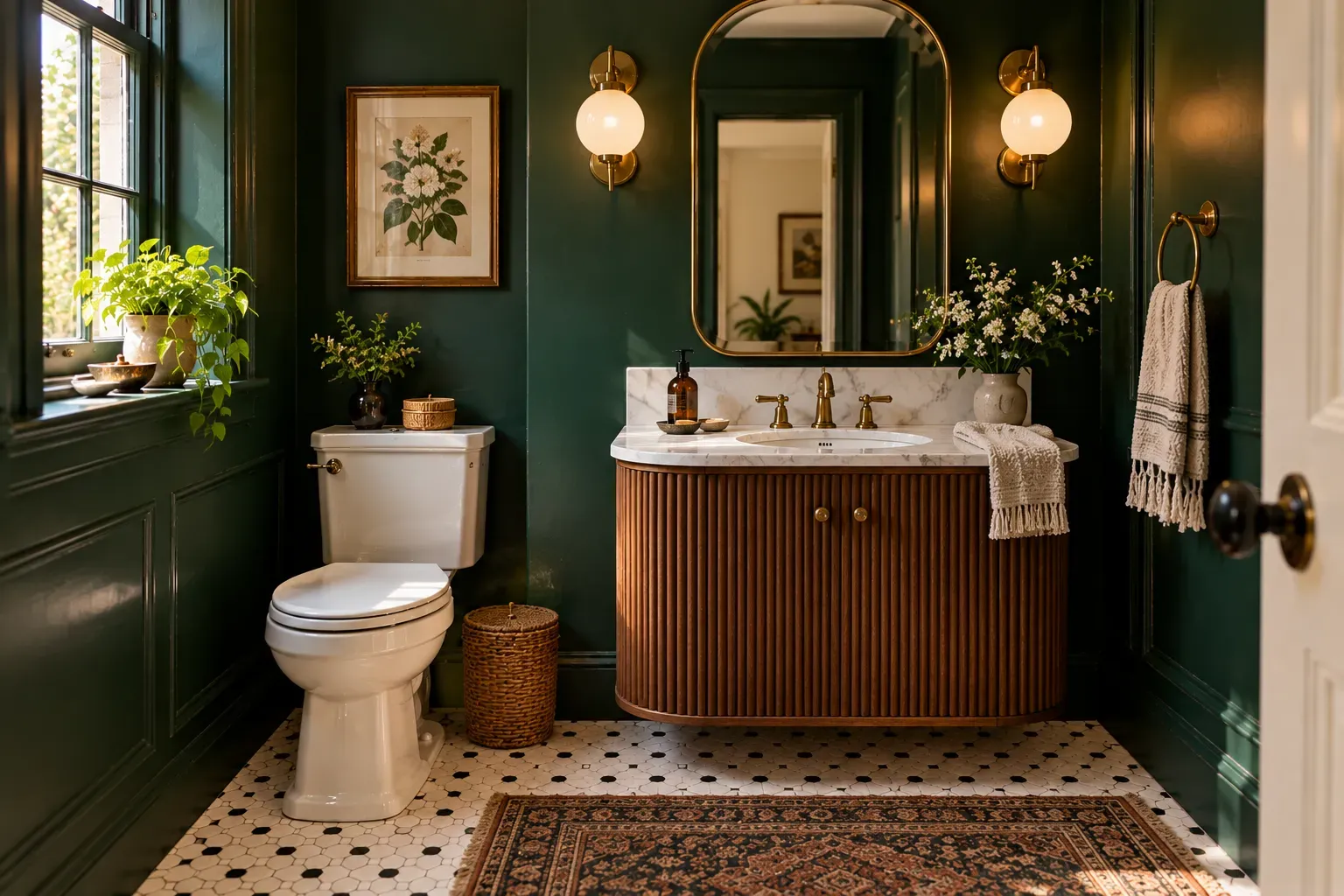
An arched mirror and deep green paint can create an Art Deco reference without major construction. This approach is particularly effective in a powder room where dramatic color feels intentional. Use a washable, bathroom-suitable paint and plan lighting carefully: dark walls absorb illumination, especially around a small mirror used for grooming.
Pair emerald with one fluted cabinet or curved detail, not every available Deco motif. Marble-look porcelain provides a lower-maintenance alternative to some natural stones. If the room lacks ventilation, resolve moisture issues before investing in decorative finishes.
6. Vintage Clawfoot Tub in a Simple Room
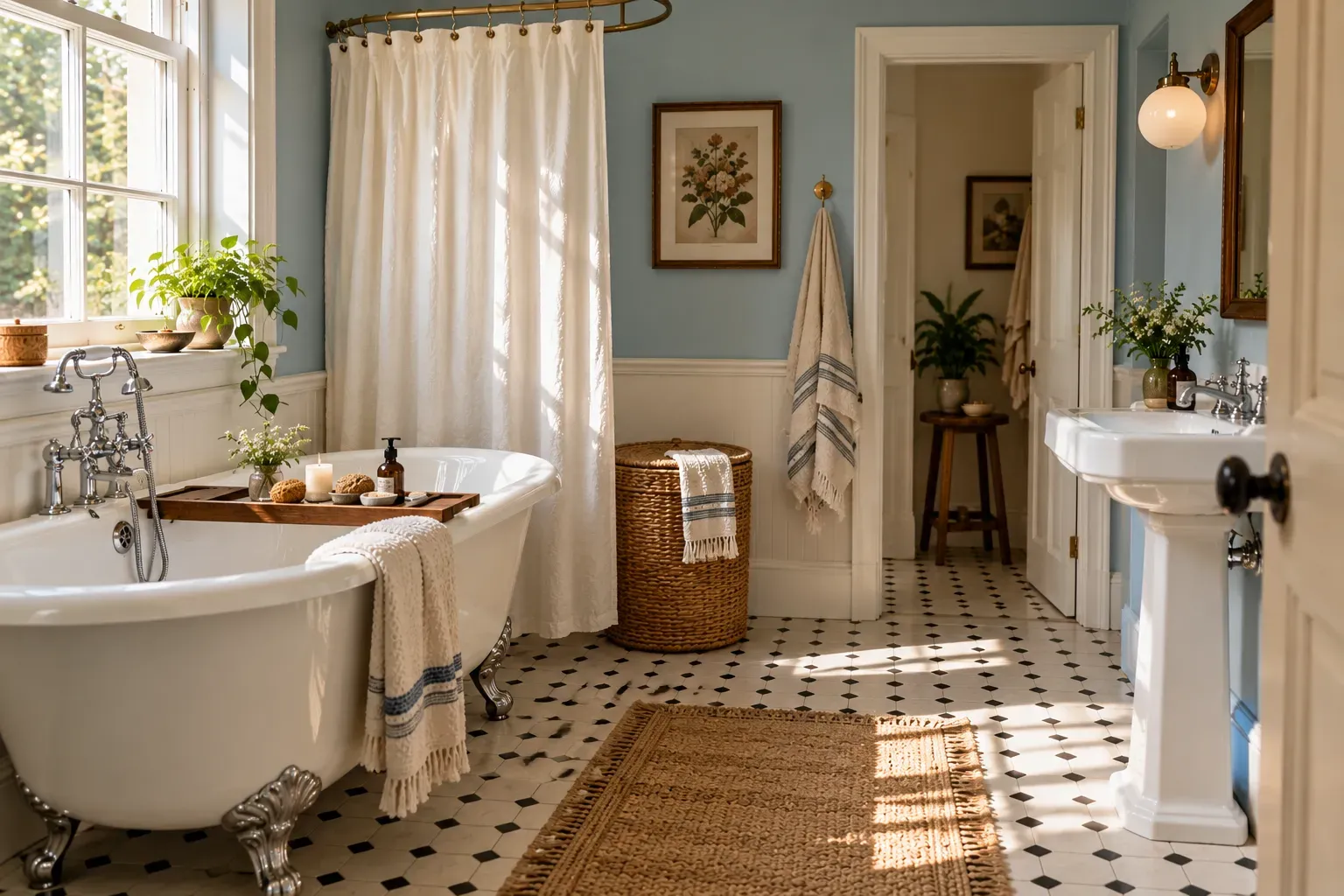
A clawfoot bathtub is a beautiful focal point when the room has enough clearance for cleaning and safe movement. Measure doorway access, plumbing positions and floor loading before buying a reclaimed cast-iron model. Refinishing can add significant expense, so inspect the enamel and feet carefully rather than judging the tub from photographs alone.
Keep the rest of the room modest: painted walls, a soft curtain and a small basket are enough. A handheld shower may improve practicality, but curtain arrangements need careful planning to limit splashes.
7. Mustard Yellow Vanity with Cream Tile
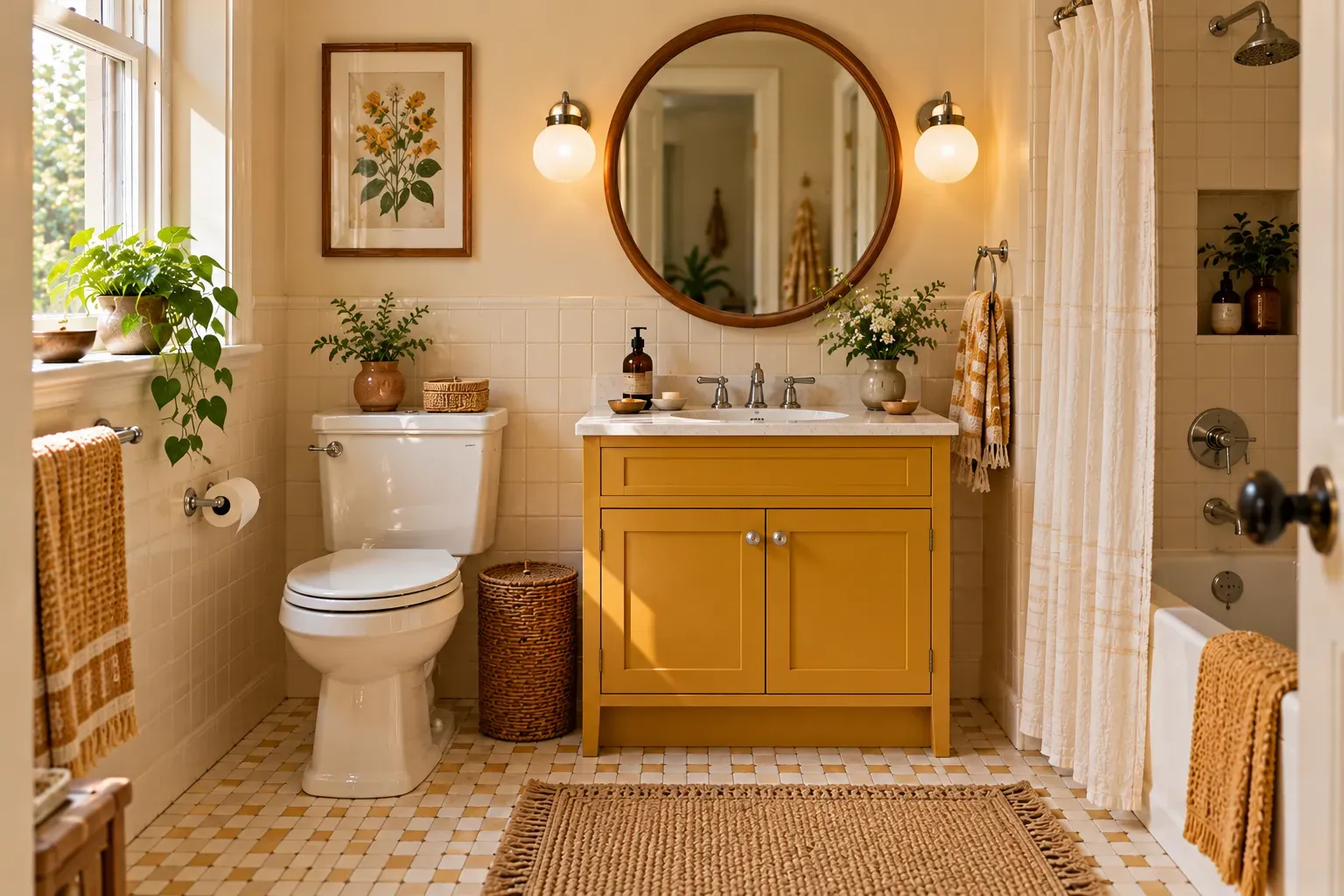
A mustard vanity adds seventies character in a controlled, affordable way. Painting an existing cabinet is often cheaper than replacing it, provided the material is sound and you use suitable primer and durable cabinet paint. Test the yellow against cream tile and flooring: golden mustard feels warm, while acidic yellow can be tiring in a small room.
Use understated chrome fittings and a rounded mirror to balance the stronger color. A teak-toned accent or woven mat adds texture without clutter. Do not overlook ventilation and drying time during painting; rushed coats can peel near a steamy sink.
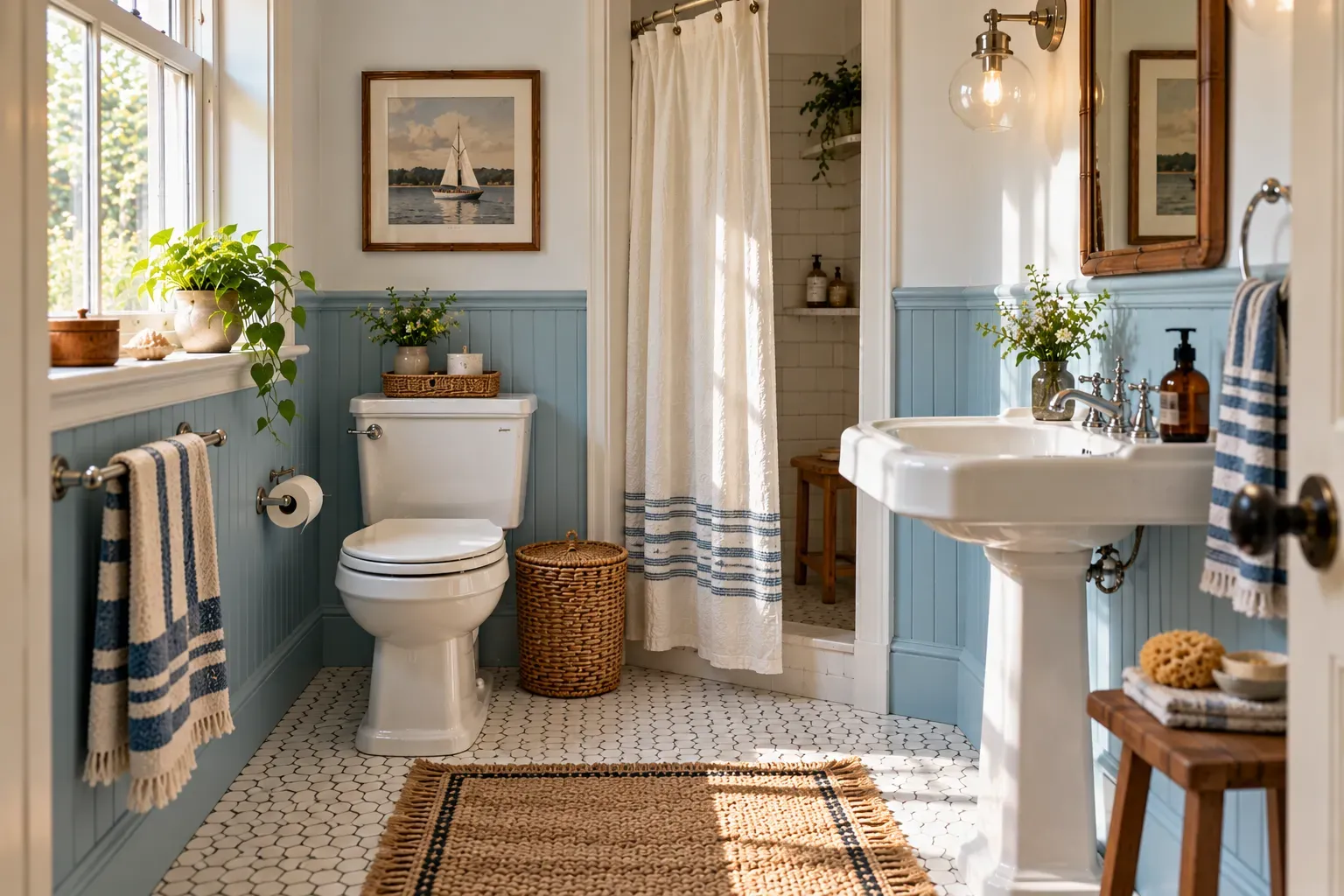
8. Blue-and-White Coastal Vintage
Powder blue beadboard and white fixtures create a relaxed retro bathroom that feels familiar rather than staged. Use moisture-appropriate paneling and avoid installing untreated wood in splash zones. If existing walls are in good condition, painting the lower half blue can imitate the visual division of paneling at a fraction of the cost.
Keep coastal references subtle. A striped towel and clear glass light are usually enough; rope mirrors and anchor ornaments can quickly overwhelm a small space.
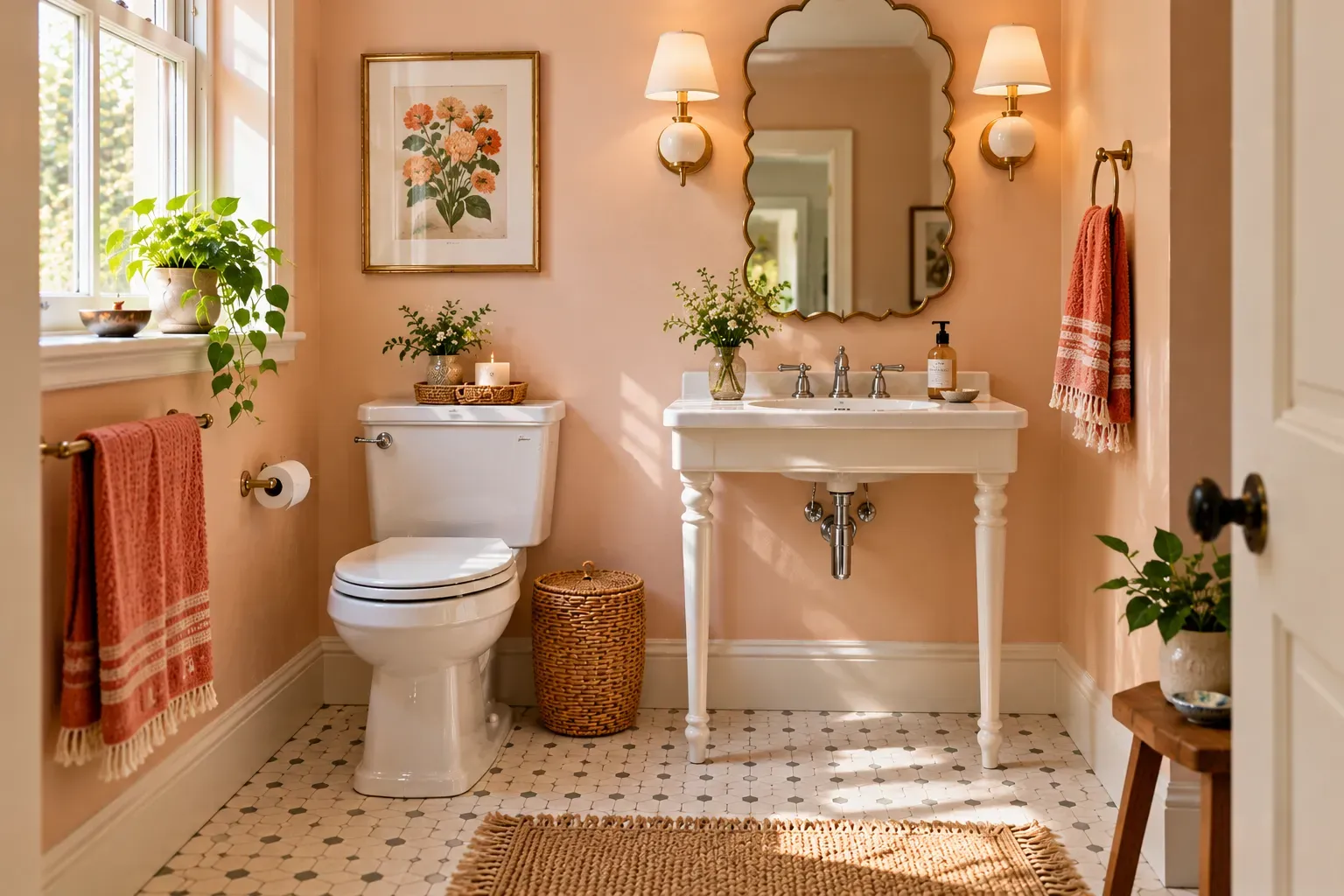
9. Peach Walls and Scalloped Accents
Peach walls can warm up a north-facing bathroom and soften stark white porcelain. Pick a dusty or clay-toned peach rather than a bright orange pastel. The scalloped mirror introduces a vintage shape without demanding patterned wallpaper or new tile. It is an approachable project for anyone who wants a visible change over a weekend.
A single scalloped detail feels more sophisticated than matching edges on every accessory. Add a plain white sink and a few coral-toned towels to connect the palette. Use bathroom-rated paint and examine the color in both morning and nighttime light.
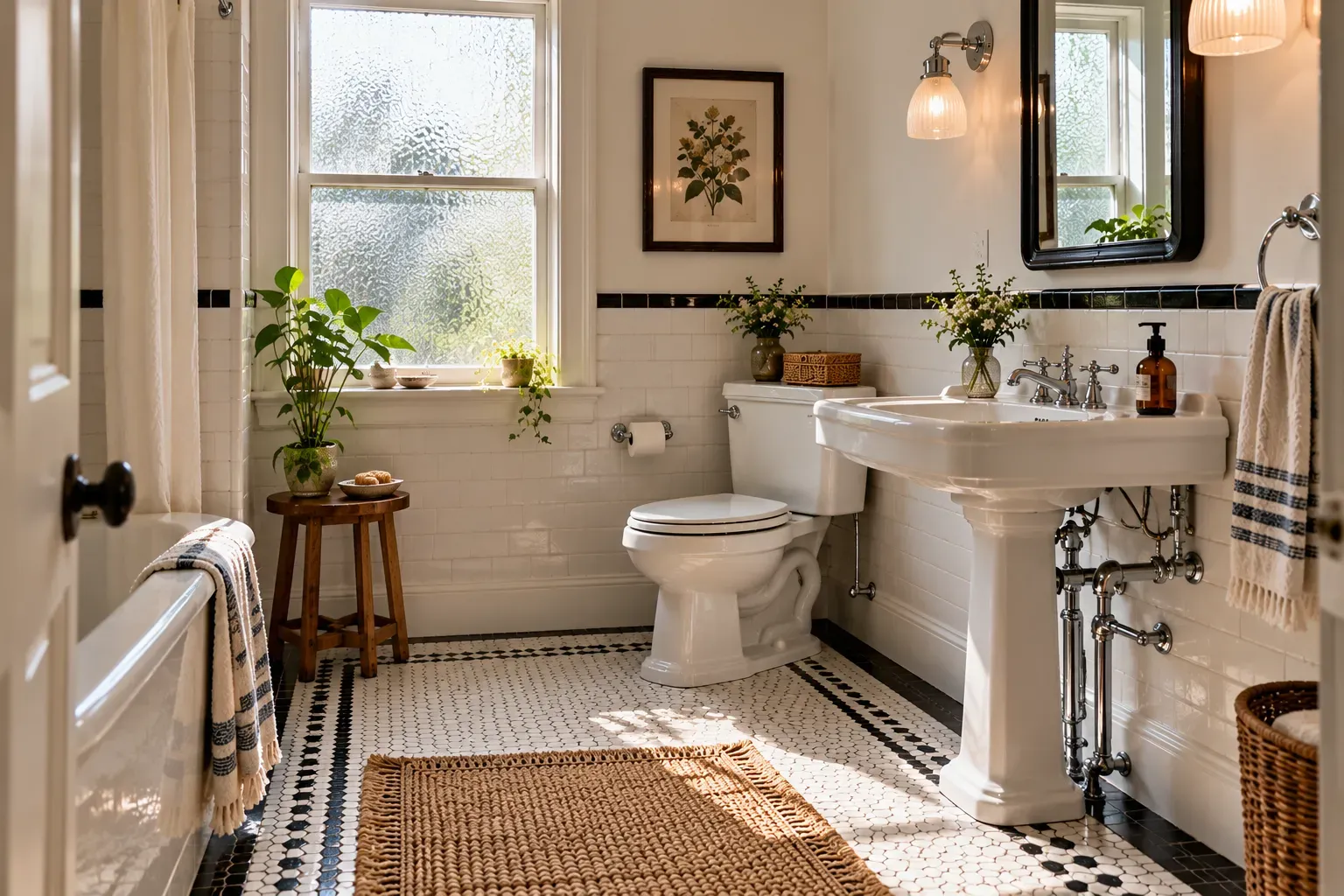
10. Black Trim and Classic White Hex Tile
Black border trim turns basic white hexagon flooring into a graphic period-inspired design. Ask your tile installer to map the border before laying adhesive, especially near a toilet or oddly shaped doorway. This detail rewards precision: a poorly aligned line is more noticeable than a simple all-white floor.
White walls and chrome fixtures keep the room bright and easy to update later. For a lower-cost version, use black trim around a mirror or paint a narrow architectural detail instead of rebuilding the floor.
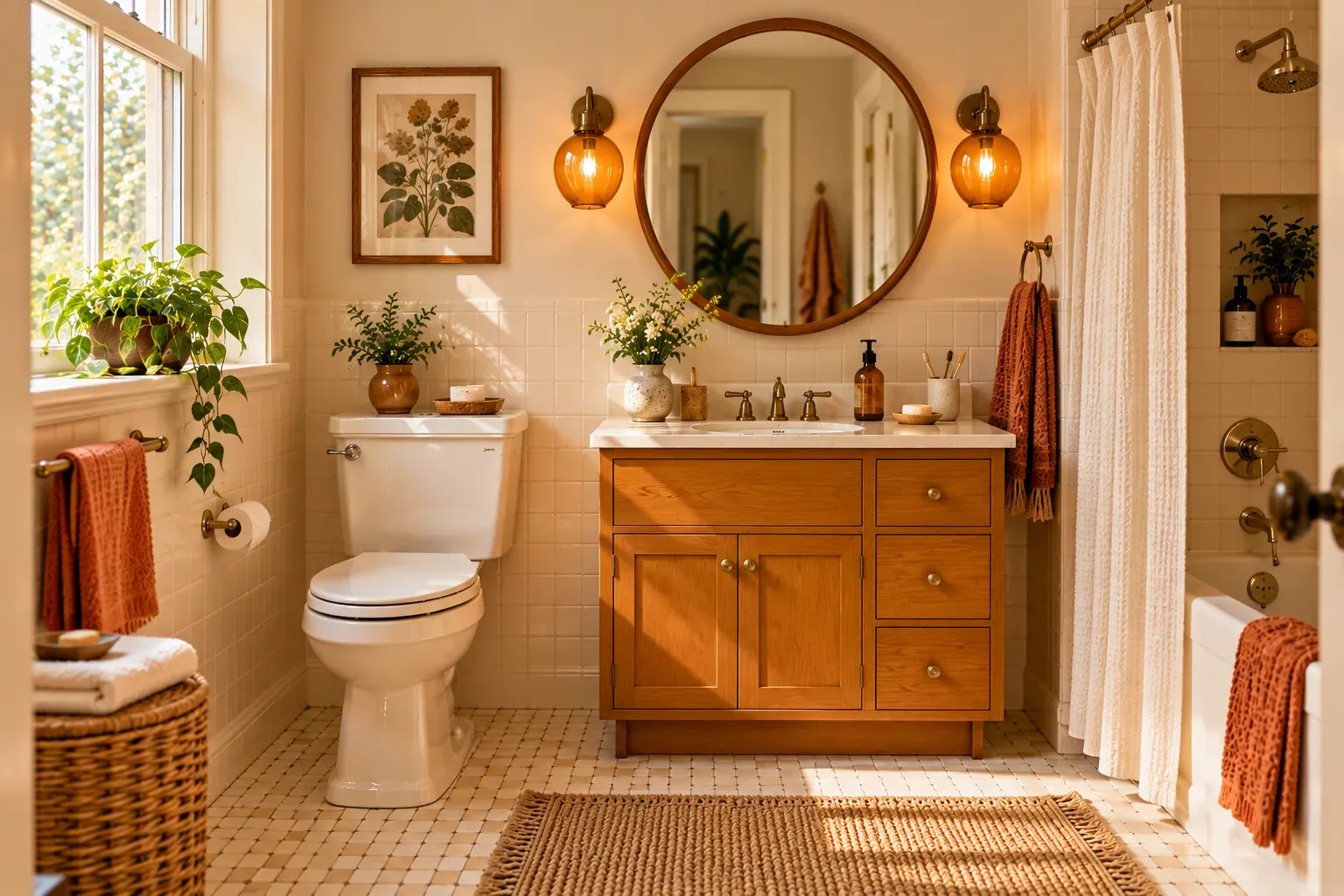
11. Wood Vanity and Amber Glass Lighting
Honey oak and amber glass can evoke seventies design without the heaviness of dark paneling. If your vanity is structurally sound, consider refinishing or changing the drawer fronts rather than replacing the cabinet. Choose warm, efficient bulbs with good color rendering so skin tones look natural at the mirror.
Keep the walls light to prevent the amber shades from making the room gloomy. Use simple off-white tile and one ceramic accessory for balance. Electrical work near water must meet local safety requirements and should be handled by a qualified professional.
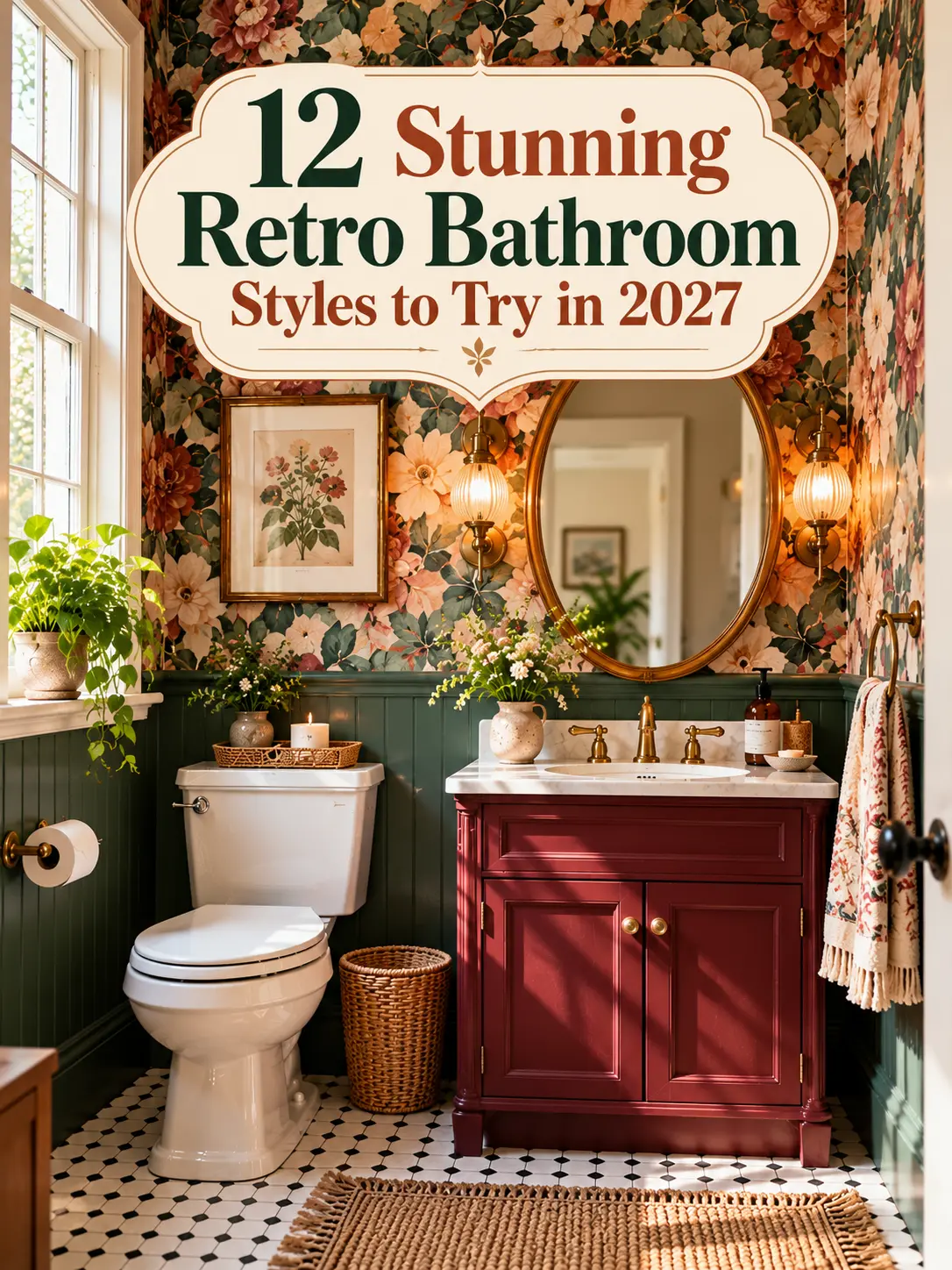
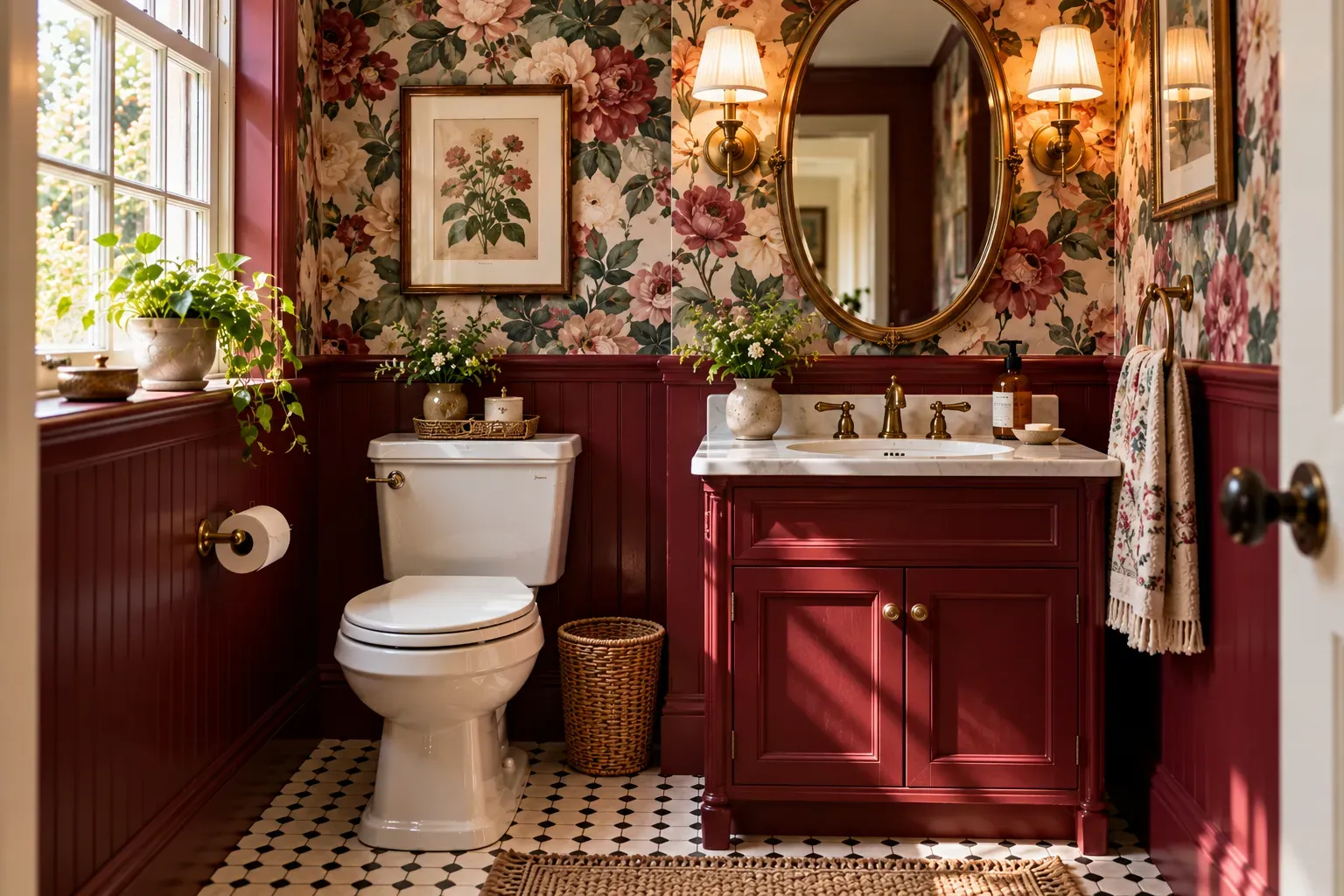
12. Bold Floral Wallpaper in a Powder Room
Large floral wallpaper is a lively way to explore retro style in a small powder room. Look for a print with a limited palette and repeat one of its colors on the vanity. Before purchasing, calculate pattern-repeat waste and order a sample; the print may look very different across an entire wall.
Use wallpaper recommended for the room’s moisture conditions and avoid placing ordinary paper in direct splash areas. A simple white sink and restrained mirror give the pattern breathing room. If a full room feels too intense, paper one wall and paint the others.
Practical Bathroom Ideas and Common Mistakes
Before buying finishes, measure the room, check ventilation and decide what must remain waterproof. The most effective Bathroom Ideas prioritize safe flooring, functional lighting and storage before decorative details. Avoid combining too many decades at once: one patterned surface, one distinctive color and straightforward fixtures usually feel more convincing than an assortment of competing references.
For a modest budget, refresh paint, hardware, lighting or a mirror before changing plumbing locations. Keep a contingency for hidden water damage, and confirm tile and wallpaper suitability for the exact wet zone. For visual references, browse retro bathroom photographs on Houzz, then compare inspiration with your actual floor plan.
-
Ordering tile without ordering physical samples first — colors look very different in photographs versus real light. -
Buying a reclaimed clawfoot tub before measuring doorway access, floor loading and plumbing rough-in positions. -
Skipping moisture-rated products — standard paint, wallpaper and wood paneling deteriorate quickly in a steamy bathroom. -
Mixing more than two prominent retro eras in one room — conflicting references dilute the intended aesthetic. -
Placing electrical fixtures near water without confirming compliance with local safety codes.
Conclusion: Choose Retro Details That Work Today
The best Bathroom Ideas combine personality with comfort. A checkerboard floor, peach wall or walnut vanity can suggest a favorite decade without making your bathroom feel stuck in it. Begin with the feature you genuinely love, coordinate a small palette and invest in surfaces that suit everyday moisture and cleaning. A considered mix of vintage shapes and modern performance will remain useful long after a trend passes.
If you enjoy extending a consistent decorating mood into nearby rooms, explore our master bedroom ideas for complementary colors and textures. For seasonal decorating elsewhere in the house, see these Halloween pumpkin carving ideas that add playful vintage-inspired charm without permanent renovation.
Frequently Asked Questions
What colors work best in a retro bathroom?
Muted pink, seafoam green, mustard, powder blue and warm cream all suit retro design. Pair one standout shade with neutral fixtures for balance.
Can I make a bathroom look retro on a budget?
Yes. Paint a vanity, replace a mirror, update towels or add one vintage-style light. Avoid moving plumbing unless necessary.
Are retro tiles suitable for modern bathrooms?
Yes, if they are rated for the intended floor or wall location. For wet floors, prioritize appropriate slip resistance and proper waterproofing.
How do I keep a small retro bathroom from looking cluttered?
Choose one focal pattern, use closed storage, limit accessories and keep the lighting bright and functional.
