
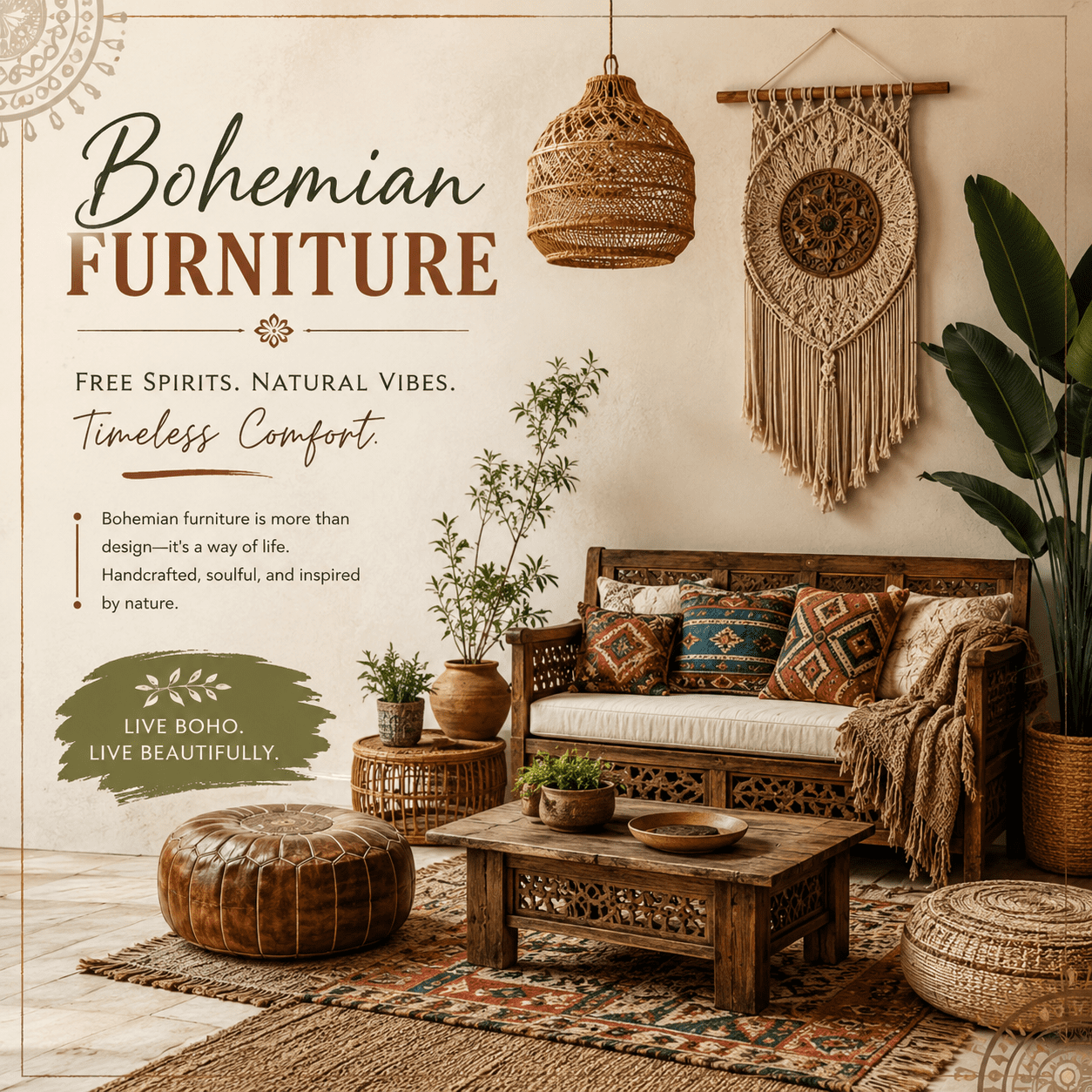
Bohemian furniture has become one of the most loved interior design trends for homeowners who want comfort, creativity, and personality in their living spaces. Unlike traditional furniture styles that follow strict design rules, bohemian furniture embraces freedom, natural textures, layered decor, and artistic expression. It combines vintage charm, earthy tones, handcrafted elements, and cozy details to create spaces that feel warm and inviting.
Whether you are decorating a modern apartment, a rustic farmhouse, or a small bedroom, bohemian furniture can transform your home into a relaxing sanctuary filled with character and style. From rattan chairs and carved wooden tables to colorful sofas and woven accent pieces, this interior style celebrates individuality and comfort.
01 — Core Concept
What Is Bohemian Furniture?
Bohemian furniture refers to a relaxed and eclectic interior design style inspired by artistic lifestyles, travel culture, vintage decor, and natural materials. It often mixes furniture from different eras and cultures to create a unique and layered appearance.
Unlike minimalist interiors that focus on strict simplicity, bohemian styling thrives on texture, organic shapes, and personalized warmth. Every piece tells a story and contributes to a cozy, inviting atmosphere.
Bohemian living rooms are most important part of the home decors so checkout https://luxedecorehome.com/bohemian-living-room/.
02 — Characteristics
Essential Characteristics of Bohemian Furniture
Natural Materials & Textures
Organic materials form the foundation of bohemian furniture design. Wood, bamboo, rattan, wicker, linen, cotton, and jute are commonly used to create a warm and earthy atmosphere. Furniture made from organic materials instantly adds tactile depth and authenticity to a room.
Vintage and Handmade Details
Bohemian interiors often feature vintage furniture with handcrafted details. Antique cabinets, distressed wood tables, and artisan-made chairs create a collected, curated look. Carved wood patterns, woven textures, and hand-painted finishes add instant visual interest.
“The beauty of bohemian design lies in its imperfections—the natural grain of a raw wood table, the slight variation in a hand-woven chair, and the rich patina of vintage brass.”
The Earthy Color Palette
Bohemian spaces use grounded and calming color palettes designed to mimic the natural world. Use the swatch guide below to balance warm earth tones with deep bohemian accents.
Desert Sand
Terracotta
Olive Green
Mustard
Walnut
03 — Space Styling
Best Types of Bohemian Furniture for Every Room
1. The Living Room
The living room serves as the social heart of the bohemian home. Aim for comfortable, low-profile seating layouts that encourage conversation and deep relaxation.
- Boho Sofas: Opt for slipcovered linen sofas or deep velvet tufted couches. Layer them with heavily textured, embroidered pillows and fringe blankets.
- Rattan Accent Seating: Iconic peacock chairs, hanging wicker nests, or woven stools instantly lift the visual weight of a living room.
- Reclaimed Coffee Tables: A low-slung, round wooden coffee table keeps the flow of the room open and grounded.
2. The Cozy Bedroom
Create a sensory retreat focused on restfulness, warm lighting, and soft, natural textiles.
- Wooden Bed Frames: Low-profile platform beds or intricate carved wood headboards serve as stunning room focal points.
- Mismatched Nightstands: Instead of matching bedroom sets, pair a distressed vintage chest with a lightweight rattan side table.
- Reading Corners: Hang a woven chair in an unused corner to instantly craft a cozy reading nook.
3. The Welcoming Dining Area
Gathering spaces should feel informal, dynamic, and closely tied to organic craftsmanship.
- Rustic Tables: Broad, solid wood dining tables with visible knots and grains.
- Mismatched Chairs: Mix and match mid-century wood chairs with woven cane and soft upholstered seats.
04 — Material Glossary
Popular Materials Used in Bohemian Furniture
The textures you choose directly impact how cozy and authentic your bohemian home feels. Mix these core elements across your furniture pieces:
- Rattan & Cane: Highly flexible, lightweight, and perfect for bringing breezy tropical warmth indoors.
- Reclaimed Wood: Filled with history, tool marks, and natural weathering that add structural soul to tables and cabinets.
- Bamboo: An eco-friendly, fast-growing option that works exceptionally well for plant stands and shelving units.
- Linen & Cotton: Breathable, natural fabrics that drape elegantly over seating to maintain a relaxed finish.
05 — Design Rules
How to Style Bohemian Furniture for a Balanced Look
Mix Patterns and Scales
While bohemian design embraces plenty of patterns, balance is essential. Ground busy tribal-print rugs and embroidered fabrics by paring them with clean, neutral-toned linen furniture.
Incorporate Lush Indoor Plants
Greens are the ultimate accessory in any bohemian interior. They bring life, movement, and a connection to the outdoors into your design scheme. Style your furniture with trailing pothos draped over tall shelves or a broad-leaf Monstera nested beside your favorite rattan chair.
Minimalist Home Decor: The Ultimate Guide to Creating a Calm, Stylish, and Functional Home
06 — Pitfalls
Common Mistakes to Avoid
Achieving a relaxed look takes thought. Avoid these common design errors to keep your space comfortable and curated:
-
Overcrowding the Space: Layering too many decorative items, rugs, and side tables can block paths and make your home feel cramped rather than cozy.
-
Neglecting Comfort and Functionality: Even the most beautiful rattan swing chair or low-slung pouf needs to be genuinely practical and comfortable for everyday use.
-
Relying on Too Many Bright Colors: Avoid visual chaos by starting with neutral foundation colors (like cream, taupe, or beige) before layering in vibrant accents.
-
Forgetting Visual Texture: Without a mix of rough wood, smooth velvet, woven jute, and sleek ceramics, a room risk looking flat and uninspired.
A Cozy, Timeless Sanctuary
Bohemian furniture is more than just an interior design trend—it is a lifestyle that celebrates creativity, comfort, individuality, and natural beauty. Whether you prefer modern boho aesthetics, vintage-inspired interiors, or earthy minimalist spaces, bohemian furniture allows you to create a home that feels warm, artistic, and inviting.
By combining natural materials, layered textures, handmade decor, and cozy furniture pieces, you can design spaces that reflect your personality while remaining timeless and stylish.
Explore expert decorating ideas and furniture inspiration for bohemian-style interiors:
07 — Q&A
Frequently Asked Questions
What is the core difference between vintage and modern bohemian furniture?
Vintage bohemian furniture leans heavily on distressed woods, ornate hand-carvings, and mismatched antique finds. Modern bohemian furniture (often called “boho-chic”) simplifies these lines, blending organic textures like rattan and cane with minimalist silhouettes and neutral bases to keep spaces feeling airy and light.
Is rattan furniture durable enough for high-traffic living spaces?
Yes, high-quality natural rattan is highly durable and flexible, making it ideal for daily indoor use. To ensure its longevity, combine it with sturdy seat cushions to distribute weight evenly and prevent direct exposure to moisture or intense, dry heat.
How do you style a bohemian home without it looking cluttered?
The key to clutter-free boho design is maintaining a consistent, warm color palette, utilizing hidden storage (like woven baskets or wooden dressers), and leaving dedicated visual “breathing room” or negative space on walls and floors.
What plants are best suited for a bohemian interior?
Hardy, sculptural plants thrive in boho settings. Top choices include the split-leaf Monstera Deliciosa, trailing Pothos, Snake Plants for vertical height, and Fiddle Leaf Figs for statement greenery.
How can I decorate in bohemian style on a tight budget?
Bohemian styling is highly budget-friendly because it embraces vintage and thrifted elements. Shop local thrift stores, flea markets, and online marketplaces for second-hand solid wood pieces, and focus on simple DIYs like styling with raw branches, changing cabinet hardware, or layering soft textiles.