
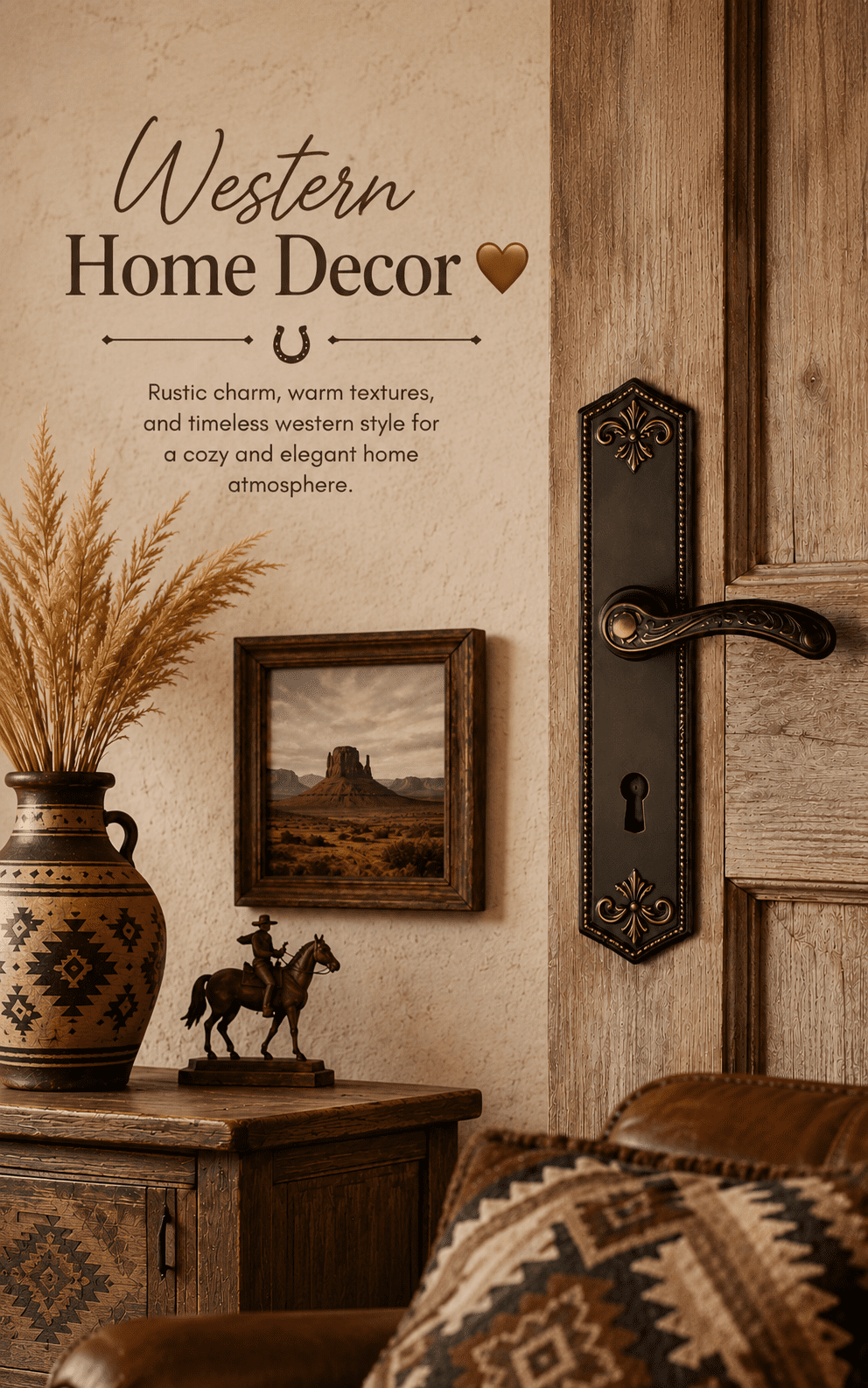
Western home decor brings together rustic charm, cozy textures, natural materials, and timeless elegance inspired by ranch living and rugged countryside landscapes. Whether you appreciate modern cowboy aesthetics, farmhouse-inspired interiors, or traditional Southwestern details, the Western style creates a warm and inviting atmosphere that feels both luxurious and deeply comforting.
From rich leather seating and weathered timber accents to earthy color palettes and vintage accessories, Western home decor has transitioned from regional ranch houses to one of the most sought-after interior design trends globally. It offers homeowners a grounded, authentic alternative to cold, hyper-minimalist spaces by focusing on history, comfort, and natural beauty.
01 — Philosophy
What Is Western Home Decor?
Western home decor is an organic interior design style rooted in the history of the American frontier, mountain lodges, and desert homesteads. Far from being a rigid set of rules, it is an architectural appreciation for raw materials, hand-hewn textures, and practical furnishings designed to withstand the test of time.
At its core, Western design relies on biophilic principles—the concept of bringing the outdoors inside to foster a deeper connection with nature. By featuring exposed grains, natural stone, and unrefined fibers, this aesthetic grounds the modern home in a sensory experience that calms the mind and feels instantly welcoming.
“Authentic Western design does not rely on manufactured novelty. Its elegance lies in the visible history of raw timber, the warm patina of natural leather, and the textures of hand-woven fabrics.”
02 — Design Foundations
Essential Elements of Western Home Decor
1. Rustic and Reclaimed Wood
Wood is the foundational skeleton of any Western-inspired space. Instead of uniform, highly polished factory furniture, look for timber that showcases its natural life cycle. Reclaimed barn wood, wire-brushed pine, and hand-scraped oak are exceptional choices. The goal is to celebrate the natural knots, cracks, and varied grain patterns that reflect the passage of time.
2. Heritage Leather
Leather is the ultimate material signature of a Western room. For a space that feels curated rather than commercial, select full-grain or aniline-dyed leathers. Aniline leather lacks synthetic topcoats, allowing the hide to breathe and develop a beautiful, caramelized patina over decades of use. Minor scratches and color variations only enhance its character, telling a unique story of daily life within the home.
3. Earthy Color Palettes
The Western color palette is drawn directly from natural geographic landscapes: deep canyons, dusty sage deserts, and dark mountain forests. The strategy is to utilize muted, low-saturation neutrals for large-scale surfaces and reserve high-character colors for secondary textiles and accents.
Canyon Clay
Dark Walnut
Sagebrush
Desert Sand
Slate Charcoal
A balanced Western color palette designed to harmonize raw wood finishes with warm, neutral walls.
4. Heavy-Weight Textiles
To soften the hard lines of iron and wood, rely heavily on thick, cozy textiles. Native-inspired geometric flatweave rugs, thick wool blankets (such as historic trade blankets), sheepskins, and linen curtains help distribute light and add comforting layers of warmth underfoot and across seating.
03 — Spatial Guide
Room-by-Room Western Styling
The Cozy Living Room Gathering Space
A Western living room layout should prioritize warmth and close conversation. Position deep-seated, comfortable leather sofas opposite a rustic stone fireplace. Anchor the seating group with a large, genuine cowhide rug or a thick geometric wool rug. Rather than matching furniture sets, pair a leather sofa with textured woven armchairs to cultivate an inviting, collected-over-time atmosphere.
For lighting, replace harsh overhead ceiling lights with statement fixtures in wrought iron or oil-rubbed bronze. A dynamic ring chandelier or a subtly integrated antler fixture can act as a sculptural centerpiece during the day and cast a warm, candle-like glow at night.

Thoughtful integration of rustic elements paired with soft, textured linens maintains an elegant aesthetic.
The Sanctuary Bedroom
Your bedroom should remain a tranquil retreat, meaning you should tone down high-contrast graphic prints and scale up softer, organic textures. A bold, hand-carved wooden headboard serves as an elegant focal point. Layer the bed with breathable linen sheets, a heavyweight wool throw, and neutral beige or olive green pillows. Soft sheepskins on either side of the bed ensure your feet touch comforting warmth every morning.
The Heart of the Home: The Kitchen
Western kitchens perfectly blend historic, hardworking details with modern utility. Consider replacing modern polished upper cabinets with thick, rough-sawn open wooden shelves. This allows you to display stoneware plates, ceramic mugs, and antique copper pots. Incorporate a fireclay farmhouse sink paired with an oil-rubbed bronze bridge faucet, and complete the layout with heavy wood-and-iron bar stools along the island.
04 — Aesthetic Balance
The Modern Western Evolution
Historically, Western interiors sometimes felt dark, heavy, and overcrowded with vintage novelty items. The “New Western” or “Modern Western” movement solves this issue by combining rustic textures with clean, modern minimalism. It maintains the comfort of the frontier while embracing open spaces and natural light.
05 — Pitfalls
Western Design Mistakes to Avoid
Because Western home decor celebrates a relaxed and weathered look, it is highly forgiving. However, it is easy to accidentally cross the line into theatrical themes. Here are a few mistakes to keep in mind when designing your space:
The “Saloon” Cliché: Avoid literal cowboy motifs, wagon-wheel tables, and overly literal signs. Focus instead on raw finishes, rich leather, and natural elements that subtly hint at the rugged lifestyle without shouting it.
Uniform Furniture Suites: Steer clear of matching three-piece leather living room sets. True Western elegance relies on mismatched, layered textures. Couple a leather sofa with fabric accent chairs, or wooden chairs with a slate-topped dining table.
Inadequate Lighting: Dark timber and rich brown leather absorb a massive amount of light. Always pair heavy Western furniture with soft white paint finishes and multiple layers of warm light to avoid making your room feel dark and cave-like.
06 — Clever Sourcing
Affordable Western Sourcing Secrets
Authentic, handcrafted Western furniture can carry a premium price tag, but you don’t need to spend a fortune to achieve this look. Because this aesthetic celebrates worn finishes, it benefits immensely from second-hand shopping. Explore local estate sales, thrift stores, and online marketplaces for vintage Persian-style rugs, copper cookware, and antique wooden benches.
If you are buying new timber furniture on a budget, you can easily distress it yourself. Utilizing simple tools like a wire brush, light sanding, and a coat of dark antiquing wax can instantly give affordable new pine or cedar the rich, historic look of a family heirloom.
Explore expert resources on rustic and Western-inspired interior design:
07 — Q&A
Frequently Asked Questions
Can I integrate Western decor into a modern urban apartment?
Yes. To make Western decor feel appropriate in a modern urban apartment, lean heavily into the “Modern Western” aesthetic. Keep your walls light, clean, and neutral (such as soft cream or alabaster), and introduce Western warmth sparingly through a cowhide rug, textured linen drapery, and a couple of natural timber accent pieces.
How do I clean and maintain an authentic cowhide rug?
Genuine cowhide is incredibly durable and naturally stain-resistant. Shake the rug outside weekly to release loose dust. If spills occur, blot immediately with a clean damp cloth and mild soap, wiping gently in the natural direction of the hair. Avoid soaking the hide or using harsh chemical solvents.
What are the best wall paint colors to pair with heavy leather furniture?
To balance the visual weight of dark brown leather furniture, paint your walls in warm, airy neutrals. Excellent choices include soft ivory, warm beige, sand, and pale sage green. These tones create a bright contrast while highlighting the organic, earthy qualities of your leather.